
Superfoods also take care of Amazonia’s health
The development of sustainable value chains for quinoa, cocoa, sesame, and other high-nutritional-value crops can foster integration into international markets, benefit the region, and contribute to sustainable development goals.

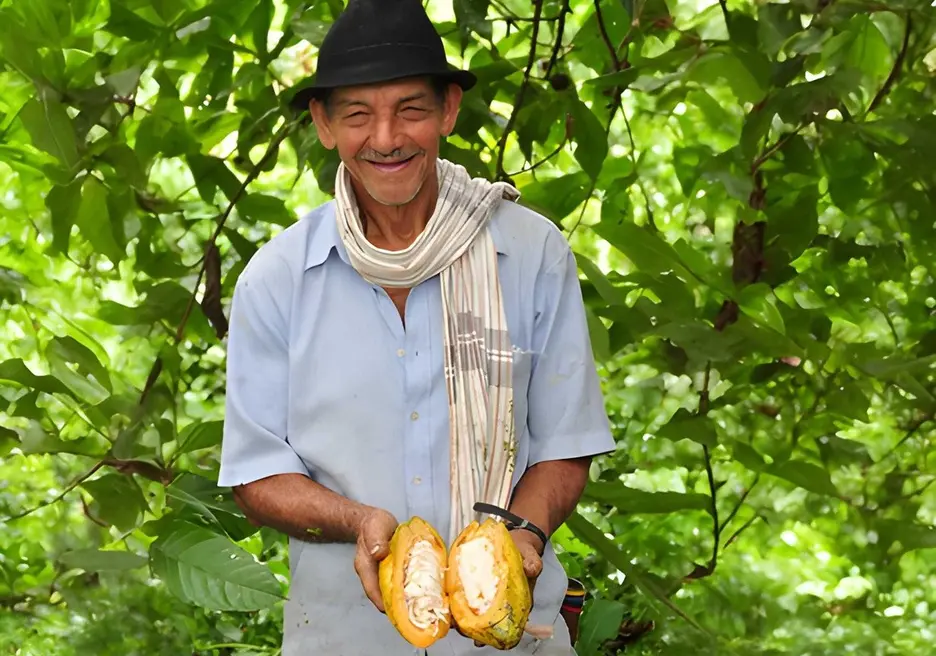
(Disclaimer: An artificial intelligence program was used to reformat the image illustrating this text. In this case, the program only enlarged the image's background without altering the subject or any other element in the frame.)
Nuts, peanuts, quinoa, sesame, avocado, cocoa, and other ‘superfoods’ represent a market opportunity, but can also drive economic growth and sustainability, all priorities for the Amazon region.
Known for their high nutritional values and health benefits, these are products in which the Amazonia has comparative advantages and high quality.
In addition to their nutritional benefits, these superfoods also promote the conservation of Amazonian ecosystems.
Related content
- BOOK: Embracing agriculture to achieve productive diversification
- DEBrief: Sustainable Superfood Value Chains: Potential Opportunities in the Amazon
For example, the Amazon nut does not require pesticides or fertilizers and is fundamental to the economy of the northern Amazonian region of Bolivia, generating employment for thousands of families.
Similarly, sesame can grow in dry and infertile soils with little investment, creating employment and income opportunities for local communities.
A unique opportunity
The Amazonia region, with its vast biodiversity and cultural wealth, presents a unique opportunity to develop sustainable value chains, especially in the emerging niche of superfoods.
The Amazon forest is vital for South America - and for the entire planet - due to its crucial role in regulating global climate and its rich biodiversity.
However, the region faces numerous challenges, such as high informality in primary production, low productivity, and unsustainable environmental practices that contribute to deforestation and climate change.
Promoting sustainable and inclusive development in the Amazon is essential to ensuring the region's economic, social, and environmental well-being.
This approach is also crucial for Amazonian countries to meet their climate commitments under the Paris Agreement and maintain access to global markets, especially with the implementation of zero-deforestation regulations in regions like the European Union.
Private sector: a crucial role
The conservation of forests and adopting sustainable agricultural practices are fundamental to achieving net zero deforestation in the Amazon.
- Did you miss IDB Invest Sustainability Week 2024? Click here!
In collaboration with governments and local communities, private sector companies can play a crucial role in restoring degraded lands and transitioning to low-carbon agricultural production.
This involves increasing productivity without expanding agricultural lands and supporting local producers in adopting more sustainable practices.
Developing inclusive value chains can drive economic growth and improve the well-being of local populations by creating jobs and developing different segments of the production chain.
Significant challenges
Despite the benefits, promoting sustainable value chains in the Amazon presents numerous challenges. Small producers face barriers such as limited access to financing, inputs, and agricultural services.
Fragmented production and lack of economies of scale result in low productivity, limiting exports' viability. In addition, the region is vulnerable to climate change and lacks basic public services, such as energy and irrigation.
International certification requirements and traceability systems also represent an obstacle. Territorial insecurity and criminal violence exacerbate these challenges, making it even more difficult to implement sustainable practices in the region.
Key factors supporting these value chains include product quality, the implementation of traceability systems and quality certifications, and access to inputs and agricultural services for small producers.
A holistic approach
Effective partnerships between governments and the private sector are essential to eliminating market distortions and promoting sustainable investment. Diversifying the offer with higher-value-added processes is also crucial.
In this way, productivity and wages increase, and opportunities emerge in spin-off industries such as pharmaceuticals, agrotourism, cosmetics, and nutraceuticals, benefiting local populations.
Developing sustainable value chains in the Amazon, especially in the superfoods niche, requires a holistic approach that considers the local context and strengthens the private sector’s capacity to operate sustainably and inclusively.
The IDB Group has committed to further increasing the impact of its actions in the region with the Amazonia Forever program. This is a holistic umbrella initiative for the region's sustainable development that aims to collaborate on forest conservation and climate action, offering economic alternatives to improve people's quality of life.
IDB Invest will continue to work with the private sector to contribute to these goals, increasing the flow of financing and innovation to the region to improve the quality of life of its inhabitants, sharing strategic knowledge, and fostering regional coordination among private sector organizations that support interventions towards these goals.
Promoting these value chains will contribute to the well-being of the Amazon and have a positive global impact, promoting sustainability and resilience in one of the world’s most important ecosystems.
Find more details in the “Sustainable Superfood Value Chains: Potential Opportunities in the Amazon” DEBrief.
Authors

María Cecilia Acevedo
Maria Cecilia Acevedo is a Lead Strategy Officer in the Strategy and Development Effectiveness Department at IDB Invest in Washington, DC. María Cecilia leads the preparation of country strategies for IDB Invest, in particular providing technical analysis by including the private sector perspective for Latin America and the Caribbean. María Cecilia conducts research on economic development issues, especially on the contribution of the private sector to the welfare of the population and the mechanisms through which market solutions are efficient to achieve this objective. A Colombian national, María Cecilia received her M.A. and Ph.D. from Harvard University, and an M.A. in Economics from Universidad de los Andes, Bogotá.

Liliana Castilleja-Vargas
Liliana is a country economist for Bolivia in the Andean Countries Department (CAN) of the Inter-American Development Bank (IDB). Previously, Liliana served as Peru's country economist and regional economist in the Southern Cone Countries Department (CSC) at IDB headquarters in Washington. Before joining the IDB, she held senior economist and finance positions at BBVA-Research, ECLAC/UN, and the National Banking and Securities Commission (CNBV) in Mexico. Liliana has a PhD in Economics from the University of Nottingham, UK, and a Masters in Finance and a BA in Economics, both from the Instituto Tecnológico Autónomo de México (ITAM). Liliana is the author and co-author of several publications and articles on economic, financial, and socioeconomic development issues.

Juan G. Flores
Juan G. Flores is a Strategy, Planning and Innovation Officer at IDB-Invest’s Strategy and Development Department where he analyzes challenges and opportunities for the private sector, with emphasis on Telecommunications, Media and Technology, Manufacturing, and Gender and Diversity. Juan has 11 years of experience in originating, structuring and supervising projects at the IDB Group, and performed a special assignment as Transaction Management Officer at the European Investment Bank. Prior to the IDB Group, Juan was Financial Controller at KFC Group Ecuador, and Chief Financial Officer of KFC Venezuela. Juan is a Certified Public Accountant, holds a bachelor’s degree in Business Administration with a focus on Finance from Universidad Católica del Ecuador, and a Master’s degree in Finance from Kogod School of Business at American University.
LIKE WHAT YOU JUST READ?
Subscribe to our mailing list to stay informed on the latest IDB Invest news, blog posts, upcoming events, and to learn more about specific areas of interest.
SubscribeGender
Related Posts
Digital Innovation Expands Financing for Women-Led SMEs in Latin America and the Caribbean
Loans and disbursements approved in less than 24 hours, enabled by artificial intelligence, and early invoice payments powered by fintech solutions are transforming access to credit for MSMEs, especially those led by women.

Fixing the Broken Rung: How Data Can Help Advance Women’s Careers in Latin America and the Caribbean
In Latin America and the Caribbean (LAC), the greatest disruption in women’s career progression occurs during the transition into managerial roles. A collaboration between IDB Invest and LinkedIn, within the framework of the Development Data Partnership, uses large-scale labor-market data to identify where women’s participation declines and what barriers exist across sectors and career stages.

Addressing gender-based violence from the private sector: the experience of Laboratorios Bagó
Francisco Méndez, CEO of the pharmaceutical company, shares his company's efforts and achievements in fostering an inclusive and safe work environment.