
Four Areas Ports Can Work on to Successfully Navigate the Future
Integrating MSMEs, enhancing synergies, promoting environmental sustainability, and fostering women’s participation and leadership are crucial to ensuring ports in Latin America and the Caribbean's long-term growth, innovation, and contribution to economic diversification, thereby benefiting natural capital and local economies.

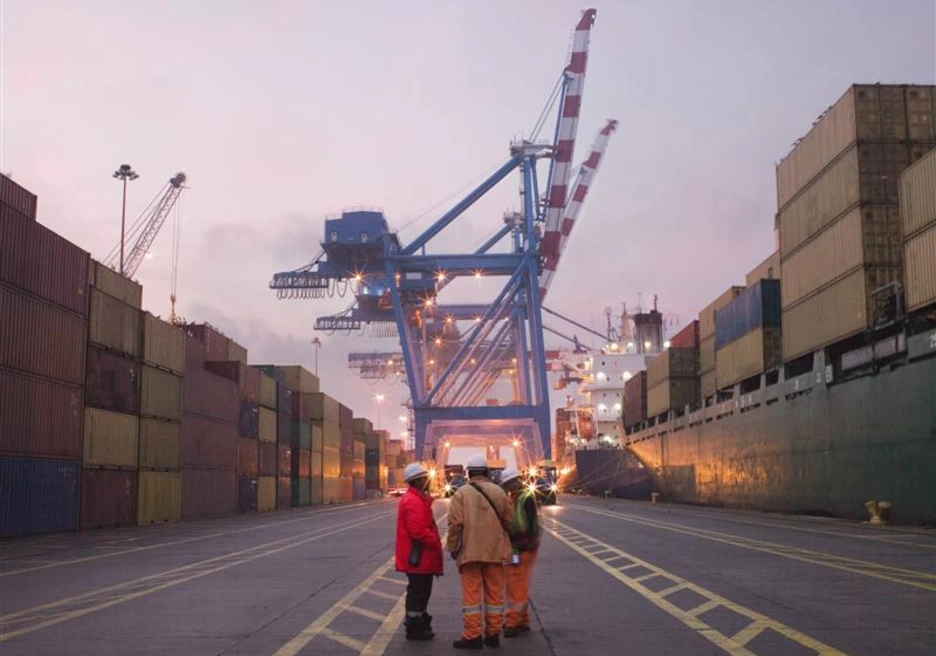
In today's interconnected economy, logistical efficiency is a cornerstone of economic progress, and the port sector plays a vital role within the supply chain.
Ports are a key link in the global supply chain, being the entrance to supplies for the local industry and imports for countries as well as key to exporting raw materials, agricultural commodities, intermediate and finished goods to external markets.
With over 80% of the world's trade conducted via maritime routes, ports are essential nodes for regional economic development.
However, promoting sustainability (including mitigation, adaptation, and natural capital) and economic integration within the industry is crucial to ensure long-term growth.
Continue reading to discover how MSMEs, through their interactions at the port level, can integrate into countries’ supply chains and explore the role of ports in promoting environmental sustainability and creating economic opportunities for women, as outlined in the IDB Invest report "Port Ecosystem in Latin America & The Caribbean: Sustainable and Inclusive Value Chains and Operations.''
Value Chains
MSMEs are fundamental to economic diversification and sustainable growth in Latin America and the Caribbean.
These businesses could integrate to the countries’ supply chains, highlighting their interaction at the port level, as well as the role of ports in environmental sustainability and economic opportunities for women.
Despite their importance, MSMEs face significant challenges in fully integrating into the port ecosystem, such as inadequate mapping, visibility, and support in training and professionalization.
According to McKinsey, “MSME and large company productivity move in tandem in most subsectors, indicating spillovers if the right conditions are created. For example, automotive MSMEs have gained operational proficiency through systematic interactions with productive original equipment manufacturers.”
These enterprises represent a substantial part of the region's economic fabric but contribute less than half of GDP and only 12% of exporting companies in developing countries.
To enhance MSME integration, ports could undertake the following recommendations, based on interviews with more than 20 key stakeholders in Latin America and the Caribbean and US port sectors.
These include ports of TCP in Uruguay, MIT in Panama, Ventura Group in Colombia, Port Spain in Haiti, and Port of Long Beach in the USA.
- Detailed Mapping and Characterization: Conduct comprehensive mapping and characterization of MSMEs to understand their roles and potential within the port value chain.
- Sustainability and economic development officers: Appoint officers to oversee the implementation of strategies aimed at integrating MSMEs.
- Adjusted Procurement Processes and Port services: Modify procurement processes and port services to meet MSME needs, such as setting minimum MSME participation in procurement and offering differentiated tariffs and conditions, respectively. Also interacting with key port customers, could facilitate joint efforts to integrate MSMEs in the logistics value chain that is not directly dependent on the port itself, like certain transportation and storage services.
- Development Programs: Deploy capacity-building initiatives and advisory services to support MSME suppliers and clients
- Innovative Financial Products: Introduce products such as reverse factoring lines and flexible payment options to enhance the financial health of MSMEs.
Mapping suppliers is crucial to differentiate between subsistence MSMEs and those with significant impact. The latter are often innovative and adaptable, leading the introduction of new solutions and processes in the port sector.
The MSME offering in the port sector includes everything, from optimizing and automating processes, to improving efficiency in construction and operations, to products and services for the adoption of sustainable environmental practices to strengthen port infrastructure, such as signage, waste management, and specialized maintenance, as well as services to generate new forms of collaboration among stakeholders within the sector.
Environmental Impact
The port sector accounts for approximately 3% of global pollutant emissions, which have increased by 20% in the last decade.
Implementing sustainable practices that minimize environmental impact without compromising profitability is essential.
Some ports in the region, such as TCP in Uruguay, MIT in Panama and Ventura Group in Colombia, have made progress in harmonizing environmental challenges with productivity.
Still, considerable investments and coordinated actions are required to mitigate and adapt port infrastructure and value chains.
Current market dynamics present a unique opportunity to increase investments, integrating advanced technologies and innovative operational practices that reduce costs, increase efficiencies, and minimize environmental impact.
Collaboration and synergies
Promoting eco-efficiency can encompass optimizing processes and resources, implementing clean and efficient energy systems, and adopting resilient designs, as well as, waste management and marine conservation measures.
Collaboration among various value chain actors is indispensable for driving sustainability in the port sector.
Public-private cooperation and civil society involvement generate key synergies to promote sustainable practices at all levels.
This cross-sector collaboration facilitates knowledge exchange and encourages innovative solutions to environmental and social challenges.
It is essential to note that in most of our countries, there is a port authority and/or an industry regulator, allowing for areas of common interest to collaborate and promote efficient MSME development related to the supply chain associated with the port business.
Financial and technical support from multilateral institutions, such as IDB Invest, is crucial. IDB Invest actively promotes decarbonization initiatives and supports clients in implementing adaptation and nature-positive measures during the construction and operation phases.
This includes advising on risk assessments (i.e climate risk assessments, implementation of nature based solutions), establishing greenhouse gas emissions baselines and reduction paths, developing nature preservation plans, designing circular economy programs, and assessing the cost benefits of innovative technologies that increase infrastructure resiliency and energy efficiencies in port operations, and improve the relation between Ports, and the natural ecosystems that surround them.
Women in the Workforce
Women's representation in the port sector is limited, accounting for only 12% of the maritime workforce.
Efficiency and productivity could be gained by incorporating women into the ports’ workforce. Initiatives include training programs for women, awareness-raising strategies to challenge existing hierarchies and stereotypes, and implementing policies that promote equality.
Including women in key roles can also drive growth and development in the sector.
IDB Invest can leverage these experiences to foster a meritocratic port ecosystem in the region, where talent and competence are the determining criteria for access and professional advancement.
By adopting these strategies, ports can contribute to innovation, economic diversification, and sustainable growth, ensuring economic activities benefit the region's natural capital and local communities.
Through collaboration and support from multiple public and private stakeholders including multilateral institutions, best practices and standards can be established and adopted in the port sector, driving transformative change, and making sustainable development a viable and attractive prospect for all stakeholders involved.
Authors

Rafael González
Rafael joined IDB Invest in January 2023 and is currently a consultant in the Sustainable Business and MSMEs team within the Advisory division. Before IDB Invest, Rafael worked as a Distribution Executive for the retail and institutional segment in LATAM and US Offshore at Jupiter Asset Management, a London-based asset manager; before this, he was a Financial Services Commercial Officer at the UK Department for International Trade; promoting investment, trade, and technical cooperation between the UK and Colombia, including the analysis of regulatory barriers to market access; and lastly, Rafael worked as an Associate Relationship Manager at Citibank Corporate Banking. Rafael holds a Master's degree in Development Management from the London School of Economics and an undergraduate degree in International Business Administration from Universidad de la Sabana.

Mauricio Ayala
Mauricio is an Officer in the Climate and Environment Division of IDB Invest, where he joined in 2024, after being an Advisory Services Officer in the Public Private Partnerships team for more than 6 years. Her work consists of actively supporting private corporations in the development of sustainable and bankable infrastructure and corporate projects. Prior to joining the IDB Group, he worked for more than three years as Legal and Economic Advisor to the Vice Minister of Finance and Public Credit in Colombia. He also worked as an attorney at Duran & Osorio Abogados, a Colombian law firm that focuses on infrastructure projects. He has extensive experience in the structuring and evaluation of PPP projects, particularly in Colombia, but also in the rest of the Latin American region. Mauricio holds a Master of Laws degree from Columbia University in New York (USA), and a double degree in Law and Economics from Universidad de los Andes (Colombia).

Felipe Ezquerra
Felipe Ezquerra es jefe de transporte de la División de Infraestructura y Energía de BID Invest. Tiene un amplio conocimiento y experiencia internacional en la estructuración, financiación y gestión de proyectos de transporte en América Latina y España. Antes de unirse a BID Invest, fue director financiero de Arteris, S.A., la mayor empresa del sector de autopistas de Brasil, con 3.250 km en operaciones. También fue director financiero de OHL Concesiones, S.A., una empresa española con amplia experiencia en el desarrollo de concesiones de infraestructura de transporte en América Latina. A lo largo de su carrera, dirigió varios procesos de crecimiento y reestructuración vinculados a la integración de empresas adquiridas y fusionadas. Tiene un máster en ingeniería naval por la Universidad Politécnica de Madrid.

Martín Duhart
Martín is a Director in the Infrastructure and Energy Division at IDB Invest. He is responsible for leading the origination and structuring of transactions in Argentina, Uruguay, and Paraguay in the sectors of Energy, Transportation, Water and Sanitation, and Social Infrastructure. He worked within the IDB Group in Washington, D.C. from 2003 to 2008, and then at the Montevideo, Uruguay office until the end of March 2017. He subsequently moved to Buenos Aires, Argentina, and since 2024 has been based in Asunción, Paraguay. Over the past eight years, he has led financing for projects in renewable energy, ports, green hydrogen, and PPP-based financing for railways, highways, and schools in Argentina and Uruguay. In the past, within the IDB Group, he was also involved in financing sectors such as agribusiness, industry, and oil and natural gas. Before joining the IDB Group in 2003, Martín worked for Fleet Boston (Argentina) from 2000 to 2003 in debt restructuring and investment banking. From 1996 to 2000, he served as Financial Manager at two public utility companies in Argentina: Transportadora de Gas del Sur S.A. (1996–1999), the country’s largest gas transportation company, and Azurix Buenos Aires S.A. (1999–2000), a former water supply and wastewater treatment company in the province of Buenos Aires. Previously, between 1988 and 1996, Martín was part of Bank Boston, where he held various positions in corporate banking. He has over thirty years of professional experience in finance and banking in the oil and gas, energy, utilities, and concessions sectors. Martín holds a Master’s degree in Finance from the Center for Macroeconomic Studies of Argentina (CEMA). He also has degrees in Public Accounting and Business Administration from the University of Buenos Aires (Argentina).
LIKE WHAT YOU JUST READ?
Subscribe to our mailing list to stay informed on the latest IDB Invest news, blog posts, upcoming events, and to learn more about specific areas of interest.
SubscribeGender
Related Posts

Digital Innovation Expands Financing for Women-Led SMEs in Latin America and the Caribbean
Loans and disbursements approved in less than 24 hours, enabled by artificial intelligence, and early invoice payments powered by fintech solutions are transforming access to credit for MSMEs, especially those led by women.

Fixing the Broken Rung: How Data Can Help Advance Women’s Careers in Latin America and the Caribbean
In Latin America and the Caribbean (LAC), the greatest disruption in women’s career progression occurs during the transition into managerial roles. A collaboration between IDB Invest and LinkedIn, within the framework of the Development Data Partnership, uses large-scale labor-market data to identify where women’s participation declines and what barriers exist across sectors and career stages.

Addressing gender-based violence from the private sector: the experience of Laboratorios Bagó
Francisco Méndez, CEO of the pharmaceutical company, shares his company's efforts and achievements in fostering an inclusive and safe work environment.