Superheroes of Development: The Brazilian Hospital with the Highest COVID-19 Survival Rates
During the height of the pandemic in São Paulo in 2020, receiving treatment for severe COVID-19 symptoms at public hospitals managed by Hospital Israelita Albert Einstein (HIAE) meant a 10% greater chance of survival compared to the rest of the city’s public hospital network. The IDB Group recognized HIAE’s successful management model and awarded it the Superheroes of Development prize.

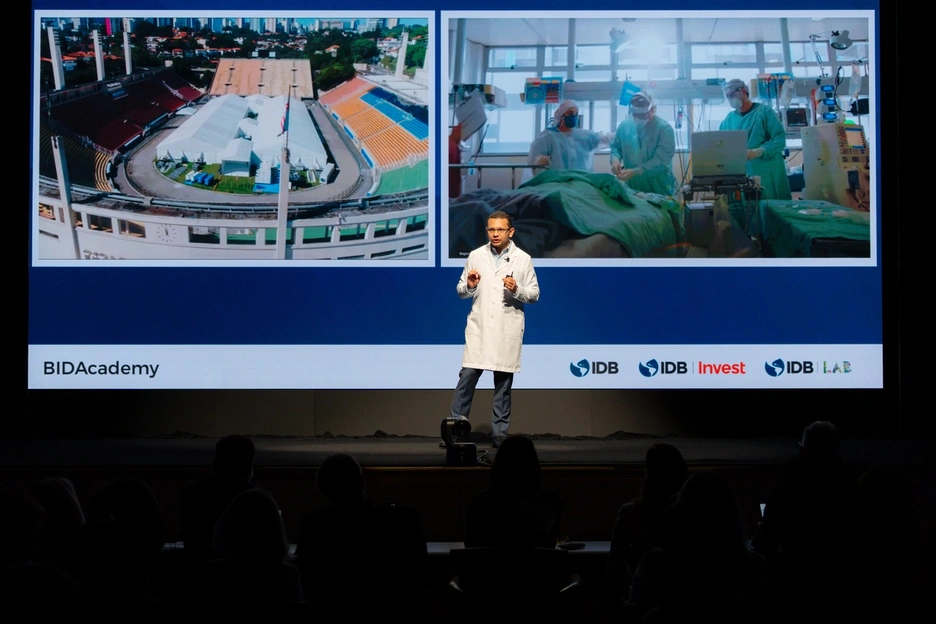
Each year, the IDB Group honors development projects that have overcome significant implementation challenges and generate lessons with replicable potential for Latin America and the Caribbean. In 2025, the Superheroes of Development program honored HIAE as one of the winners. This private, nonprofit organization, founded in 1955, was previously supported by IDB Invest during the COVID-19 pandemic.
The IDB Group’s recognition highlighted HIAE’s private model of managing public hospitals, which offers valuable lessons for strengthening the responsiveness of health systems under high-pressure conditions.
An IDB Invest study analyzed COVID-19 care at two HIAE-managed public hospitals—Hospital Municipal Vila Santa Catarina and Hospital Municipal M’Boi Mirim—from March 2020 to December 2021, comparing their performance to the rest of São Paulo’s public hospital network.
The main finding: during peak contagion periods, when the city-wide hospital bed occupancy rate exceeded 90%, the probability of surviving severe COVID-19 symptoms was, on average, 10% higher at the Einstein network’s public hospitals.
IDB Invest’s methodological model calculates that HIAE’s management of public hospitals saved at least 70 lives during the pandemic. In addition to the two public hospitals, HIAE’s operational scope during the health emergency included two temporary hospital units installed in a stadium, alongside its two private hospitals.
What Made the Einstein Hospital Network Stand Out?
Preparedness
Several weeks before Brazil reported its first COVID-19 case, during the Rio Carnival, HIAE had already initiated a comprehensive preparedness plan. This included acquiring ventilators, expanding intensive care units, hiring additional staff, establishing new protection protocols, and increasing overall hospital capacity.
Hospital Capacity Expansion
HIAE rapidly increased the number of beds in the public hospitals under its management, from 423 to 1,146 between 2019 and 2020. In its two private hospitals, the number of beds rose from 592 to 626. This expansion was supported by a $37 million loan from IDB Invest, granted in mid-2020.
Extended Hospitalizations
The increase in installed hospital capacity gave the Einstein network greater flexibility to admit severely ill COVID-19 patients into intensive care units. This capacity also allowed longer hospitalization times, which proved essential for the most serious cases.
Lessons Learned
HIAE’s private management of public health infrastructure during the pandemic offers several key lessons:
The importance of early preparedness and timely access to private financing during health emergencies.
The contribution of private management to improving service quality in the public health network.
A flexible model for managing hospital beds during times of stress on the health system.
For saving dozens of lives and generating lasting benefits for the public health system, the doctors, nurses, and administrative staff of Hospital Israelita Albert Einstein in São Paulo are true development superheroes. IDB Invest is proud to have supported them during one of the most critical periods of their mission.
Authors

Cristina Simón
Cristina leads the Social Infrastructure Team at IDB Invest, which she joined in 2018. She is responsible for developing strategies and business plans, and for client management and structuring of transactions in the health and education sectors in Latin America and the Caribbean. Before joining the IDB Group, she worked at Deloitte for ten years in Colombia, Brazil and Spain as Director of Infrastructure Finance and Public-Private Partnerships and Director of Infrastructure Advisors. She previously worked at PricewaterhouseCoopers in the Infrastructure, Government and Public Services Department in Madrid, Spain. Cristina earned a master’s degree in corporate finance and investment banking from Instituto de Estudios Bursátiles (IEB) in Madrid (Spain) and a professional degree in business administration and Management from Universidad Complutense de Madrid (CUNEF) (Spain).
LIKE WHAT YOU JUST READ?
Subscribe to our mailing list to stay informed on the latest IDB Invest news, blog posts, upcoming events, and to learn more about specific areas of interest.
SubscribeGender
Related Posts
Digital Innovation Expands Financing for Women-Led SMEs in Latin America and the Caribbean
Loans and disbursements approved in less than 24 hours, enabled by artificial intelligence, and early invoice payments powered by fintech solutions are transforming access to credit for MSMEs, especially those led by women.

Fixing the Broken Rung: How Data Can Help Advance Women’s Careers in Latin America and the Caribbean
In Latin America and the Caribbean (LAC), the greatest disruption in women’s career progression occurs during the transition into managerial roles. A collaboration between IDB Invest and LinkedIn, within the framework of the Development Data Partnership, uses large-scale labor-market data to identify where women’s participation declines and what barriers exist across sectors and career stages.

Addressing gender-based violence from the private sector: the experience of Laboratorios Bagó
Francisco Méndez, CEO of the pharmaceutical company, shares his company's efforts and achievements in fostering an inclusive and safe work environment.