Plastics and Sustainability... An Unlikely Partnership
While sustainability and plastics may seem like opposing concepts, a company’s experience in Haiti shows that they are indeed complementary, as long as recycling and cleaner production are part of the equation.


Plastic is everywhere. It’s so integrated into modern life —used to make cars, planes, medical devices, buildings, clothing, and much more — that we don’t even see it. Plastic waste on the other hand is quite visible.
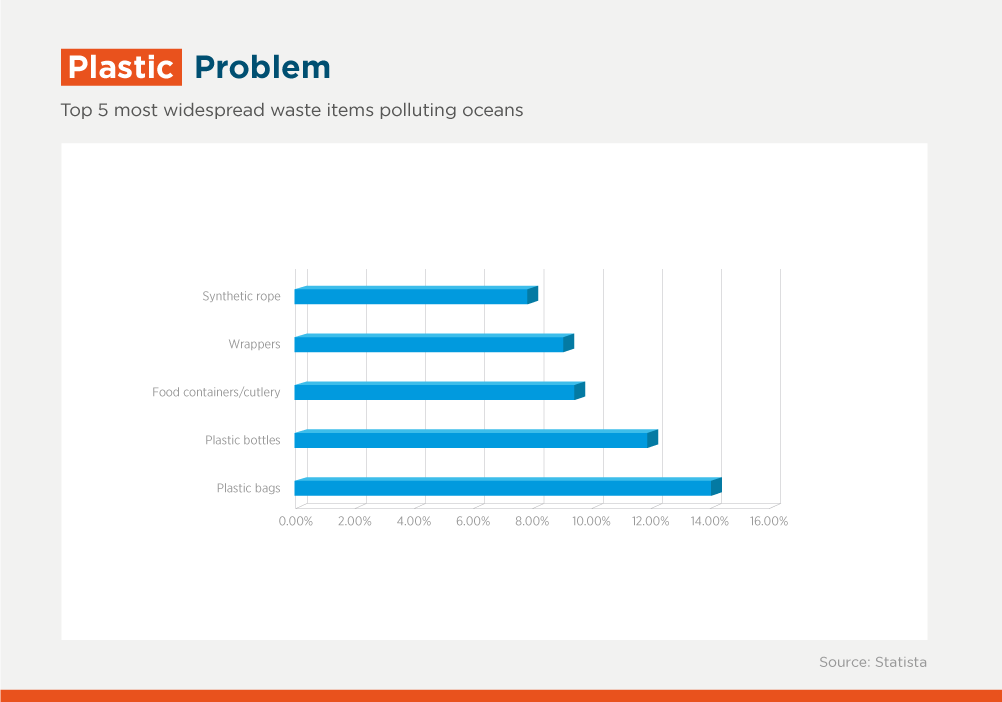
Three-hundred and eighty million tons of plastic are produced every year globally. Almost half is single-use plastic, utilized only for a brief moment, and just 9% of total plastic is recycled. Over 10 million tons of plastic are dumped into our oceans every year. Plastic shards in Caribbean waters represent approximately 80% of local litter, and Haiti has been identified as one of the main sources of ocean-bound plastics.
NGOs and development organizations alike have implemented programs and mobilized funds to combat plastic pollution there, but those efforts are not enough. Engaging the private sector is key to addressing this growing problem. That is why local companies such as plastic manufacturer Plastech are part of the solution.
The company is not only increasing its plastics recycling capacity but also cleaning up how it produces plastic goods to begin with.
Founded in Haiti in 2003, Plastech produces a variety of plastic items, including bottles and caps, buckets and pails, containers and PET (Polyethylene terephthalate) preforms, among others. These preforms are a fundamental product in the plastic value chain, as they are intermediates product that can be later shaped into all sorts of plastic containers.
From its inception, Plastech focused on items that were not produced in Haiti, thereby developing local expertise and replacing imports. They have cemented themselves as an integral link in the supply chain of the country’s beverage industry. Additionally, Plastech has expanded its market reach to four clients in Jamaica, with its sights set on further growth into four other Caribbean countries.
From its humble origins, Plastech knew that it was not enough to be just another manufacturer in the Caribbean and sought to make a positive impact on Haitian society. Initially, its energy needs were met using diesel powered generators, requiring between 80,000 to 85,000 gallons of diesel fuel monthly. The first step was to reduce this consumption significantly, which Plastech did by investing in modern technologies that use less energy and raw materials for their output.
The next step was switching from diesel to a cleaner source of energy. The company quickly identified a need for long-term financing, a challenge in Haiti where this type of funding is not available from local banks. In addition, ordinary financing wouldn’t do since Plastech needed a development partner who understood their vision and could help them further strengthen their commitment to generating positive social change.
This is where IDB Invest came in with a loan to finance a major capacity expansion, coupled with higher production efficiency through recycled raw material inputs and decreased use of fossil fuels. Additionally, Plastech employees received training that aimed to enhance the recycling supply chain in Haiti.
A key takeaway from the Plastech experience is that the private sector plays a pivotal role in the fight against pollution. Currently, the company has a fully operational recycling plant capable of cleaning and processing the materials to be recycled, one collection point, and a pipeline of approximately 40 suppliers of plastics. Between 2019 and 2021, Plastech recycled a total of 3,606 metric tons of plastic. The company’s vision is to incorporate these recycled materials into their products.
In the area of energy consumption, Plastech was able to replace diesel fuel with Liquified Natural Gas (LNG). By making this switch, as of 2021, the company had avoided the emission of 20,680 tons of carbon dioxide that would have otherwise been released into the atmosphere had they continued to use diesel fuel.
For more on the impact achieved by Plastech, see this Client Impact
This blogpost is published in connection with IDB Invest Sustainability Week 2022, to be held between June 28 and July 1 in the city of Miami. Learn here how to register to participate, either in person or virtually.
Authors

Denesh Baboolal
Denesh Baboolal is a Development Effectiveness Officer in the Development Effectiveness Division stationed in the Jamaica Hub. He works on transactions in the Small and Island (S&I) Countries, ensuring that IDB Invest operations promote social and economic benefits. Denesh has also worked as an Operations Consultant in the Country Office of Trinidad and Tobago, the Gender Diversity Division and IDB Lab. He has a degree and master’s in economics from the University of West Indies, St. Augustine Campus.
LIKE WHAT YOU JUST READ?
Subscribe to our mailing list to stay informed on the latest IDB Invest news, blog posts, upcoming events, and to learn more about specific areas of interest.
SubscribeTransport
Related Posts

Xochi, a Path of Flowers to Alleviate Traffic Woes in Guatemala
In a country where gridlocks are a part of daily life, a private toll road built to international standards drastically reduces travel time, empowers local communities, and innovates in more than one way for a project of its kind.

Next Stop for Electric Buses: What Do We Do with the Batteries?
This type of vehicle is becoming a key option compared to diesel to reduce emissions in public transport. The challenge, however, is to find effective ways to extend the life of the batteries and recycle their components.
Is Bikesharing The Future of Latin America’s Cities?
Micromobility solutions, such as shared bikes and scooters, have gained significant traction in cities worldwide, with Latin America witnessing a surge in their adoption. These alternatives to car usage promise reduced emissions, reduced congestion, and decreased parking space demands in urban centers.