
What can Latin American countries learn from Korea in energy efficiency?


[caption id="" align="alignleft" width="457"] Korea in energy efficiency[/caption]
Korea achieved its economic growth with strong leadership from the public sector and an innovative approach from the private sector. It is considered a development model for many other developing countries and makes an interesting case study for development institutions. But in addition to its traditional growth, Korea has shown leadership in the area of green growth in recent years. One recent project supported by the IIC leveraging Korean expertise has helped 30 Bolivian and Central American companies save energy and reduce greenhouse gas emissions. The project is part of the GREENPYME program, which boosts energy efficiency in Latin America and the Caribbean through energy audits and workshops for private businesses as well as a scholarship program for future energy auditors. Energy audit reports provide several measures that can help companies cut their electricity bill. They also include advice on how to improve demand-side energy management.
Korea is in many ways similar to several countries in Latin America and the Caribbean, as it heavily relies on imported energy sources. This energy dependence inspired the Korean government to reinforce energy efficiency policies across the country, and particularly in the private sector, through the Korea Energy Management Corporation (KEMCO). The public agency fosters a more efficient use of energy resources and supplies technologies for the development of new energy sources.
KEMCO joined a network of international energy efficiency stakeholders in 2012 and provides detailed energy audits to big energy consumers, trains local energy auditors, and promotes energy efficiency through workshops and seminars. In Bolivia,a joint energy audit project completed in July of this year identified a wide range of opportunities for six companies to use energy more efficiently, leading to combined annual energy savings of 30% – a total of up to 210 GWh which will save $1.1 million annually.
Hopefully this is just the beginning. There are several other areas where Korea’s experience can contribute to boosting green growth in Latin America and the Caribbean. Korean companies with world-renowned green technology already expressed their interest in expanding their business beyond their traditional markets at a recent B2B forum aimed at linking business communities from both regions. In the context of the IIC’s and IDB’s next annual meeting in Busan, Korea, in March 2015, these projects and collaborations provide solid proof that the geographical distance between Korea and the LAC region should not be a barrier when it comes to learning how to improve energy efficiency in our private sector.
* Narae Lee joined the Inter-American Investment Corporation (IIC) in 2009. She manages the Greenpyme program, IIC’s innovative energy efficiency and GHG reduction initiative for the private sector, and also actively writes and advocates for solutions to climate change.
Escrito por

Autor invitado
¿TE GUSTA LO QUE ACABAS DE LEER?
Suscríbase a nuestra newsletter para mantenerse informado sobre las últimas noticias de BID Invest, publicaciones de blog, próximos eventos y para obtener más información sobre áreas específicas de interés.
SuscribirseDevelopment Impact
Posts Relacionados

Impulso a las pymes argentinas: financiamiento para capital de trabajo e inversión
BID Invest refuerza el apoyo al sector productivo de Argentina mediante financiamiento a largo plazo e instrumentos de factoraje inverso que permiten anticipar el cobro de facturas y mejorar la liquidez de las empresas.
Tres aprendizajes de nuestro Informe de Impacto 2026
Conoce los resultados de impacto en el desarrollo de la cartera de BID Invest.
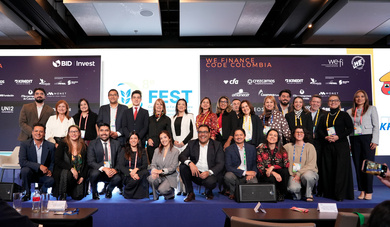
WE Finance Code Colombia: datos y alianzas para ampliar el financiamiento a empresas lideradas por mujeres
Las entidades del ecosistema financiero de Colombia unen esfuerzos para ampliar el acceso al crédito de las mujeres empresarias mediante datos, colaboración y soluciones financieras adaptadas a sus necesidades.