
Sustainable BusinessRecent posts
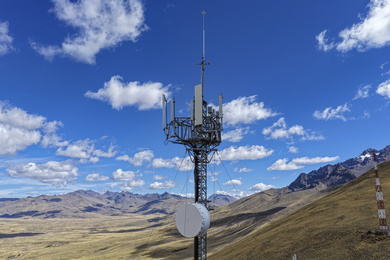
The Towers We Don't See and the Economy We Can't Live Without
IDB Invest finances telecommunications tower infrastructure across Latin America and the Caribbean, helping expand connectivity and support 5G network growth.
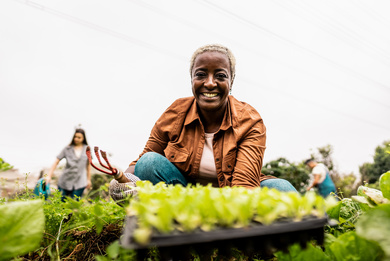
How Santander Brasil and Eco Invest Mobilize Private Capital at Scale
IDB Invest provides financing to Banco Santander Brasil to support sustainable agriculture, land restoration efforts, and resilient infrastructure.

The AI Factory: Latin America's Next Big Industrial Revolution
Latin America’s window to build AI infrastructure at scale is opening, supported by its diverse energy matrix and growing digital demand.

How to attract more private capital to PPPs
As an engine of economic growth and poverty reduction, PPPs are on the rise in Latin America and the Caribbean (LAC). In the last decade, there were approximately 1,000 PPP infrastructure projects valued at $360 billion. Especially, in our current market of constrained fiscal budgets and deep social inequalities, PPPs have become more relevant than ever. Despite this historic uptick, many projects cannot mobilize sufficient private capital. PPPs crowd-in approximately one dollar of commercial finance for every dollar of public finance – a 1:1 ratio which has failed to close the infrastructure funding gap. On the supply side, institutional investors hold funds equivalent to 20 percent of the region’s GDP - a compelling figure when we seek an additional 2-2.5 percent of GDP to meet demand. Managing long-term assets like pensions and insurance is an ideal match for the long-term tenors of PPP projects. In addition, PPPs offer investors relatively predictable repayment schedules, promising financial returns and protection from inflation. In the past, private capital, namely from institutional investors, has been cautious. However the ability to mitigate certain risks is making projects more bankable and piquing investor interest. 1. Legal and regulatory risks Legal and regulatory risks span policies, regulations and institutions. Strengthening them to address market failures, incentivize risk-sharing and regulate consistently reassures investors. Countries are setting up government agencies and units with expertise to supervise PPPs. Advisory services to governments can further strengthen institutions, their regulators and supervisory mechanisms as well as long-term project programming. 2. Project preparation risk Capacity-building combined with the right incentives can mitigate project preparation risk. This can optimize project efficiency, predictability and investor-friendliness. Technical assistance can support project investment plans and share knowledge with public officials at PPP promotion agencies. Supporting investment planning can align PPP development with nationally- determined contributions. This fosters more climate-resilient, sustainable projects. Advisory also allows governments to determine optimal delivery models by conducting value for money assessments to ensure each asset brings value to government agencies, investors and end-users. 3. Foreign exchange risk Most PPPs, except for many in the energy sector, where they are often dollar-denominated, rely on local currency. For a PPP to succeed, avoiding foreign exchange risk is key. Governments are limited in the amount of dollars they can guarantee. Mobilizing local currency allows local borrowers to repay in the currency they are generating cash flow, avoiding mismatches. Currency risk can be mitigated by investors setting up local treasuries to issue debt in local currencies or by providing local currency guarantees project-by-project. 4. Construction risk Construction risk includes expropriation, geological and additional exposures to loss during the construction phase. Investors prefer to invest in PPPs only once construction is complete. However, de-risking projects through liquidity facilities, blended finance, subordinated debt and completion guarantees, which cover construction risk and up to the first 24 months of operation, can bring further comfort and incentivize early entry. Multilateral development banks are uniquely positioned to offer many of the solutions that address legal, regulatory and project preparation risks. IDB Invest (formerly known as Inter-American Investment Corporation), on behalf of the IDB Group, recently mitigated risks and attracted institutional investors in the Reventazón hydropower project in Costa Rica and Campo Palomas and Colonia Arias wind farms in Uruguay. The next phase seeks to bring institutional investors to PPPs and at construction phase. Besides, we can lend in local currency, as we are currently doing in Paraguay, Brazil, Colombia and Mexico, and we can also deploy guarantee and debt instruments to mitigate construction risk. Our in-house experts analyze infrastructure pipelines, support country planning and deploy financial and non-financial products that enhance infrastructure project risk profiles. IDB Invest, on behalf of the IDB Group, recently mitigated risks and attracted institutional investors in the Reventazón hydropower project in Costa Rica and Campo Palomas and Colonia Arias wind farms in Uruguay. The next phase seeks to bring institutional investors to PPPs and at construction phase. As the region’s PPP pipelines continue to grow, we will deploy the solutions to maximize PPP bankability and mobilize more financing. The boost we see in PPPs brings benefits for governments, private firms and the citizens of the countries we serve. [gallery type="slideshow" link="none" size="full" ids="7775,7776,7777"] Subscribe to receive more content like this! [mc4wp_form]
How we incentivize social inclusion through Sustainable Infrastructure? The case of Villa 31
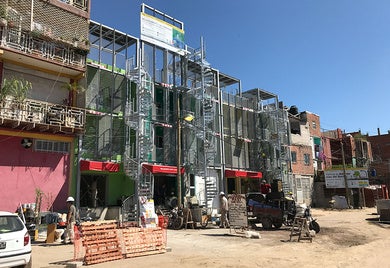
Recently I visited the Villa 31 in Buenos Aires, Argentina. It is a poor and informal neighborhood located at approximately 500 meters from La Recoleta, one of the most sophisticated areas of the Argentinian capital. Despite this proximity, near 45,000 residents at Villa 31 have lived in isolation, not accepted as true “porteños” by their neighbors due to the social and economic characteristic of their community. My hope is that a new development project of sustainable infrastructure in the area changes this scenario. During my visit, I met fantastic people, but I experienced a strong mix of feelings. 20 years ago, I worked on an urban rehabilitation project in Brazil, which provided new homes, electricity, water, and sanitation to hundreds of low income people. By the end of the project, high-level dignitaries from the Government and other entities visited the new homes. One of them approached a woman benefited by the project and asked: “Are you happy? Is your life better?” She looked at him and said: “No, I am much worse off today. Before the project, I lived in a shack, I had no light, no water, no job, but no bills either. Now I have been given this nice house with bills to pay, but I still do not have a job. I do not know what to do”. 20 years after, I still carry this experience with me, even though we have learned a lot about urban development and inclusion projects ever since. The number of success stories has been growing, but its nature remains rather complex and represents a significant challenge to governments, policy makers, and financiers alike. According to an Inter-American Development Bank report: “Poverty-targeted projects that did not include specific objectives to reach excluded populations often reinforced their exclusion”. We must avoid this at all cost and work on the inclusion since the beginning. From Villa 31 to Villa “Thirty and Everyone” Working on sustainable infrastructure is not only about building new houses, but to improve the entire ecosystem around them to mobilize more human and economic resources that help people to break the poverty cycle. Villa 31 is not an isolated case. In Latin American and the Caribbean cities, informal areas can concentrate up to 50% of its habitants, and according the estimates, these number will keep rising. Development processes must include habitants’ perspective. Local communities have a voice, and the fact that we are listening to them makes a huge difference in terms of long-term acceptance, appropriation and viability. During my days at the Villa, I saw the construction taking place and the physical infrastructure being implemented. The work on water, sanitation, accessible roads, energy and electrified systems at Villa 31 is allowing its inclusion into Buenos Aires. More importantly, I saw people smiling and the pride on their eyes not only for the new structures, but for having a voice and being really included. So much that the initiative has been called Treinta y Todos (“Thirty and Everyone”) by Horacio Rodríguez Larreta, Buenos Aires city Mayor. This project has renewed people’s belief that their children would have the opportunity to live a different and better life, which is an essential success factor in such complex situation. Walking the talk at the Villa The feeling when leaving Villa 31 was completely different to what I felt 20 years ago, after our conversation with that woman in Brazil. I saw a high sense of trust and hope, so high that residents are already investing their own capital on improving their homes and establishing new business, such as: restaurants or beauty shops. Complementary initiatives like these are key, considering near 70% of the urban population of Latin America and the Caribbean works in the services sector, according UN-Habitat. A new socio-economic dynamic is developing, and some important external factors are fueling the process forward. The decision to establish a major government office building from the Education Ministry at the Villa provides a strong signal. However, it is not the only one. At the Inter-American Development Bank Group (IDB Group) we firmly believe in ‘walking the talk’, and the construction of the new Argentinian representation in Villa 31 shows it. This is a bold sign of commitment to the country and, more importantly, to the people. As part of the IDB Group, IDB Invest (formerly known as Inter-American Investment Corporation) is mobilizing resources and creating financial tools to stimulate private investments on these projects. Other public and private institutions should learn about the changes at the Villa, and hopefully decide to stand up and support this process too. [gallery type="slideshow" link="file" size="full" ids="7752,7753,7755,7757,7758,7759"] Subscribe to receive more content like this! [mc4wp_form]

The power of baby wipes to promote breastfeeding
How a US$4 million loan to a baby wipes producer in the Dominican Republic can help address infant health.
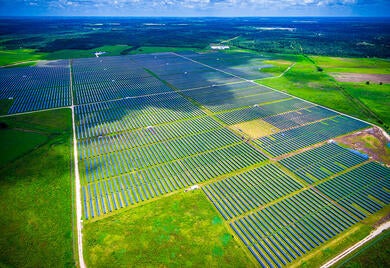
Four countries leading in solar in Latin America and the Caribbean
Nearly half of the global electric power capacity could come from solar energy by 2025, according to McKinsey & Company. Multiple Latin American and Caribbean countries, benefitting from exceptional resources and evolved regulatory frameworks, have seen rapid growth in solar energy in the last few years. Utility scale projects are now considered commercially viable and receive private financing, while the application of distributed solar is growing quickly. However, falling solar prices are squeezing the industry, and macroeconomic uncertainty will continue to test its strength. Meanwhile, developers are now consolidating to gain market share and achieve profitability.

Three Trends in Sustainable Finance across LAC
2017 could be another record year for green investment products as the issuance of green bonds globally is forecast to rise to $206 billion, twice the volume from 2016. This shows how in the last few years, the finance sector has taken serious interest in sustainability’s potential to deliver profit, even though the benefits of environmental and social management have long been understood.
Four reasons why the Caribbean private sector must invest in renewables
In the Caribbean, the year-round sunshine and extremely favorable insolation levels have not been enough to spur significant investments in renewable energy. Now, a year after the signature of the Paris Agreement, investments in solar energy seem more appealing than ever before, mainly due to four reasons:
