
Helping Brazil to Cut Down on Water Losses
Brazil, a country with abundant water resources but also significant regional imbalances when it comes to access to clean water and sanitation, has surprisingly high rates of water losses. A new fund seeks to fund the fight for an efficient use of water and energy.


Brazil, a country with abundant water resources but also significant regional imbalances when it comes to access to clean water and sanitation, has surprisingly high rates of water waste.
Even though Brazil is home to the world’s largest river, the Amazon, as well as many other large watercourses, the water and sanitation sector is among the least developed in the country, largely as a result of decades of chronic underinvestment. Data from 2021 indicates that Brazil still has great difficulties with sewage treatment, to the point that only just over 50% of waste water is treated.
This means that more than 5,500 Olympic swimming pools of untreated sewage are dumped into nature daily, in Brazil alone.
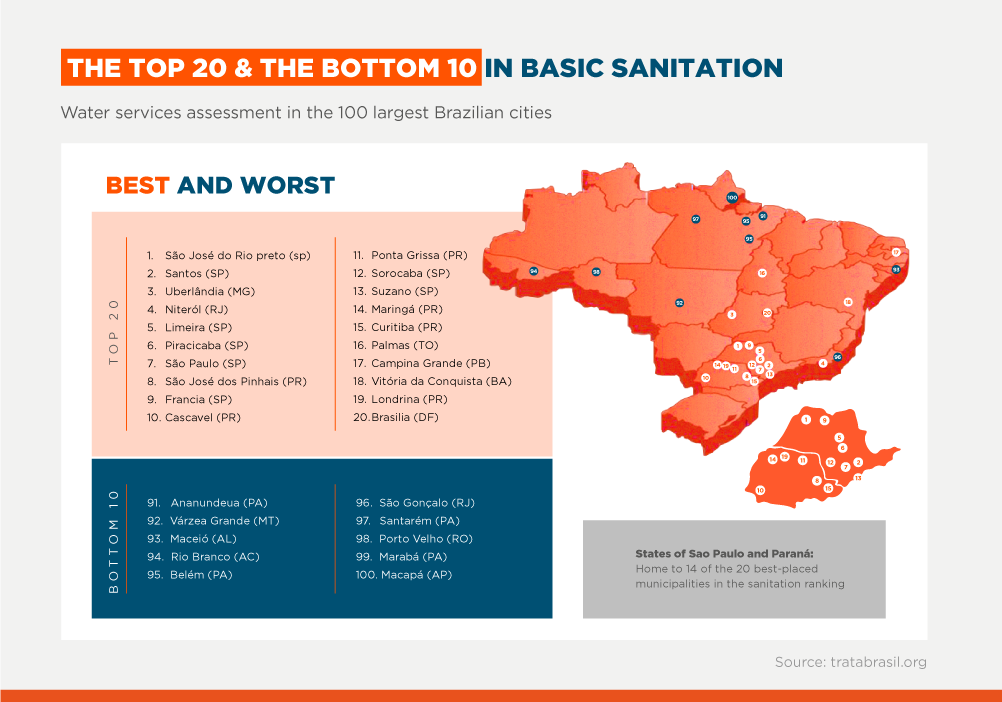
Given this predicament, it’s no wonder that reducing water losses is a key priority for many Brazilian water and sanitation companies, as it can help to conserve precious resources and improve the sustainability of their operations.
According to Trata Brasil Institute ranking, the 100 largest Brazilian cities, which concentrate 40% of the country's population, on average managed to reduce the loss of water in the distribution systems, but there is still much to be done.
Within this universe, there are cities with alarming loss rates in distribution, above 70%, while the national average stands at 40.25%. Many companies are investing in innovative technologies and management practices to reduce water losses and improve the efficiency of their systems, but the role of small and medium-sized enterprises (SMEs) is just as important here.
SMEs are key players in the water and sanitation sector, particularly as subcontractors of large companies, both private and public ones. SMEs often provide specialized services, personnel and equipment that large companies may not have in-house, and they can be an important source of innovation and competition in the sector.
Many of these companies already operate with performance-based contracts, ensuring that the results promised by the contracted company are achieved, since the payment is made based on the effective savings generated by the implementation of the proposed solutions. This means that, if the proposed solutions do not generate the expected savings, the contracted company does not receive full payment. As the key performance indicators used to measure the performance of the contractors are very accurate, they can also be used to scale the social and environmental impact of the initiatives.
However, SMEs operating in the water and sanitation sector may face challenges related to accessing capital to fund such initiatives and also need support to improve their governance in order to be part of this moment of market growth.
IDB Invest supports initiatives in the water and sanitation sector. In this context, a new, innovative water and sanitation fund identified this opportunity and aims to bridge that gap. The fund will first focus on the massive Sao Paulo market before it expands to the rest of Brazil.
The fund will provide financing to SME subcontractors of large water utility companies to develop projects with a specific focus on water loss reduction, energy efficiency and water treatment, and will be managed by a reputable fund manager with extensive experience in the sector.
IDB Invest, together with other investors, has committed up to R$80 million worth of funding, and is also providing technical assistance focused on climate and sustainability, as well as corporate governance for the fund’s SME clients.
Aside from its positive environmental impact, the fund will promote private sector involvement in Brazil’s water and sanitation sector. It aligns with the IDB Group’s water and sanitation approach as it promotes universal access to these basic needs, while promoting private sector participation, efficient service delivery, continuous improvements in sector institutions and governance, and innovation to enhance aspects including efficiency and access.
Authors

Karla Bertocco Trindade
Karla Bertocco Trindade is partner at Jive - Maua Capital, a leading Brazilian asset manager, where she heads the infrastructure division. Karla has more than 15 years of leadership experience in the infrastructure industry in Brazil. In 2019 she served as managing director of the Government and Infrastructure division at BNDES – Brazilian Development Bank, and prior to this she was the CEO of SABESP – São Paulo Water and Sanitation Company (2018), a mixed capital company responsible for providing services to more than 25 million people in the state of São Paulo. She was also Undersecretary for Partnerships and Innovation at the São Paulo State Government (2015-2018), in charge of PPP’s and privatizations in different sectors, and before that, director of Artesp and Arsesp. She joined Maua as partner in 2020 and in 2023 was appointed as President of the Board of Directors of SABESP.

Maria Eduarda Gouvea Berto
Maria Eduarda Gouvêa Berto is an economist with a master's degree in business administration (Pontifical Catholic University – Rio de Janeiro, Brazil). She has more than two decades of professional experience, having worked in the private and public sectors and multilateral organizations. Since 2020, she has worked at the IDB's Water and Sanitation Division in Washington D.C. as a senior financial and institutional specialist. Previously, she worked a consultant for the International Finance Corporation on the PPP advisory team. She has worked for more than a decade structuring public-private partnerships in the infrastructure sectors in Brazil, with a particular focus on financial modeling and project finance. In 2017-2018 she held the position of Finance Secretary of the Municipality of Rio de Janeiro, Brazil. She was also Managing Director of the Brazilian Project Structuring Company (EBP), a partnership between BNDES, Banco do Brasil, Itaú, Santander, Bradesco, Votorantim, Citibank and Haitong with the objective of advising governments on the structuring of projects infrastructure and mobilization of private capital (2014-2016).

Lucas de Beaufort
Lucas de Beaufort is a Principal Investment Officer for the Investment Funds team at IDB Invest, where he invests in private equity funds and multi-sector debt throughout Latin America and the Caribbean. Lucas has more than 25 years of experience in debt and equity in Latin America. Before joining the IDB Group in 2019, he was responsible for raising and investing the Central American Mezzanine Infrastructure Funds (CAMIF I & II) in LAP Latin American Partners. Lucas also served as Head of Investor Relations. He previously co-managed a $1 billion Latin infrastructure fund at EMP Global. Prior to that, he was Investment Officer for Latin America at the Dutch development bank FMO. Lucas completed a Master's degree in Corporate Law from Leiden University in the Netherlands and a Master's degree in International Economics and Latin American Studies from the Johns Hopkins School of Advanced International Studies (SAIS), where he was a Fulbright scholar.
LIKE WHAT YOU JUST READ?
Subscribe to our mailing list to stay informed on the latest IDB Invest news, blog posts, upcoming events, and to learn more about specific areas of interest.
SubscribeSocial Infrastructure
Related Posts

Respect the Environment, Protect People, and Improve Quality of Life: How To Build Green Houses
Developing sustainable and affordable housing for the most vulnerable populations is a major challenge in a changing global context that requires buildings and infrastructure to incorporate climate change mitigation and adaptation measures.

Mobilizing Private Capital for Sustainable Infrastructure
Climate-related investments needed in the region through the end of the decade stand at between $470 billion and $1.3 trillion. Governments are unable to fund such amounts, so they are increasingly turning to the private sector to raise capital and relieve the pressure.

The Silver Economy: from Inclusive Responsibility to Thriving Business
Through the "silver economy", senior citizens are a source of business for the private sector. Financial inclusion of this growing population segment will create opportunities throughout the region.