
Sustainable BusinessRecent posts
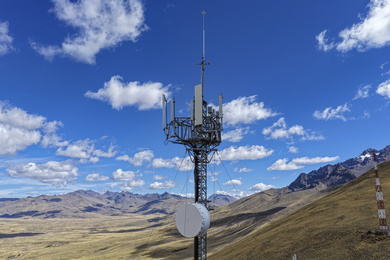
The Towers We Don't See and the Economy We Can't Live Without
IDB Invest finances telecommunications tower infrastructure across Latin America and the Caribbean, helping expand connectivity and support 5G network growth.
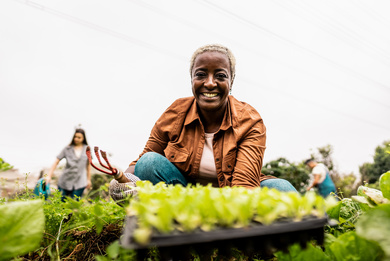
How Santander Brasil and Eco Invest Mobilize Private Capital at Scale
IDB Invest provides financing to Banco Santander Brasil to support sustainable agriculture, land restoration efforts, and resilient infrastructure.

The AI Factory: Latin America's Next Big Industrial Revolution
Latin America’s window to build AI infrastructure at scale is opening, supported by its diverse energy matrix and growing digital demand.
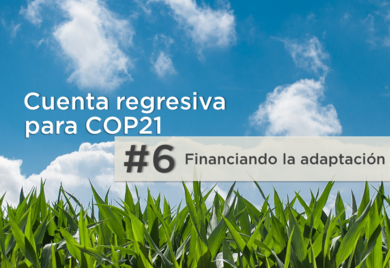
Adaptation matters: the private sector’s role adapting to climate change
At the 21st edition of the annual climate conference (COP 21) in early December, financing commitments by countries will be top on the agenda. Who is paying for what? How much will they pay? And by when will they do so? One major issue of debate in the face of limited resources is how much money should go towards avoiding and reducing GHG emissions – "mitigation" – versus how much should go towards supporting people, businesses and ecosystems to adapt to the effects of climate change.

Every watt matters: Geothermal in Latin America and the Caribbean
[caption id="attachment_2505" align="alignleft" width="440"] Geothermal and COP20[/caption] Latin America and the Caribbean leads the world in renewable energy. Hydropower makes up 60 percent of the generation matrix. Still, there is vast untapped potential for low-carbon energy development. One long-established source of renewable energy that has yet to reach its full potential is geothermal in Latin America and the Caribbean.
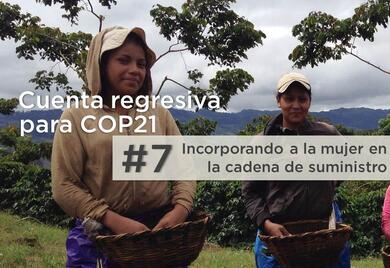
Agribusiness supply chains and climate change: why women matter
By Jimena Serrano and Michaela Seelig Women play a key role in agribusiness supply chains in Latin America. That is why they are essential in the feat to help adapt crops to climate change.
Four reasons to pay attention to the private sector at COP21
The hopes are high for the UN Climate Change Negotiations in Paris at the end of this year. Nothing less than a universal, legally binding agreement to combat climate change is at stake.
Six key steps to become an energy efficiency expert
Energy efficiency is a key part of cutting costs at any business or in any household. That said, do you know how to perform an energy audit or where you can learn how to do so?
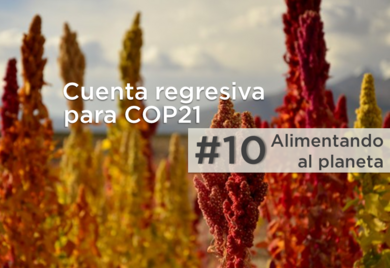
Quinoa: more than a healthy super-food, a super solution to food security
Two years ago, the Food and Agriculture Organization (FAO) declared 2013 the International Year of Quinoa. Before then, it was scarcely found outside of colorful Andean marketplaces except at boutique shops in the U.S. and Europe. Now, many international food companies are embracing quinoa and exporting this super-food from Andean countries like Bolivia, Peru and Ecuador.
