Critical Minerals: Accelerating Investment in Advanced Technologies for Sustainable and Responsible Mining
IDB Invest Report: Leveraging smart mining in Latin America and the Caribbean amid surging global demand for critical minerals.

Global leadership in critical minerals will be defined by productivity, sustainability, and the speed of innovation, not just by reserves. Applying Industry 4.0 technologies – such as artificial intelligence (AI), automation, the Internet of Things (IoT), digital twins, and blockchain technologies – in the mining sector can reduce costs, strengthen operational safety, and make more complex deposits viable. However, digital innovation must be integrated with effective community engagement strategies, transparency, and early participation to ensure the sector's environmental and social sustainability.
The IDB Invest report, "Smart Mining in Latin America and the Caribbean (LAC): Accelerating Investment for Sector Transformation," outlines the competitive advantages of adopting Industry 4.0 technologies to capitalize on the global demand for critical minerals, which could more than double by 2030 and quadruple by 2050.
The region occupies a strategic position in global supply chains for advanced technologies thanks to its abundance of essential resources – such as copper, lithium, nickel, and silver – that support energy diversification and technological development. These mineral resources are fundamental for the manufacture of batteries, electric vehicles, and solar panels, as well as a wide range of digital technologies. Increased competitiveness enhances investor confidence and positions Latin America and the Caribbean to capture more value amid growing global demand for critical minerals.
In this growth scenario, the region's mining sector faces increasing pressure to ramp up production, meet higher sustainability and safety standards, and simultaneously strengthen community engagement and local development. Technological adoption is emerging as a decisive factor for the region's mining competitiveness. Accelerating investment in smart mining is vital to maximize the sector’s social, environmental, and economic benefits.
 The Great Opportunity: A Market of Over $154 Billion
The scale of the key energy minerals market in Latin America and the Caribbean underscores the region's strategic relevance. In 2024, production reached an estimated value of $100 billion in mining and $19 billion in refining. By 2040, these figures are projected to increase to around $130 billion and $24 billion, respectively, driven by the expansion of copper in Chile and Peru, as well as the advancement of copper, nickel, and lithium production and refining in Chile, Argentina, and Brazil.
This growth indicates a significant opportunity to attract investments and expand productive capacity. However, the realization of this potential does not depend solely on the scale of resources or market conditions.
In several countries in the region, social and environmental factors have stalled mining projects, limiting development potential and creating a critical strategic risk. Such delays severely undermine companies’ business cases and operating models, demonstrating that technical efficiency alone is insufficient without social legitimacy.
The lack of proactive, early engagement strategies and effective territorial management leads to a range of costs that impact both operational viability and government tax revenues. As a result, building trust is essential – making the Social License to Operate (SLO) a key factor for attracting investment and adopting new technologies.
Truly smart mining must implement participatory monitoring systems that use digital tools to monitor environmental impacts in real-time, transforming distrust into shared technical knowledge. It is also essential to ensure tangible, measurable benefits for local communities by aligning technical investment with local development priorities and land-use planning.
How can the region capitalize on the technological transformation to increase production, reduce costs, and strengthen sustainability?
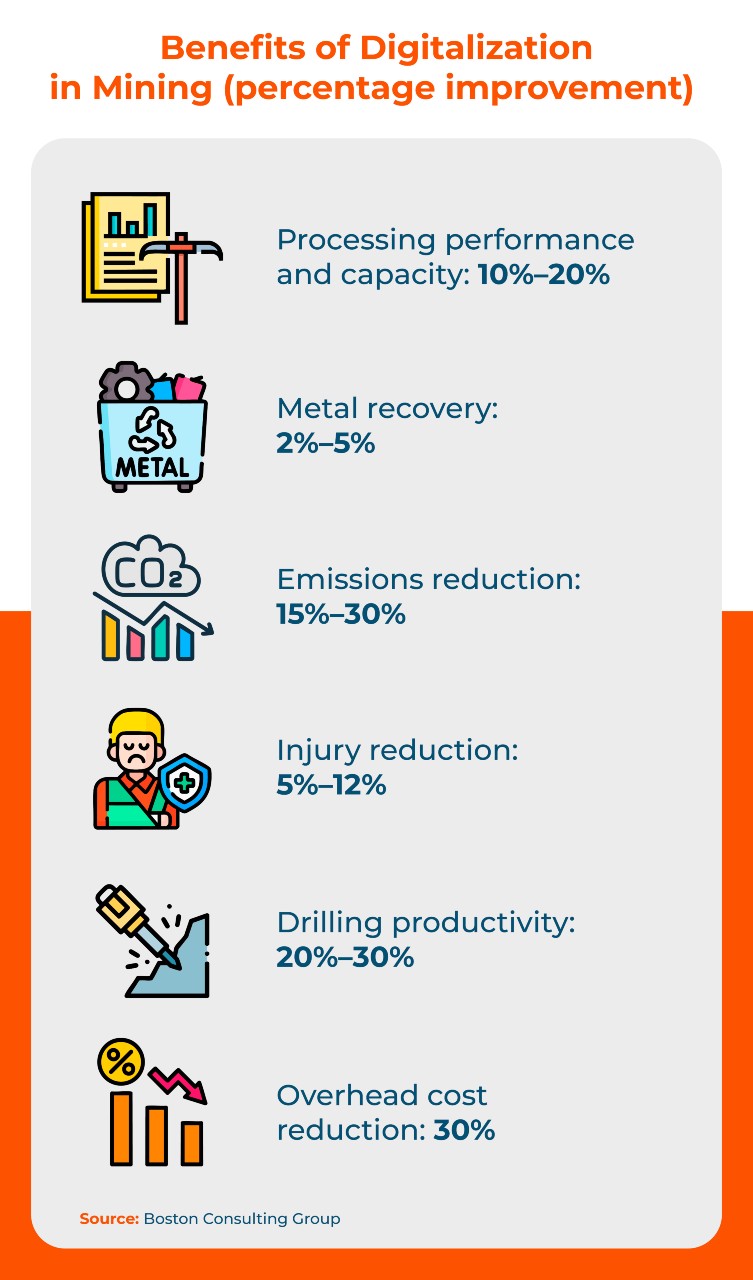
The key is to adopt technological innovations early on – those that boost economic outcomes, minimize environmental and social impacts, and build trust among investors and local communities. By digitalizing operations, mines can raise their rate of return by 10% to 20%, enhance productivity in core activities like drilling by 20% to 30%, and cut overall operating expenses by around 30%.
The countries that move fastest in this transformation will attract more investment and secure a stronger position in global mining value chains.
Competitive Advantages and Key Trends in the region
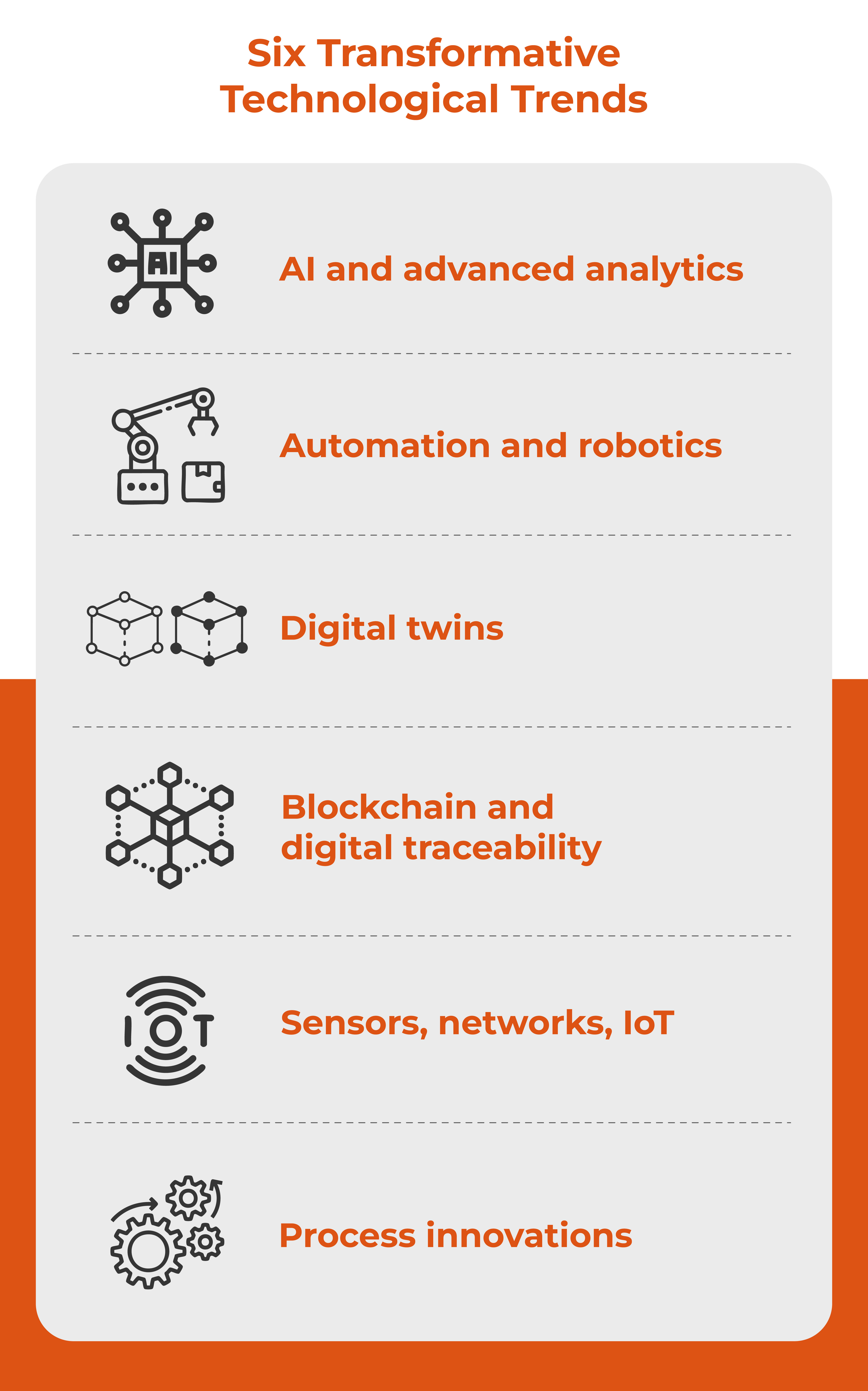
The adoption of advanced technologies is already transforming mining extraction and processing across Latin America:
AI and Advanced Analytics: Harnessing these technologies allows mining companies to process large volumes of operational data and make faster, more informed decisions. These efficiency gains reduce operating costs and enable the development of deposits that were previously considered unviable. For instance, BHP leverages AI at the Escondida mine in Chile to optimize copper recovery, reducing water and energy consumption.
Automation and Robotics: Autonomous vehicle fleets, such as Vale’s more than 90 self-driving trucks in Brazil that remove workers from high-risk areas, increase productivity, and enhance workplace safety.
Digital Twins: These virtual models enable operators to anticipate failures and coordinate predictive maintenance, as Anglo American does in Quellaveco, Peru.
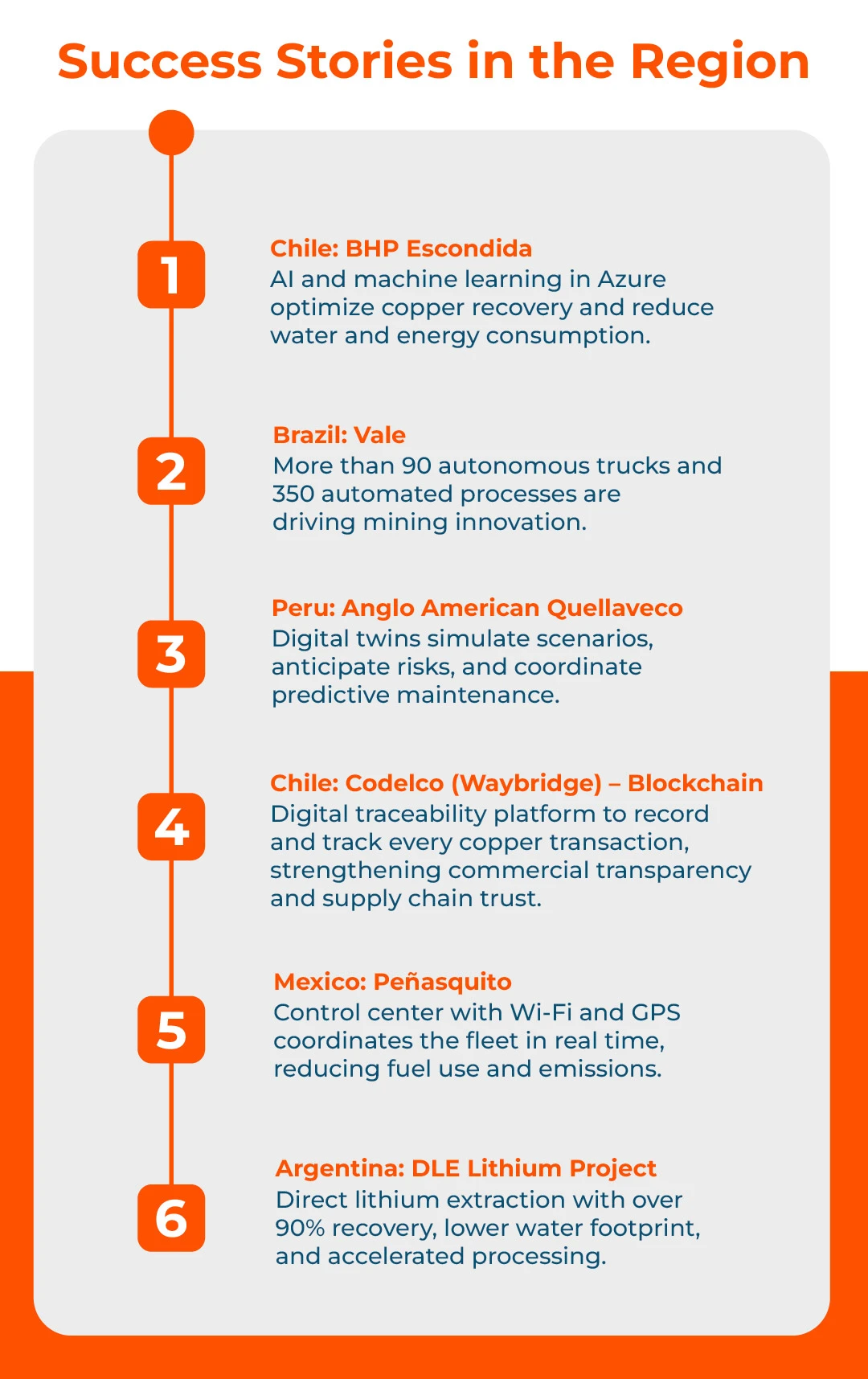 Sensors, Networks, and the IoT: These technologies significantly improve operational efficiency and safety by providing real-time monitoring capabilities. At the Peñasquito mine in Mexico, digital integration of these tools has led to better fleet coordination, lower fuel consumption, and more efficient loading cycles.
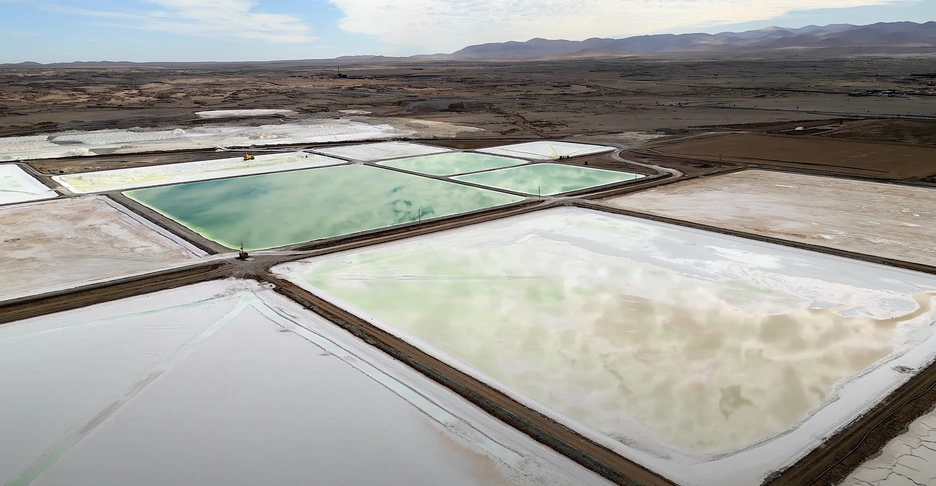
Process Innovations and Sustainability: Direct lithium extraction (DLE), as used in the Andean salars of Argentina, allows lithium to be produced with significantly less water, quicker processing times, and eliminates solid waste. In Chile, seawater desalination and the electrification of copper-mining fleets are driving greater operational efficiency and advancing environmental sustainability.
Beyond Efficiency: Governance, Traceability, and Digital Trust
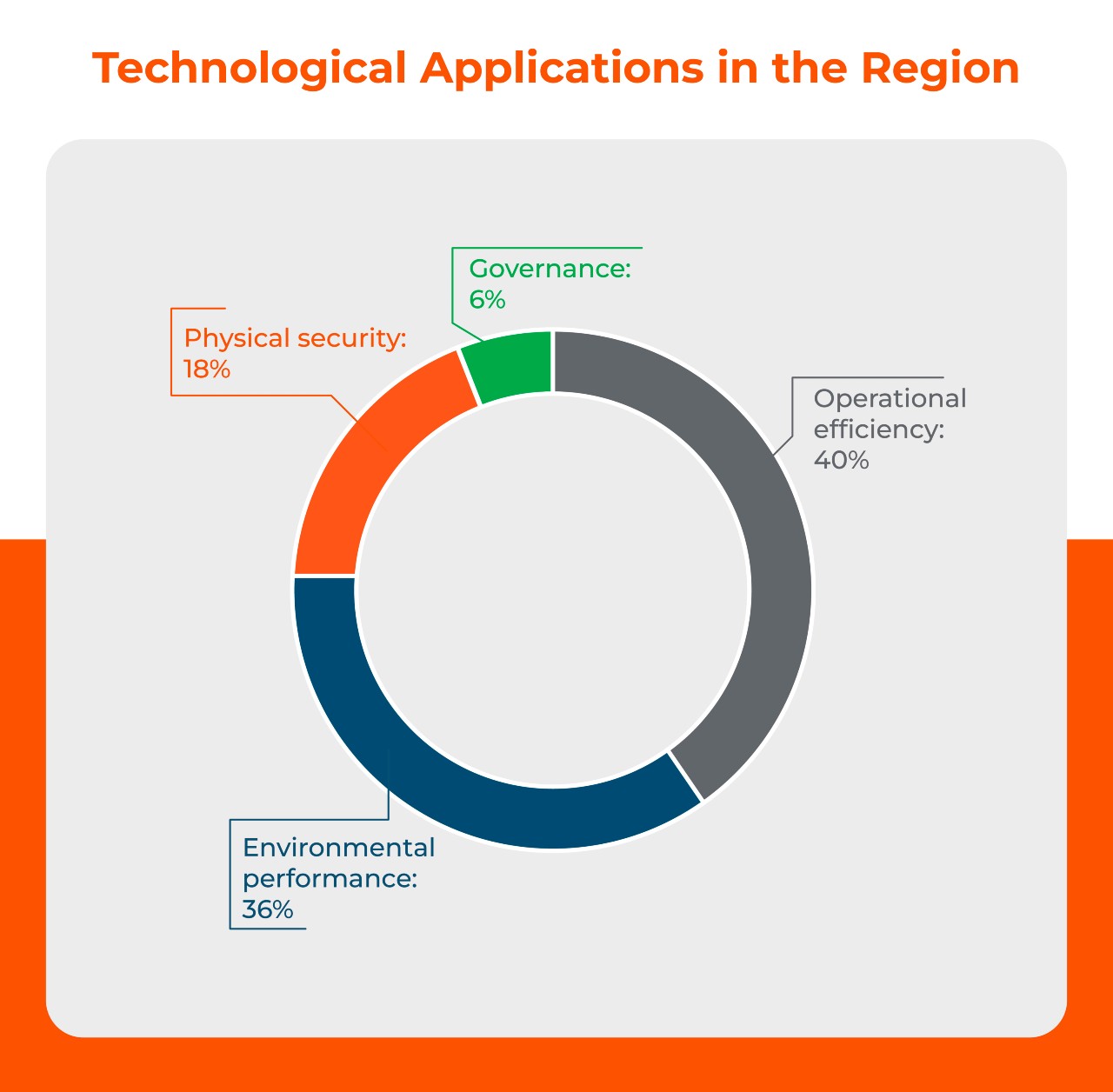
A review of technology initiatives across Latin America and the Caribbean reveals that most projects focus on boosting operational efficiency (40%) and enhancing environmental performance (36%). However, only 6% of these solutions are dedicated to strengthening governance frameworks.
This lack of emphasis on digital governance presents a strategic vulnerability. To unlock the full value of technological transformation, it’s vital to reinforce governance structures that address the ethical, operational, and cybersecurity risks brought by digitalization.
Blockchain-powered traceability is enhancing commercial transparency and regulatory compliance in the mining industry. For example, Codelco in Chile utilizes the Waybridge platform from MineHub to manage its global refined copper business, ensuring robust traceability, transparency, and auditability throughout the supply chain.
To address challenges like inadequate infrastructure and gaps in governance, it is critical for mining companies, governments, and local communities to work together. This collaboration is essential to promote responsible extraction that respects both the environment and local interests.
A Call to Immediate Action
Embracing digital transformation is the pathway for Latin America's mining sector to boost productivity, enhance environmental standards, and become a global leader in responsible mining.
With an anticipated market exceeding $154 billion, widespread adoption of smart technologies is not just an option—it’s vital for attracting investment, improving competitiveness, and ensuring both social and environmental sustainability. The pace at which these technologies are adopted will determine the region’s ability to seize this opportunity and deliver sustainable growth with tangible benefits.
Authors

Adriana M. Valencia J.
Adriana M. Valencia is the Energy, Water and Sanitation, and Climate Change Officer in the Strategic Planning and Knowledge Division of IDB Invest, the private sector institution of the Inter-American Development Bank Group (IDB). Adriana has more than 15 years of international development experience in energy and environmental issues. Prior to joining IDB Invest, Adriana served as an energy specialist in the Energy Division of the IDB. Adriana joined the IDB in 2010 and has participated as a team leader/co-team leader in several innovative initiatives and projects. Adriana has contributed to devising strategies with countries and guidance documents for different sectors to achieve development goals in 26 countries in Latin America and the Caribbean. Prior to joining the IDB, Adriana worked on sustainable energy, environment, and climate change issues at the World Bank and other entities at the country, state, and city levels. Adriana has published and spoken at several conferences. Her academic background includes a Ph.D. and a Master of Science in Energy and Resources from the University of California at Berkeley.

Fabián Montemiranda
Fabián is a consultant in the Strategy, Planning, and Synergies Division at IDB Invest, where he develops strategic analysis focused on mobilizing private capital in Latin America and the Caribbean. He has also worked with the Inter-American Development Bank (IDB) in the Infrastructure and Energy Division, supporting the structuring of projects in water, sanitation, and energy. Before joining the IDB Group, he served as director of structuring and investment banking at Colombia’s National Development Finance Institution (FDN), where he contributed to the structuring and financing of infrastructure projects and public‑private partnerships (PPPs) in strategic sectors such as transport and energy. He has more than 13 years of experience in project finance, investment banking, corporate finance, and mergers and acquisitions transactions. He holds a bachelor’s degree in finance and international business and a master’s degree in finance from the University of the Andes.
LIKE WHAT YOU JUST READ?
Subscribe to our mailing list to stay informed on the latest IDB Invest news, blog posts, upcoming events, and to learn more about specific areas of interest.
SubscribeAgribusiness
Related Posts
Korea's Cutting-Edge Innovations to Transform Agribusiness in Latin America and the Caribbean
Discover how IDB Invest connects regional agribusinesses with leading innovators in Korea to accelerate smart agriculture, agritech, and sustainable growth.
Digital Transformation Redefines Agricultural Competitiveness in Latin America and the Caribbean
Every time an agricultural company determines when to irrigate, selects what inputs to apply, or decides how to market or transport its production, the use of data and technological solutions becomes a key competitive advantage.

Combating Multidimensional Poverty from the Private Sector Requires Much More Than Jobs
For Danper, a leading Peruvian company in the global agri-food sector, understanding the living conditions of its workers and their families is fundamental to strengthening actions to improve their quality of life.