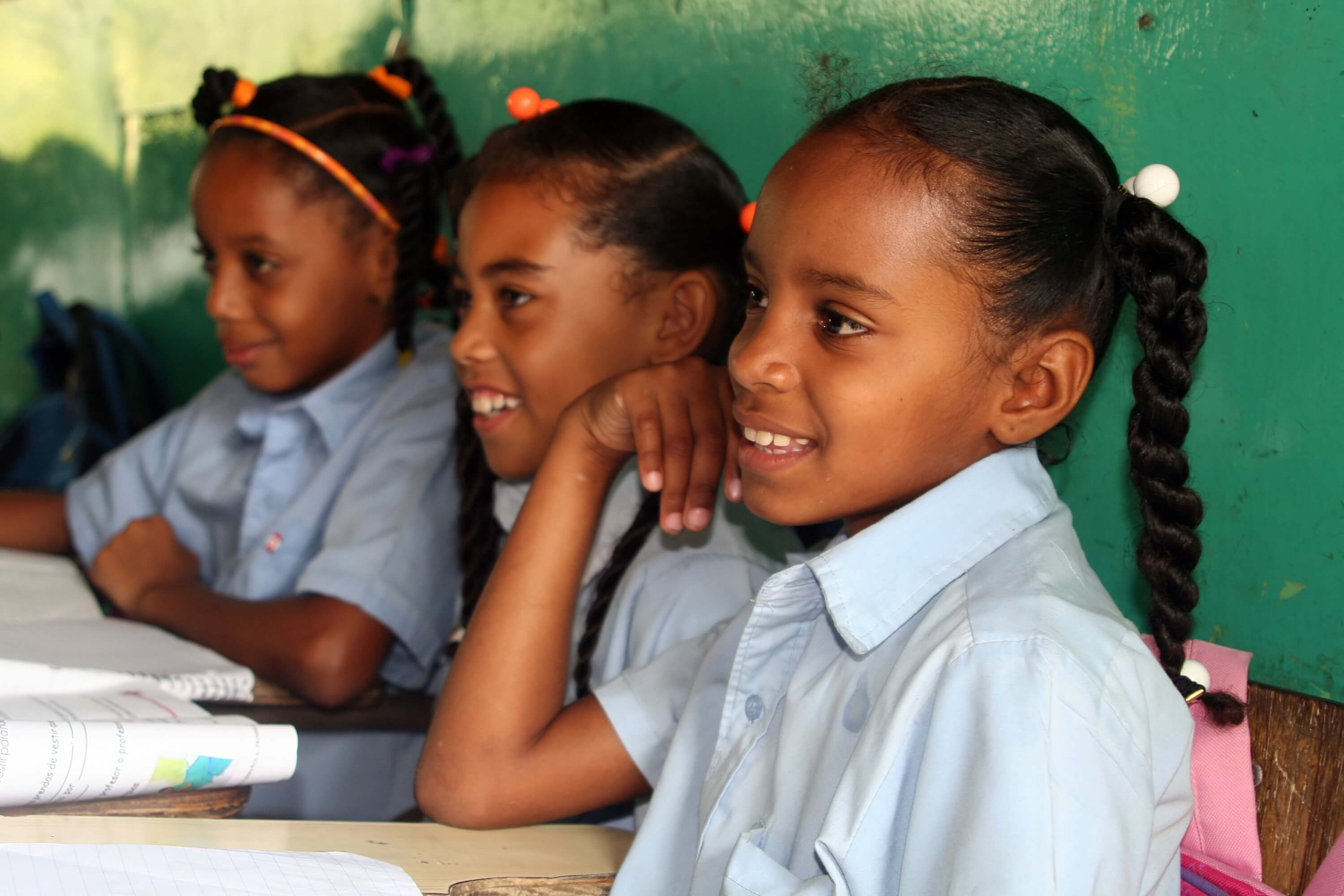
Guide to a Blue Economy that Benefits Communities in the Caribbean
Besides having a positive environmental impact and protecting the natural capital, the use of ocean resources by the small island developing States in the Caribbean should also foster inclusive growth, fair employment, and community well-being.


The ocean is a vital resource for the small island developing States in the Caribbean, as 70% of their population lives along the coast and depends on it for subsistence and income.
Moreover, their ocean territories range from 0.1x to over 50x larger than their land mass – offering the potential for significant development of the blue economy.
Additionally, the value of ocean assets in the Caribbean has been declining rapidly due to destroyed reefs, rising sea levels, hurricanes, floods, and other weather impacts, and excessive coastal development compounded with ocean pollution.
Therefore, the blue economy in the Caribbean is of high significance. The IDB and IDB Invest define the blue economy as the sustainable use of ocean resources, lakes, and rivers for economic growth, improved livelihoods and jobs, and ocean ecosystem health.
Expanding blue economy opportunities can create jobs, alleviate poverty, create inclusive growth, and improve infrastructure, but it is important to address any social trade-offs or adverse impacts and actively promote more inclusive business models.
Measuring Impact
While environmental metrics for the blue economy have received significant attention in recent years, the social impact of the blue economy has not had as much of a focus.
Understanding the specific social indicators that deserve attention and analysis is necessary to assess the full picture—both the environmental and social impacts.
Related Content
Negative screening indicators can be used to establish a minimum set of criteria which need to be met to ensure that investment in the blue economy does no harm. While positive screening indicators can be used to identify where an investment may deliver enhanced social impact.
As a result, gathering information across a range of social indicators, can help to ensure that blue economy investments not only provide environmental benefits, but also offer opportunities to create tangible benefits for local communities and wider stakeholders.
Guided Investment
The Caribbean basin has a mixed, vibrant culture and unique social demographics, which require specific consideration to ensure that the blue economy ensures that no one is left behind or pushed behind in the transition to an environmentally sustainable economy.
IDB Invest, in partnership with Finance Earth, has developed a set of social indicators to guide investment in the blue economy.
The key issues in the design of the proposed blue economy social impact indicators, grouped across the following areas:
- Employment and Working Conditions: The seasonality of employment in the Caribbean deserves careful consideration across multiple sectors, including tourism and fishing.
- Community Benefit and Cultural Preservation: The Caribbean is home to a range of cultures and backgrounds, including indigenous communities, and it is crucial to respect their rights and interests and incorporate these in project development and ongoing business operations across blue economy sectors.
- Socioeconomic Opportunities: The level of access varies widely across sectors and countries, higher in some and lower in others.
- Governance: Robust governance is crucial to ensuring a fair distribution of the blue economy's benefits among sector participants.
Social Indicators
The guidance includes a range of social indicators that apply across multiple sectors and geographies, covering critical areas such as fair wages, job security, vulnerable populations, and community engagement – beyond just being relevant for the blue economy.
You May Also Like
- Five Good Reasons to Ride the “Wave” of Blue Bonds
- IDB Invest Champions Costa Rica's Inaugural Blue Bond
The indicators can be measured through a mixture of qualitative and quantitative metrics.
Corporate entities and financial institutions can use the indicators to provide a first filter through negative screening (compulsory minimum requirements) and positive screening focused on driving community impact in the Caribbean.
Informed Decisions
The indicators primarily target the social impacts of private sector activity in the blue economy.
When integrated with commercial and environmental indicators, it is possible to measure and monitor progress toward achieving a more equitable and sustainable blue economy.
The analysed sectors are key in the Caribbean: tourism, conservation, energy, fishing, biotechnology, deep-sea research, transport, and shipping, and benefitted from extensive stakeholder consultation in Jamaica, Belize, and The Bahamas.
By using universal metrics and sector-specific key performance indicators, stakeholders can better understand the prevailing social landscape of the Caribbean´s Blue Economy, empowering private enterprises and financial institutions to make informed business decisions.
Authors

Sylvia Dohnert
Dr. Sylvia Dohnert is a Private Sector Lead Specialist at the Competitiveness, Technology and Innovation Division of the Inter-American Development Bank. Her main role has been to lead Compete Caribbean, a multi-donor effort that since 2010 has contributed to increasing productivity and firms’ contribution to economic growth in the Caribbean region by supporting business climate reforms, cluster and value chain initiatives, and innovation and technology adoption by the private sector in traditional and emerging new sectors. Jointly financed by the Inter-American Development Bank, the United Kingdom’s Foreign and Commonwealth Development Office, the Caribbean Development Bank and the Government of Canada, Compete Caribbean has since 2010 supported more than 160 projects across its 13 beneficiary countries. Outside of Compete Caribbean and as an IDB specialist, Dr. Dohnert has also contributed to the design of public sector programs to stimulate private sector development in the LAC region. She has co-edited the book: “Are we there yet?:The Path towards Sustainable Private Sector Development in the Caribbean“ (2024), and the monograph: “Exploring firm-level productivity and innovation in developing countries: The perspective of Caribbean Small States” (2017). Dr. Dohnert holds a Ph.D. in Economic Development and Regional Planning from the Massachusetts Institute of Technology (MIT).

Su Hyun Kim
Su Hyun Kim is a Sustainable MSME Consultant at the Advisory Service Division (ADV) of IDB Invest. She works on advisory projects that provides guidance and action plans for IDB Invest client companies to transform their operations and value chain into a sustainable one. She also works in knowledge product creation related to sustainable value chain, circular economy, silver economy, sustainability indicators, and other topics. Prior to joining IDB Invest, Su Hyun held positions related to technical assistance and advisory projects in the World Bank and IDB. She holds a Masters of Public Affairs from Cornell University and a Master of Business Administration from Columbia Business School.

Elizabeth Beall
Elizabeth co-leads Finance Earth alongside its two founders. She is a specialist in nature-based solutions and climate finance, and has worked in an advisory capacity providing insight on project design, feasibility, and investment models across a range of sectors and geographies for more than 20 years. At Finance Earth, Elizabeth has led recent engagement with the Inter-American Development Bank (IDB), the European Investment Bank (EIB), WWF, and Blue Marine Foundation on developing guidance and investment models for engagement in natural capital markets and the blue economy. Elizabeth has held a variety of roles focused on the nexus of investment and sustainable development, including within development finance institutions, the UN, and non-profit environmental organisations. Elizabeth has worked extensively across emerging economies, including in Latin America and the Caribbean. Elizabeth is a Fulbright Scholar and has published research on engaging local communities, including indigenous peoples in natural climate solutions. Elizabeth holds a Master’s degree in Commerce and Administration from Victoria University of Wellington, New Zealand, and a Bachelor’s in International Relations and International Business from Northeastern University.

Anna Halliday
Anna is an Associate at Finance Earth leading on a range of blue economy-focused projects, including work with the Inter-American Development Bank to assess business models for marine conservation, supporting WWF in the Southwest Indian Ocean on business models to support seascape restoration and conservation, and working with UK Overseas Territories on behalf of the UK Marine Management Organisation (MMO) to identify sustainable financing options and impact frameworks. Prior to joining Finance Earth, Anna was a senior associate at OC&C Strategy Consultants with experience across the UK, Europe and the US. She has wide-ranging experience advising C/executive-level clients from blue-chip corporates, NGOs and private equity-backed companies on corporate strategy, sustainability and impact assessment, M&A (buy-side and sell-side), and operational transformation & optimisation. Anna holds a first-class BSc (Hons) in Economics via Engineering from the University of Bristol, where she specialised in the economics of developing countries and corporate finance.
LIKE WHAT YOU JUST READ?
Subscribe to our mailing list to stay informed on the latest IDB Invest news, blog posts, upcoming events, and to learn more about specific areas of interest.
SubscribeDevelopment Impact
Related Posts

The Untapped Opportunity in SME Banking
IDB Invest is helping financial institutions across Latin America and the Caribbean strengthen their SME banking capabilities for long-term growth.

Supporting Argentine SMEs: Financing for Working Capital and Investment
IDB Invest is helping strengthen Argentina's private sector through long-term financing and reverse factoring solutions that improve small and medium-sized enterprises' access to liquidity.
Three Takeaways From our 2026 Impact Report
Learn how IDB Invest's portfolio is performing on development impact.