
Sustainable BusinessRecent posts

The Towers We Don't See and the Economy We Can't Live Without
IDB Invest finances telecommunications tower infrastructure across Latin America and the Caribbean, helping expand connectivity and support 5G network growth.
How Santander Brasil and Eco Invest Mobilize Private Capital at Scale
IDB Invest provides financing to Banco Santander Brasil to support sustainable agriculture, land restoration efforts, and resilient infrastructure.

The AI Factory: Latin America's Next Big Industrial Revolution
Latin America’s window to build AI infrastructure at scale is opening, supported by its diverse energy matrix and growing digital demand.

Why steel companies are hiring more women
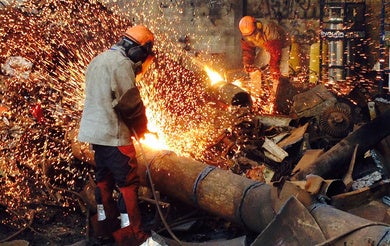
If the entire private sector of Latin America and the Caribbean was one giant company, six out of ten of its employees would be men. And while you could find a somewhat larger number of women in some parts of that company such as Finance, Legal and Human Resources, other areas would almost entirely be made up of men.
Technology to access an unexplored market in Peru
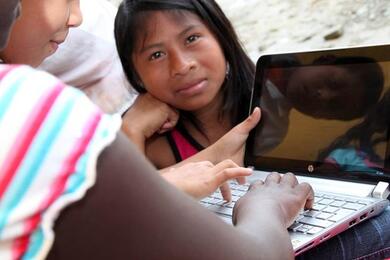
Good news for companies and financial institutions interested in tapping into new markets: Peruvians who live at the base of the pyramid (BoP) spent 160 percent more on information and communications technologies (ICT) in 2013 than in 2000 –from US$20 per capita per year to US$52. Currently, four out of ten BoP heads of households use the internet. More than half of them are between 18 and 35 years old. Additionally, 95 percent of the country’s BoP heads of household own a cellphone, and predominantly the younger ones use it to access the internet.

The best of 2015: Four transportation projects leading in sustainability
Climate change and transportation have an intimate yet complex relationship. Transport accounts for one-fifth of the world’s energy use and one-quarter of energy-related CO2 emissions, making it a main cause of global warming. On the other hand, climate change can severely affect transportation systems, resulting in shorter project life spans, reduced quality of infrastructure services and increased maintenance and operating costs. These impacts on infrastructure harm the economy as a whole by causing trade and supply chain disruptions and hindering access to markets, schools and health centers.
The best of 2015: How to reduce energy costs and become more competitive
These days reducing production costs to increase competitiveness is a must. In a report titled Climate Solutions, the World Wildlife Fund notes that the world could cut energy consumption 40 percent by 2050 through improving energy efficiency and energy conservation. But when looking for alternatives that don't sacrifice the quality of raw materials, not many entrepreneurs realize that a change in energy policy could save them a considerable amount on their energy bills.

The best of 2015: Surprising habits of productive women in the private sector
In Argentina, 61 percent of mothers work outside the home. In Chile, the US and Mexico, those numbers are 59 percent, 57 percent and 42 percent, respectively. Globally, that percentage is growing. As I prepare to join these women after the birth of my second child, I know I must find ways to be more productive and disciplined in my corporate environment. To tackle this, I spent my last weeks of maternity leave seeking the advice of the most highly productive women in the private sector I know. Their surprising answers on work-life balance, professional success and doing more with less offer tools for women, men and companies more broadly.

The best of 2015: Counterintuitive ideas for sustainable enterprises
Most business models are formulated by the top of the economic pyramid. Many business leaders and academics write about the "must haves" of a successful base of the pyramid (BOP) business model. Still quite a few of those business endeavors fail. While reasons for failure vary, experience shows that the ability to observe, listen and understand the BOP’s social codes and priorities is key to successfully formulate and set up profitable, sustainable enterprises that target low-income markets.
