
Sustainable BusinessRecent posts
The Towers We Don't See and the Economy We Can't Live Without
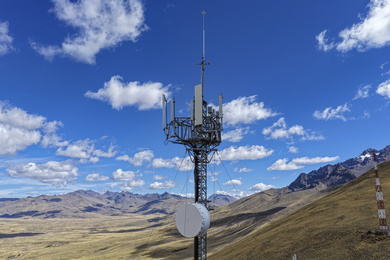
IDB Invest finances telecommunications tower infrastructure across Latin America and the Caribbean, helping expand connectivity and support 5G network growth.

How Santander Brasil and Eco Invest Mobilize Private Capital at Scale
IDB Invest provides financing to Banco Santander Brasil to support sustainable agriculture, land restoration efforts, and resilient infrastructure.

The AI Factory: Latin America's Next Big Industrial Revolution
Latin America’s window to build AI infrastructure at scale is opening, supported by its diverse energy matrix and growing digital demand.

How sustainable infrastructure can decide Peru’s future
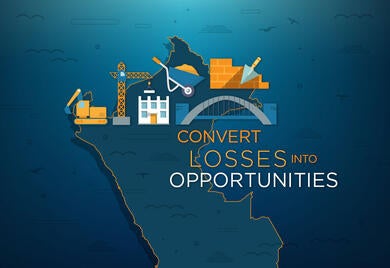
Last March, Peru experienced extreme weather conditions in the north of the country. This resulted in numerous physical, economic and human losses with costs associated at over US$3 billion, or 0.5% of GDP. Planning for reconstruction, the country found itself at a crossroads: it could focus solely on meeting immediate construction needs or rebuild with a long-term vision. The latter option, to adapt the new infrastructure to the uncertainty of weather conditions, represents an opportunity to incorporate sustainability in highways, bridges, water distribution and management systems, as well as to leverage public-private partnerships and rebuild Peru’s economy to compete in the global market. The government of Pedro Pablo Kuczysnki has launched a reconstruction plan called “Reconstruction with Changes” which has two phases. The first seeks to invest up to US$3 million in immediate reconstruction and resettlement. The second, projected to last five years, focuses on the development of modern, climate-resilient public works that represent an additional investment of US$6 billion. A private sector opportunity A large part of infrastructure losses is absorbed by private markets, and for this reason the private sector has a lot to gain from reconstruction. For example, a new highway can allow products to reach their markets more quickly, lowering the cost of doing business for companies. The private sector not only benefits from reconstruction. It could also be part of its development. Estimates from the World Economic Forum suggest that for every dollar of public capital that is mobilized to close the infrastructure gap, five dollars of private capital should be mobilized. However, financing alone is not enough. Key tools for reconstruction IDB Invest (formerly known as Inter-American Investment Corporation), the IDB Group’s private sector arm, has experiences in technical assistance that can serve as a reference for Peru. In Mexico’s Port of Manzanillo, we found ways to adapt the design of the port to unpredictable weather conditions. This included ensuring reforestation and measuring the port’s carbon emissions. We made sure that the terminal operators have the tools and training necessary to replicate the environmental assessments every year. We also use the Envision methodology, developed by Harvard University’s Zofnass Program for Sustainable Infrastructure and the Sustainable Infrastructure Institute. The methodology focuses on quality of life, leadership, resource allocation, the natural world and climate, and risk. The tool has helped our clients measure sustainability, particularly during project planning and design phases. Environmental and social safeguards promote minimum quality in infrastructure investments. In June 2014, during the review of a loan to a local cement plant, our environmental models predicted atypical rains in Asunción, Paraguay. Our environmental specialists needed a contingency plan. When flooding occurred, the plant mitigated damage although there were some construction delays. The project’s sponsor recognized the importance of the environmental safeguard measures and invested in additional water studies, new internal routes with barriers and protected storage facilities. [clickToTweet tweet="For every dollar of public capital in #infrastructure, US$5 of private capital should be mobilized" quote="For every dollar of public capital that is mobilized in infrastructure, five dollars of private capital should be mobilized" theme="style1"] Corporate governance safeguards and attention to integrity also strengthen infrastructure sustainability. Although Latin America is a middle income region, two-thirds of its countries fall in the bottom half of Transparency International’s “corruption perception index.” According to this organization, 26% of Peru’s population has been the victim of corruption. IDB Invest maintains the highest standards of integrity, and we are confident that with our support for the RCC we will reduce this rate. Finally, investments in sustainable infrastructure can attract institutional investors. Investing in socially and environmentally responsible companies is increasingly considered a fiduciary responsibility and a means for increasing the value of company assets over the long term. We have witnessed the interest of such investors when we presented sustainable and bankable investments. The Reventazón hydroelectric dam in Costa Rica and the Campo Palomas and Colonia Arias wind farms in Uruguay have been pioneer projects in attracting financing from local institutional investors. In Peru, we seek to leverage local money and our capacity to advise public-private partnerships to attract more local stakeholders. This is a critical moment, but Peru is well positioned to convert its losses into opportunities. Investments in sustainable infrastructure are the only guarantee for building a more inclusive, less vulnerable, and more competitive future in the 21st century. Subscribe to receive more content like this! [mc4wp_form]

Can banks serve the Women’s Market without sidelining men?
If a bank makes targeted efforts to better serve women customers, does this necessarily mean men are shortchanged? Global experts at the recent Global Banking Alliance for Women (GBA) All-Stars Academy in the Dominican Republic agreed with a resounding “no”.

Finance adapts to climate change
Climate change is already a real threat that affects macroeconomic variables and company results in Latin America and the Caribbean. For example, Peru may not be able to reach its inflation target this year due to the rise in agricultural prices caused by atypical rains. In Colombia, insurers face pressure on their risk rating due to recent landslides and floods. In the Dominican Republic, the trade deficit and the exchange rate are being affected by the impacts of climate change on agricultural exports. In effect, Latin America and the Caribbean lose an average of 1.21% of their gross domestic product (GDP) due to economic damages associated with climate change, according to the Climate Risk Index 2017. These events are geographically dispersed but are occurring with increasing frequency and generating unanticipated costs. The impact of climate change is all around us: from damaged roads and destroyed bridges that keep products from reaching their market to changes in agribusinesses such as coffee and cacao quality and harvest. It is even reflected in the risk to business continuity that a company may have when obtaining a bank loan. [clickToTweet tweet="#Latam & #Caribbean lose near 1.21% of GDP due to economic damages associated with #climatechange" quote="Latin America and the Caribbean lose an average of 1.21% of their GDP due to economic damages associated with climate change"] For this reason, more than 280 investors are taking steps to ensure that climate-related risks are formally presented, so as to make more informed decisions. This new process, associated with new regulations and reduced technology costs, is generating a tendency to divest stranded assets. In addition, institutional investors now prefer cleaner sectors, such as solar power. This opens up a window of opportunity, where financial institutions in Latin America and the Caribbean are already taking the lead. What are the opportunities for the financial sector? Climate change is accelerating the transition to more flexible, greener, and more circular economies. In Latin America and the Caribbean, we see how the financial sector is developing and using financial products that can only be explained by the existence of climate change: Green bonds for financial institutions. Green and/or climate bonds are a new financing option and have begun to grow rapidly in the region with solar energy projects under way, such as Solar City in Mexico. Investment funds. Ecotierra’s Canopy Fund is an example of this, in that it seeks to diversify the risks associated with climate change in the production of coffee and cacao, attracting both impact investors and traditional financing for such supply chains. Climate finance. Climate finance has helped to launch public-private partnerships (PPP). For example, in Chile, public lighting is being replaced by LED technology, with the support of the Canadian Climate Fund for the private sector in the Americas (C2F). Changes in business models. Banks are beginning to internalize climate change in credit ratings, for example by analyzing the flow of each of their clients according to the segment to which they belong. In IDB Invest (formerly known as Inter-American Investment Corporation), the private sector arm of the IDB Group, we are developing approaches and tools to make it possible to reduce and transfer investment risks, facilitate the development of PPPs and promote financial innovation to adapt financial products to the new unstable reality presented by climate change. These are just a few examples of how to take advantage of climate finance. What is clear is that climate change is an opening emerging sector that require specific financing. Those financiers that adapt are gaining the benefits as first-movers. Subscribe to receive more content like this! [mc4wp_form]
How can we boost sustainable infrastructure investments?
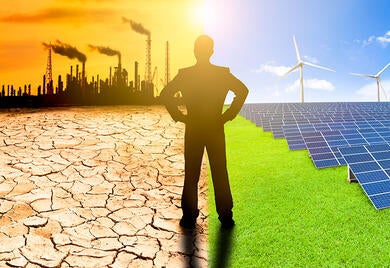
Evidence is mounting that through the right mix of policies and incentives the world can significantly reduce climate risks while boosting growth. Last month, the Organisation for Economic Co-operation and Development (OECD) said that action on climate change can generate inclusive economic growth over both the short and long term. These policies can increase GDP by up to 2.8% on average across the G20 countries in 2050. The question is, how can we capitalize on these opportunities while reducing climate risk? We believe that the answer is joining forces from governments, multilateral development banks and investors to increase investments in sustainable infrastructure.

How to calculate the cost of generating electricity
When I attend energy conferences in Latin America and the Caribbean, whether as a panelist or attendee, I often hear questions such as: What type of energy is cheaper: thermoelectric or renewable energy? And what is the most competitive renewable technology: hydroelectric, solar, or wind? These are also the basic questions that regulatory entities ask when planning to expand their energy matrices. Investors also ask these questions when seeking opportunities for investment in the region. Comparing apples and oranges The answer is not so simple. We are talking about different technologies with different investment requirements, dissimilar service life, capacity factors and operational costs that vary based on the project type and location. The levelized cost of energy (LCOE) is a useful tool that can be used to consistently compare the costs of different types of technologies (solar, wind, natural gas, etc.). How to calculate the levelized cost of energy (LCOE) In simple terms, the LCOE consists of calculating the total average cost of building and operating an electrical power station and dividing it among the total energy to be generated over its entire service life. The National Renewable Energy Laboratory (NREL) has financial models available to the public that can be used to calculate the LCOE for solar and wind plants. The models contain variables such as the investment cost necessary to build the plant, the useful life of the power station, and annual operating and maintenance costs, among other variables. Performing a sensitivity analysis of these different variables allows us to determine which specific actions can be taken to reduce the levelized cost of electricity in a specific project. The conclusions may vary, from changing the equipment provider to reconsidering the project’s site. What information can be obtained from the LCOE? The first benefit is the ability to compare to make informed decisions. The LCOE tool also: Provides a break-even point: Its result, expressed in kilowatt hours (kWh), can also be considered the break-even point for an electrical power station, i.e. the minimum price at which it would have to sell electricity to neither gain nor lose. Yields interesting conclusions: Using the LCOE as a tool for a competitive measure among various sources of energy allows for obtaining diametrically different results, even within the same technology. For example, the LCOE in a country with ideal geography for mini-hydroelectric power stations (in terms of both investment cost and plant factors) could be much less than a run-of-river hydroelectric power station in a flat country with high labor costs. Measures competitiveness trends among different technologies over time. Thus, five years ago the levelized cost of solar plants could not compete with other sources of energy. Thanks to the drastic reduction in investment cost, solar plants now compete at the same level as other technologies in bidding for energy contracts. LCOE and other available tools IRENA, in its 2016 publication, analyzes levelized cost of renewable energy trends in Latin America and the Caribbean with revealing conclusions. Even though the cost of installing wind farms in the region is slightly higher than in more developed countries (such as India and China), the region’s higher level of wind resources makes it possible to achieve a higher capacity factor —the ratio between the actual energy generated during a given period and what would have been produced if the plant had been continuously operating at nominal power during that period— resulting in a comparatively similar LCOE. For example, in some areas of Brazil, the plant factor reached 50 percent. It should be emphasized that although the LCOE is widely used to compare unit costs among technologies, the methodology does have some limitations since its results are highly dependent on the scope and assumptions used. Nonetheless, there are various tools and technologies that seek to determine relative economic competitiveness among different technologies. These include the Levelized Avoided Cost of Energy (LACE), which measures the avoided cost of electricity of a new electrical power plant due to the displacement that the new infrastructure produces in the system. However, this will be the subject of a future blog entry. Subscribe to receive more content like this! [mc4wp_form]

Latin America needs more broadband to capitalize on the data explosion
There are many stories about the origins of chess. To me, the most colorful is about a king in India who was given a new game consisting of two armies and 64 squares, to overcome the loss of a son in the battlefield. The king was so delighted with this new game that he offered to give the inventor anything he wished for as compensation: “Give me one grain of rice for the first square, two grains for the second square, four grains for the third square, and so on for each of the squares of the game board,” said the inventor.
