Sustainable BusinessRecent posts
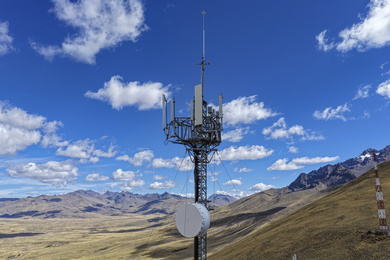
The Towers We Don't See and the Economy We Can't Live Without
IDB Invest finances telecommunications tower infrastructure across Latin America and the Caribbean, helping expand connectivity and support 5G network growth.
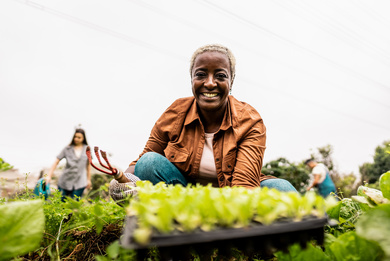
How Santander Brasil and Eco Invest Mobilize Private Capital at Scale
IDB Invest provides financing to Banco Santander Brasil to support sustainable agriculture, land restoration efforts, and resilient infrastructure.

The AI Factory: Latin America's Next Big Industrial Revolution
Latin America’s window to build AI infrastructure at scale is opening, supported by its diverse energy matrix and growing digital demand.
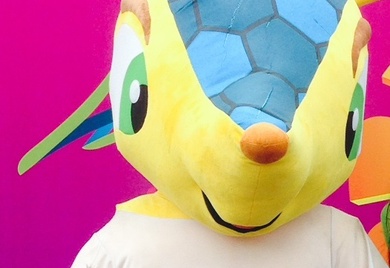
Keep The Ball Rolling: The Link Between the World Cup Mascot and the environment
“Fuleco” is its name derived by combining “Futebol” (soccer) with “Ecologia” (ecology), highlighting the role of the World Cup in preserving the environment. Many Brazilians also recognize it as “tatu-bola,” the Three-Banded Armadillo (Tolypeutes tricinctu) that exists only in Brazil. By either name, it is the FIFA 2014 World Cup mascot, and already a winning player. When the Tatu-Bola is threatened it turns into a round shape, similar in appearance to a soccer ball - making it a fitting mascot for the FIFA 2014 World Cup in Brazil, don’t you think?
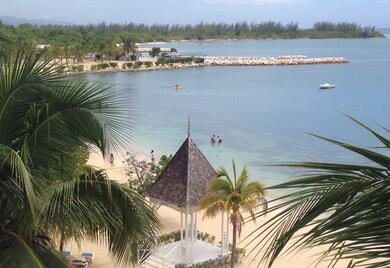
Four Climate-Smart Business Opportunities in Jamaica and the Caribbean
If we contemplate climate change long enough, it seems like we all lose. However, if you really want to talk about the equivalent of an unfair penalty or missed offside call, look around Jamaica. Ten hurricanes ravaged the country in the last five years, each causing damages of approximately US$100 million. The rainy season is longer, droughts follow that exacerbate agricultural deficits, and the sea level is rising 3.5 mm year. Climate change affects Jamaica and other Caribbean islands disproportionately. And Jamaicans contribute very little to its causes.
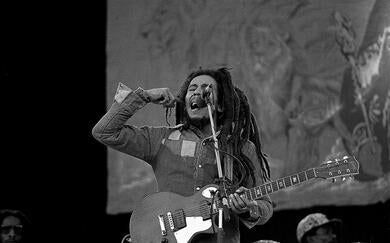
Climate finance and Climate Investment Funds
What do Bob Marley and climate change have in common? Never would I have thought there might be a connection between Bob Marley and climate change. "It's all about 'One Love,'" repeated the Honorable Minister Ian Hayles of Water, Land, Environment and Climate Change, when he opened the Climate Investment Fund (CIF) Partnership Forum in Montego Bay, Jamaica. Obviously the minister realizes it is slightly more complicated than just “one love.” But starting with a little love, and, equally importantly, simplicity made the issue of climate change a tad more entertaining and understandable for the 500 plus global participants at this week’s event.
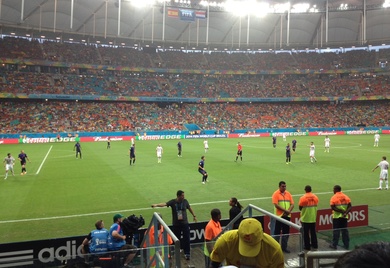
What is the World Cup's Carbon Footprint?
When Arjen Robben scored Holland’s fifth goal against Spain, the Arena Fonte Nova in Salvador, Brazil, was overflowing with emotion. The Dutch ecstatic, the Spanish devastated, and neutral fans like myself thrilled just to see such an exciting game. After watching the Netherlands team take a well-deserved victory lap, we poured out of the stadium into Salvador’s streets, singing until our throats were hoarse.
Something New in BOP Housing
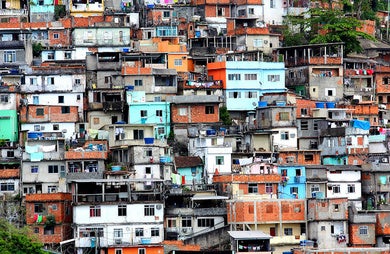
By Christy Stickney, author of Many Paths to a Home: Emerging Business Models for Latin America and the Caribbean’s Base of the Pyramid; and Lina Salazar Ortegón, Opportunities for the Majority at the IDB I’m intrigued by FOMEPADE, a rising star in Mexico’s financial scene. Conceived by microfinance veteran Juan José Gutiérrez Chapa (a founding partner of Banco Compartamos) to provide quality housing to underserved markets, FOMEPADE launched in 2012 a housing loan program that incorporates housing providers into a unique value chain for the families at the base of the pyramid (BOP). FOMEPADE’s promising ventures in affordable housing for the BOP offer evidence that new players and business models are emerging, forging inroads into BOP housing markets in Latin America and the Caribbean (LAC).
And the 2014 FIFA World Cup Brazil Winner is... Sustainable Business
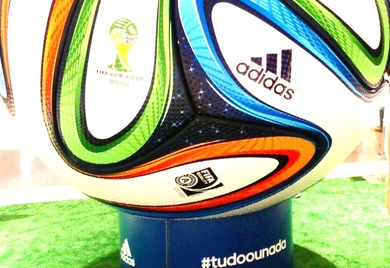
Seguir a @BIDSecPriv The FIFA 2014 World Cup Brazil has begun, and with it comes a lot of controversy regarding investments and their societal trade-offs - especially given almost 22% of the Brazilian population still live at the base of the pyramid, on less than US$2.50 a day. Nonetheless, this year, the FIFA Brazil World Cup is thought to be a milestone in terms of sustainable business practices. Below we explore 3 initiatives that can allow small companies to generate new businesses and thrive in the long term.
