
Sustainable BusinessRecent posts
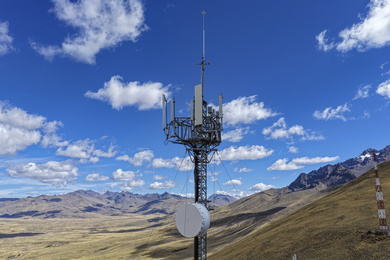
The Towers We Don't See and the Economy We Can't Live Without
IDB Invest finances telecommunications tower infrastructure across Latin America and the Caribbean, helping expand connectivity and support 5G network growth.
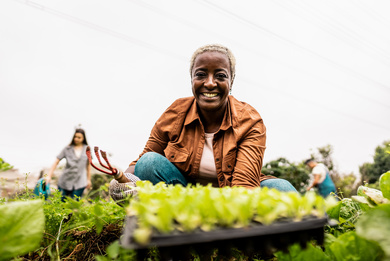
How Santander Brasil and Eco Invest Mobilize Private Capital at Scale
IDB Invest provides financing to Banco Santander Brasil to support sustainable agriculture, land restoration efforts, and resilient infrastructure.

The AI Factory: Latin America's Next Big Industrial Revolution
Latin America’s window to build AI infrastructure at scale is opening, supported by its diverse energy matrix and growing digital demand.


China Insights Program: Do you speak the Chinese business language?
Chinese business opportunities for Latin America and the Caribbean * by Gema Sacristán (Versión en español) Imagine for a second that you spend your free time designing clothes and you want to export to China. Where do you start? When I first asked myself this question, I had no idea. I realized how much we in the region talk about Chinese business opportunities for Latin America and the Caribbean (LAC) but how little we actually know.

What lessons does Brazil’s Independence have for sustainable business in Brazil?
Back in 1822 the private sector was key to Brazil’s independence. Today the private sector has the opportunity to play a defining role in another turning point for Brazil and beyond: shaping the new global development agenda post-2015 Millennium Development Goals through sustainable business practices.
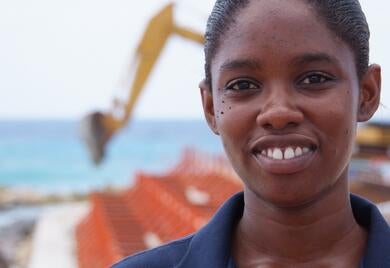
STEM minus Women = Private Sector Problem
By Kristin Dacey & Sanola Daley* Math and Science are for Men Women are not smart enough to be engineers. Women are not good at math. Isn’t this why globally men earn 70% of doctoral degrees in mathematics and the world rejoiced recently that a woman – Maryam Mirzakhani –won the top prize in mathematics for the first time?

Are women the only ones who need mentors?
Mentoring and work-life balance for men can be good for women and for business A recent article by the Financial Times described a private sector mentor program launched by the 30 Percent Club. It focused on women in the “danger zone” - defined as those between 28 and 38 years old. In the short-term, the program seeks to keep women in the workplace and promote leadership. The end goal is to achieve more women on boards.

Ugly food leads to innovation in fighting hunger
Latin America and the Caribbean is one of the biggest exporters of food on the planet. Yet, more than 52 million people, or 10 percent of the region’s population, still suffer from hunger and malnutrition. The July 2014 FAO publication Food Loss and Waste in Latin America and the Caribbean has highlighted a significant paradox the region faces. While the region has a sturdy food-production capacity, 6 percent of the total loss and waste of food in the world occurs in Latin America. Poor distribution and access to food has led to this misuse of sources of nutrition that could have met the needs of at least 47 million hungry people in the region.
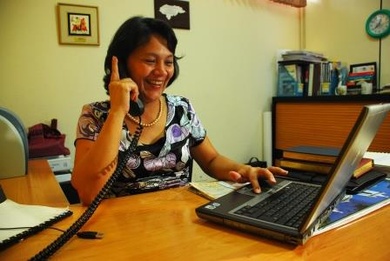
Four ways technology and data facilitate SME finance in Latin America & the Caribbean
* By Greg Da Re Technology, particularly the Internet, allows SMEs to share experiences, connect to different networks and operate in a world without the limitation of geographical barriers. Social networks are increasingly important for companies to position their brands. Social media in Latin America will near 300 million users by 2017. Technology can allow SMEs to increase their competitiveness and facilitate new ways to access financing.
