
Sustainable BusinessRecent posts

The Towers We Don't See and the Economy We Can't Live Without
IDB Invest finances telecommunications tower infrastructure across Latin America and the Caribbean, helping expand connectivity and support 5G network growth.

How Santander Brasil and Eco Invest Mobilize Private Capital at Scale
IDB Invest provides financing to Banco Santander Brasil to support sustainable agriculture, land restoration efforts, and resilient infrastructure.

The AI Factory: Latin America's Next Big Industrial Revolution
Latin America’s window to build AI infrastructure at scale is opening, supported by its diverse energy matrix and growing digital demand.


Getting Brazil Climate-Ready One Sector at a Time #CRinBrazil
At the very time the city of São Paulo is struggling with the worst man-made water crisis in its history, with millions of people and local businesses suffering from water scarcity, climate leaders gathered in Rio de Janeiro just a few hundred miles away, to come up with solutions to the global climate crisis. I was one of 600 participants who came from 55 countries to attend Former U.S. Vice President Al Gore’s Climate Reality Project’s 26th leadership training, #CRinBrazil, the first one ever held in Latin America and the Caribbean.
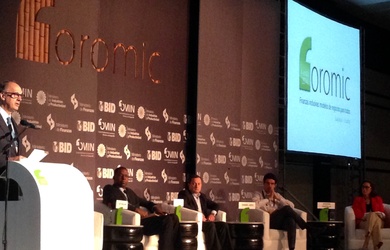
The evolution of impact investing: 6 signs of progress
Today experts from Latin America and the Caribbean gathered at the Foromic Conference in Guayaquil, Ecuador, to reflect on the evolution of impact investing. A recent JP Morgan and Global Impact Investing Network survey estimates there is at least $46 billion in impact investing assets under management globally, a figure expected to grow ten-fold in the next five years, according to predictions by the same institutions. The industry is especially relevant in emerging markets, where seventy percent of investment capital flows. This made today a timely moment of self-reflection to highlight how far impact investing has come and where it is going.
A Laboratory for Climate Finance
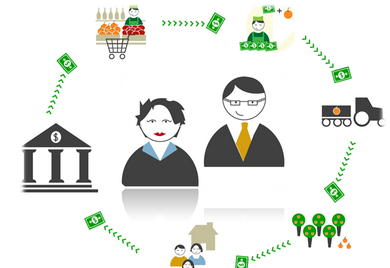
Editor’s Note: As of October 20th 2014, the Agricultural Supply Chain Adaptation Facility, along with 3 other financial instruments, has been selected at the Second Lab Advisor’s Meeting to move forward to Phase 3. During this phase, the Lab will refine the 4 most promising instruments with further analysis and stress testing, so they can be ready for pilot.
Three ways multilaterals support local banks and drive innovation in the Caribbean
Local banks are a core component of the market architecture in Latin America and the Caribbean with the potential to catalyze innovation and growth. As I return from the Americas Competitiveness Forum in Trinidad & Tobago, my third visit to the country this year, I am reminded how dynamic and innovative its business environment is and how multilaterals can better engage Caribbean business. Here are three ways we support local banks and drive innovation.
Data gaps and women entrepreneurs: why they matter
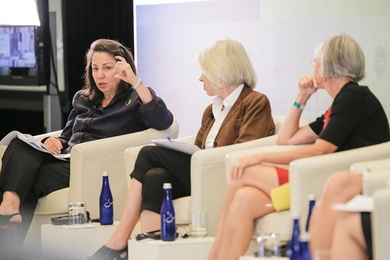
* By Nancy Lee, General Manager, Multilateral Investment Fund While moderating a panel at the annual summit of the Global Banking Alliance for Women on gaps in data about the women’s market, I briefed the audience of about 200 on the gender-related results of a 2013 survey by FELABAN, the Latin American bankers’ association. The survey posed two questions to regional bankers regarding use of data broken down by gender and how banks serve their women clients.

EYE Scream, You Scream, We All Scream for EYE Bonds!
Three firsts for the Education, Youth and Employment Bond program * By Michelle Viegas On September 23, 2014, a delivery of 16 pints of Ben & Jerry’s ice cream arrived to the Boston office of Breckinridge Capital Advisors. Observers may have assumed that it had been ordered for a celebration, perhaps for a company anniversary or an employee’s retirement or birthday. That day, however, similar deliveries were made to various companies throughout Boston, including Zipcar, Patagonia and Invested Development. Ben & Jerry’s was simply thanking them for their contributions as fellow certified B Corps – companies that meet rigorous standards of social and environmental performance, accountability, and transparency. As the certifying non-profit B Lab explains, “B Corp certification is to sustainable business what LEED certification is to green building.”
