
Resilient Banking: From Risk Management to Investment Opportunities
Toward a business model that anticipates opportunities to finance resilience investments in assets exposed to extreme natural events.

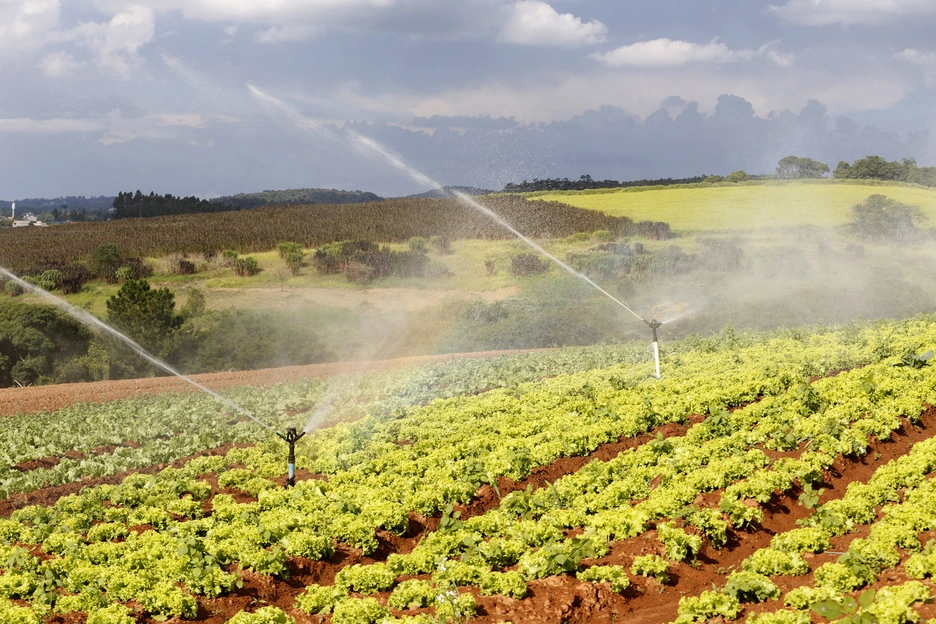
What does it mean for a bank to be resilient amid increasingly severe physical risks? Beyond protecting its assets and portfolios, it means anticipating clients’ needs and financing investments that reduce their vulnerability.
In Latin America and the Caribbean, economic losses associated with disasters have reached approximately $360 billion over the past 50 years. These events put homes, industrial facilities, agricultural production, roads, and other assets at risk. Biodiversity loss and land degradation can further compound chronic risks.
Recent events illustrate the direct impact on lending, insurance, and guarantee portfolios. In Rio Grande do Sul, Brazil, flooding in May 2024 triggered a humanitarian crisis and caused an estimated $15 billion in economic losses. The agricultural sector recorded $2.4 billion in losses, while housing damage exceeded $920 million.
In Argentina, the 2022 and 2023 drought associated with La Niña resulted in nearly $20 billion in losses in agricultural production and exports. This experience is now compounded by the 2026–2027 El Niño phenomenon, whose intensity could heighten the risk of floods and droughts across parts of the region, with consequences for economic activity and the financial sector.
Risks, but Also Opportunities
For financial institutions, these risks can have a direct financial impact: weakened client repayment capacity, greater financing needs for post-disaster recovery, business interruptions, declining asset and collateral values, higher insurance claims, and greater concentrations of risk in certain sectors or geographic areas. But exposure to physical risks is only one part of the equation.
The growing vulnerability of companies and assets also creates significant investment needs for adaptation and resilience. Sectors such as agriculture, housing, infrastructure, water, energy, construction, industry, transport, and tourism need to protect assets, minimize business disruptions following catastrophic events, reduce expected losses, strengthen supply chains, and adapt their operations to emerging risks.
This creates an opportunity for banks to move from reacting to anticipating. Instead of focusing only on mitigating losses and restructuring portfolios after an event has occurred, banks can measure their exposure to droughts and floods, integrate monitoring indicators into their strategies and governance, and prepare for potential prudential requirements from regulators.
Most importantly, banks can turn these risks into business opportunities by financing investments that reduce their clients’ vulnerability, such as efficient irrigation, drainage, storage, and power infrastructure, and by working with insurers and the real economy to develop better risk-transfer products. In this way, resilience is no longer viewed solely as a cost. It becomes an opportunity for collaboration and business development that creates value for all parties.
Turning these risks and opportunities into action requires sharing knowledge, identifying common challenges, and developing collective solutions.
First Regional Think Tank on Resilient Banking
In 2025, the IDB Group launched Ready and Resilient in the Americas, and in 2026, IDB Invest launched Ready & Resilient Enterprises, a regional initiative designed to strengthen disaster resilience in Latin America and the Caribbean, focusing on governance for risk prevention and reduction, disaster preparedness, and rapid response.
As part of these efforts, the first regional think tank on resilient banking was held in Buenos Aires on September 23 and 24. It brought together 18 banking and insurance representatives from Argentina, Colombia, Costa Rica, Guatemala, Mexico, Panama, and Paraguay, primarily executives and specialists in risk management and sustainability. IDB Invest and Fundación BASE facilitated the meeting using a participatory approach to identify challenges and develop proposals.
The objective was to identify and prioritize barriers and opportunities for integrating resilience into financial-sector business models, connecting the identification and valuation of physical risks with proactive risk management and new business opportunities to finance adaptation investments.
Key Takeaways from the Meeting
Participants identified several mutually reinforcing barriers: difficulties translating physical risks into financial impacts and business cases; insufficient integration of data and tools into origination and portfolio management; complex eligibility criteria; financial products and incentives that do not adequately reflect the benefits of adaptation; and gaps in capacity building and internal coordination. On nature and biodiversity, participants also highlighted the challenges of identifying bankable investments and assessing smaller transactions.
Through a co-creation exercise, participants proposed solutions including risk analysis and management tools, commercial training, governance mechanisms, tailored eligibility methodologies, portfolio reviews, new financial product proposals, and stronger coordination with insurers.
These results lay the groundwork for a regional roadmap to guide IDB Invest’s next steps. The challenge now is to put these proposals into practice and move toward a resilient banking model that can anticipate risks, generate business opportunities, and mobilize more private capital for adaptation and resilience.
Authors

Luis Alejandro Mejía
Luis Alejandro is an executive with more than 25 years of experience in the financial, corporate, investment, and sustainable development sectors. He currently serves as Principal Officer and Head of Climate and Environment for the Financial sector at IDB Invest, where he leads advisory work for investment funds, financial institutions, and capital markets across Latin America and the Caribbean.
Throughout his career, he has advised on the structuring of pioneering, high-impact thematic instruments, including sustainable, green, blue, and sustainability-linked bonds and securitizations. Before joining the IDB Group, Luis led the development of the first green financing facilities for renewable energy and sustainable transportation and spearheaded the world’s first issuance of forestry carbon credits on NYSE Blue.
In 2011, he received the IDB’s planetBanking Award for his innovative leadership in advancing sustainable finance in Central America. Luis Alejandro is an agricultural engineer who pursued specialized studies in Israel and holds an MBA with a concentration in Sustainable Development from INCAE Business School.

Cecilia Acuña
Cecilia holds a degree in Business Administration from the National University of Cuyo (UNCuyo), with more than 20 years of experience in the financial sector and a specialization in Sustainable Finance and Investor Relations. She currently serves as Climate and Environment Consultant for the Financial Sector in the Southern Cone at IDB Invest.
She coordinates Enlaces, IDB Invest’s Sustainable Finance Initiatives Network, which brings together initiatives from 12 countries across Latin America and the Caribbean, and Argentina’s Sustainable Finance Protocol, made up of 33 financial institutions that represent approximately 93% of lending in Argentina’s financial system and that promotes the integration of environmental, social, and governance (ESG) criteria in the sector.

Diego Flaiban
Diego leads the Financial Institutions Team for the Southern Cone at IDB Invest, which he joined in 2016. He is responsible for originating and structuring financing operations for financial intermediaries that have an impact on development. Diego has more than 15 years of experience in the IDB Group, where he has led transactions for loans, capital markets and capital investments in the region that promote access to finance, women’s empowerment and climate change mitigation. Before joining the IDB Group, he worked as Senior Consultant and Auditor of Financial Institutions at Arthur Andersen and Deloitte. He previously worked as a loan officer and financial specialist at leading financial institutions in Argentina. Diego earned a graduate certificate in international business from Georgetown University (USA) and an undergraduate degree in public accounting from Universidad de Buenos Aires (Argentina).
LIKE WHAT YOU JUST READ?
Subscribe to our mailing list to stay informed on the latest IDB Invest news, blog posts, upcoming events, and to learn more about specific areas of interest.
Subscribe{{ raw_arguments.field_category_target_id }}
Related Posts

Korea's Cutting-Edge Innovations to Transform Agribusiness in Latin America and the Caribbean
Discover how IDB Invest connects regional agribusinesses with leading innovators in Korea to accelerate smart agriculture, agritech, and sustainable growth.
Digital Transformation Redefines Agricultural Competitiveness in Latin America and the Caribbean
Every time an agricultural company determines when to irrigate, selects what inputs to apply, or decides how to market or transport its production, the use of data and technological solutions becomes a key competitive advantage.

Combating Multidimensional Poverty from the Private Sector Requires Much More Than Jobs
For Danper, a leading Peruvian company in the global agri-food sector, understanding the living conditions of its workers and their families is fundamental to strengthening actions to improve their quality of life.