Posts by Financial Institutions
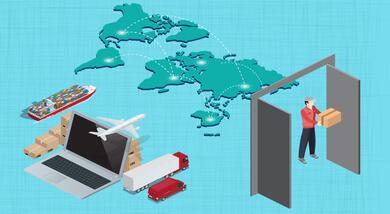
How to take your business global
In an increasingly globalized economy, expanding markets beyond borders constitutes an alternative that businesses —more than ever— are considering among their options for growth. For instance, a group of mega-companies—so-called multilatinas—have capitalized on internationalization opportunities in the region and have seen significant increases in their investments and productivity as a result. A study by the Boston Consulting Group finds these enterprises showed outstanding performance, with 5.2 percent annual growth from 2008 to 2016, compared to 1.8 percent among their peers.

Pushing boundaries with blended finance in Latin America and the Caribbean
Every transition, every turning point, moves through critical junctures wherein a slight push determines the success or failure of a transformative proposal. Crossing the frontiers or staying in the same place. This applies to everything, from people to new business models or innovative financial solutions.
What is a B-bond?
With a nearly $200 billion a year financing gap, it is virtually impossible for the development banks in Latin America and the Caribbean to close it alone. However, there is good news.
The issues that marked the private sector in 2017
For the private sector, 2017 was a year marked by major changes and a call to prepare for the future. From the damages done by natural phenomena to the adoption of new technologies, several factors made this the year of adaptation, for both businesses and people. In this context, many Latin American and Caribbean countries began to explore new ways to grow, invest and even generate energy. Here we share the most discussed issues in 2017: 1. Solar energy took off In 2017, the constant increase in oil prices and the reduced cost of photovoltaic panels helped to spur notable growth in solar power, both in the developed markets and in Latin America and the Caribbean. The growth of this industry has gone hand in hand with the public and private sectors in the region, which have worked on procurement policies and programs to incentivize the use of clean energies, to transform the energy matrix and stimulate private investment. Review once again which countries are leading in solar energy in the region. 2. Natural disasters demand sustainable buildings Hurricanes and floods produced millions in losses, in Latin America and the Caribbean and the rest of the world during 2017. Hurricane Irma devastated the Caribbean, while other phenomena also left their mark in various countries of the region. For all of them, the lesson was clear: sustainable buildings are required. In all sectors, climate change is expected to continue causing havoc, and for this reason infrastructure must be increasingly more resilient. After the storm, many have already made the decision to adapt. We leave you with the case of Peru and its model of Reconstruction with Changes following the floods that swept through the north of the country. 3. Bitcoin whets investors’ appetite Bitcoin was another main issue in 2017. The cryptocurrency achieved fame when it entered the market, with prices above US$17,000, awakening crowds’ appetite. Although there are still many experts who warn about the risks of investing in digital currency, the imminent bubble it can cause in the markets, and the lack of regulation, it quickly became widespread. For many, investing in Bitcoin is a new way to diversify funds and even offset inflation in their countries. Also for this reason, every day there are more who seek to dabble in digital mining. Here we share the opportunities and dangers of Bitcoin mining in our region. 2017 was a year for adapting to new forms of construction, new ways to generate energy and even new ways to save and invest. For companies in Latin America and the Caribbean, this capacity will be key to continuing to have an impact on development and growing sustainably. As Peter Druker says: “the entrepreneur always searches for change, responds to it and exploits it as an opportunity.” What changes do you think will occur in 2018? Discover the rest of most searched terms during the year in Google Year in Search 2017.
Mining Bitcoin in Latin America: opportunities … and dangers!
The discovery of the first gold nuggets in General Sutter’s sawmill became a true “gold rush” in the United States. In the mid-19th century, California attracted a generation of immigrants and adventurers looking to become wealthy in the blink of an eye, with their picks and shovels. However, to achieve this dream it was necessary capital, energy and luck. In addition, this adventure involved greater economic and physical risks. According to my family story, my great-granduncle was among those enticed by the gold fever, leaving Ireland behind with its poor potato harvests and economic policies dictated from London. Like most of immigrants, his dreams of a golden wealth soon were vanished. Nonetheless, over the following decades, California would become a vibrant state where film industry, commerce, aeronautics, and more recently, technology, would thrive. The “gold rush” and the determination of those pioneers were the initial catalysts for California’s vibrant economy that today continues to spread wealth and benefits on a global scale. Mining Bitcoin Today we live in a world where the real and the virtual are merging. In a world where data is considered the new oil it is not surprising that the mining trend is data mining, more specifically, Bitcoin mining. But, what is Bitcoin mining? Bitcoin is a cryptocurrency based on Blockchain technology. This technology is nothing more than a long chain of records; a digital, decentralized, immutable, sequential, and encrypted “ledger.” The chain is not controlled by any central authority but by an enormous computers’ network in charge to verify that the information saved in the component blocks is consistent. The key for the security of the chain of blocks is a hash, a cryptographic mathematical bit that makes the links among the blocks practically unbreakable. Returning to Bitcoin, the cryptocurrency originated from a “mining” process in which “miners” compete to solve complex mathematical problems using computers that run algorithms. Every ten minutes, whoever solves the problem and validates the chain with at least 51% confirmed by the miners is the winning miner. The new chain is then encrypted with a new block and copied in all the computers in the network. Obviously, the reward for the winning miner is paid in Bitcoin. Not a bad deal, considering that the value of a Bitcoin has increased from $700 to $16,789 in the last year alone (value at December 14th, 2017). What do we need to mine Bitcoin? Like gold miners a century and a half ago, a digital miner requires some capital, an Antminer S9, “plug and play” hardware; enough energy to run the computers day and night; and a great deal of luck to figure the solution based on computational capacity only. These days, the competition for Bitcoin mining is brutal and inefficient without economies of scale. Besides, like gold nuggets in California that became increasingly scarce, the total number of Bitcoins to be mined is fixed. American curiosities Unlike the “gold rush,” to mine Bitcoin there is no need to go to Silicon Valley. Digital technologies are geographically agnostic, which is beneficial for those who are most desperate to find solutions to their pressing issues. In Venezuela, the case of Bitcoin mining is emblematic and there are those who believe it could be the first country in the world to adopt Bitcoin as currency. The country suffers from high inflation and a weakened currency. But if you add the fact that energy is practically free in Venezuela, the country has some of the ingredients to become a paradise for miners. However, the indiscriminate use of energy has already caused significant tensions between the miners and the authorities. In addition, in the United States, the Bitcoin entrepreneur, Charlie Shrem, was arrested, accused of conspiracy for facilitating the use of cryptocurrency on the Silk Road platform. On one hand, it is evident that there is demand for a digital, credible unit of value free of interference from the central authorities. On the other hand, this logically creates tension with the traditional players (i.e. governments, central banks) and the desire to define basic game rules, in a context where reality advances at a faster than the ability to regulate it. Meanwhile, the Bitcoin fever continues, and the Blockchain ecosystem is still on the front pages. The Latin American company, Ripio, with its business model of person-to-person loans, has raised $37 million selling tokens through an ICO (“Initial Coin Offering”)! The “gold rush” drew adventurous immigrants to California’s mountains. As happened with the Irish, they were driven out by bad administrations and various misfortunes, and were willing to risk it all. As a result, California’s economy is one of the most dynamic in the world. Today, the Bitcoin fever is attracting another type of miner, a digital miner. Some will be successful and make their fortune from the valued currency. In certain countries, some of them will be imprisoned, accused of wasting electricity. But for many, cryptocurrency mining is seen as one of the gears of a new technology that over the long term may become an alternative to certain fiduciary currencies, making the digital economy even more efficient. Mind you, miners and investors, proceed with caution! Subscribe to receive more content like this! [mc4wp_form]
What have we learned after a decade of public-private partnerships in Latin America and the Caribbean?
Until the end of 1990, Latin America and the Caribbean was the region with the greatest proliferation of public-private partnerships (PPPs). At that point, investments plummeted, partly due to negative reactions caused by its deficient implementation. In 2005, thanks to the joint efforts of public, private sector, and multilaterals, PPPs became again a widely used tool. Driven by the fall in commodities prices, the increase of fiscal deficits, and the improved conditions for implementing PPPs, many countries established specific institutions and strengthened their regulations. As a result, investments through PPPs grew almost five times, from US$8 billion in 2005 to US$39 billion in 2015. In barely one decade, Latin America and the Caribbean has registered US$361.3 billion in investments for almost 1,000 infrastructure projects through PPPs, primarily in the energy and transport sectors. PPPs potentially can help to overcome some of the public-sector limitations but they also raise concerns. Large-scale projects involve many technical, financial, environmental, and social risks. PPPs demand greater attention to risks assignment, conflict resolution, and the analysis of “value for money.” They also require institutional development that takes time to consolidate and, when it is poorly done, can even increase costs and reduce services or its quality. Transparency is also key to mitigate the risk of corruption, which has become more visible in Latin America and the Caribbean in recent years. In this context, multilateral development banks can play a key role supporting the development of proper environments for attracting private investment, supporting independent projects preparation, and helping to bridge financing gaps. These banks, also have a potential comparative advantage: their ability to be directly involved with the public and private sectors. 10 keys for strengthening the multilaterals’ support for PPPs The Office of Evaluation and Oversight has reviewed IDB Group support for PPPs in infrastructure projects at three levels: favorable environment, project preparation and financing, besides other development banks’ experience. These banks financed a small (3%) but considerable proportion of PPP’s investment in Latin America and the Caribbean. The IDB Group provided the most financing (35%), among these entities, with 145 approved operations for US$5.8 billion between 2006 and 2015. Based on our conclusions, the Evaluation of Public-Private Partnerships in Infrastructure, published last March presents 10 recommendations: Specific diagnostics: identify and evaluate potential demand for PPPs by country, including analysis of infrastructure needs in the sector, PPPs environment, fiscal limitations and risks, and type of support needed by the governments. Priorities: include a general framework to determine which countries and sectors need support, type of support needed, and define priorities. Focal point: establish a PPP focal point with sufficient authority and resources to promote collaboration among all parties involved in the institution. Capacities: do an inventory of existing capabilities, identify what is missing, and try to attract and maintain the necessary capabilities. Incentives: reform the incentives, granting rewards when private investors’ funds are mobilized and creating incentives for collaboration. Advisory services: Analyze infrastructure projects in the pipeline, and advise countries regarding the most suitable delivery model, regardless of the sector that will originate the operation. New products: Explore the use and development of new financial and advisory products tailored to the countries’ specific needs, such as local currency financing, advisory services, specific instruments supporting subnational governments, and project preparation mechanisms. Results framework: examine the value for money of PPPs operations, the quantity and quality of the services provided, costs to the taxpayer and the user and its sustainability, in addition to evaluating whether critical environmental and social objectives have been met. Knowledge: Design a specific knowledge strategy on PPPs to systematically capture and file the results of operations and lessons learned. Lessons learned:Systematically incorporate lessons learned by your own organization and other banks on the design and implementation of new PPP operations. Many Latin American and Caribbean countries with solid capacity for implementing PPPs have an extensive list of potential projects, and practically all the larger countries have an infrastructure investment program in which PPPs play a fundamental role. Moreover, since in some of the region’s most important economies the ratio between private investment and gross domestic product (GDP) continues to be low, there is a considerable margin for new projects. The development banks are well positioned to play a fundamental role in these future PPPs, providing support to ensure their suitability in economic, environmental, and social terms, to generate favorable environments that attract private investments, and to close the financing gaps. Only if these recommendations are implemented will we be able to contribute to a wave of successful PPPs and avoid the negative reactions we have seen in the past. The IDB Group has accepted the recommendations and is ready to put them into practice. Subscribe to receive more content like this! [mc4wp_form]