
Sustainable BusinessRecent posts
Corporate Governance: Practical Sessions from Family Business to AI Oversight
Strong governance is what turns sustainability goals into results. At Sustainability Week 2026 in Barbados, join free training sessions on family governance, AI oversight, and SOE continuity, available online on May 25.
Not Impact Measurement. Impact.
MDBs are pioneering a new profession for results in a data-rich world. This blog was originally posted by the World Bank on April 21, 2026, by the Heads of Outcome Measurement of Multilateral and Bilateral Development Agencies, including IDB Invest.
The Rules Have Changed: Sustainability Is Now the Price of Entry for Investment in Latin America and the Caribbean
Discover how, at Sustainability Week, May 26–28, private-sector leaders turn resilience into investable, scalable growth.


Don’t let base of the pyramid millennials catch your company off guard
Hardly a day passes without a new article on how businesses are analyzing the needs, wants and spending trends of millennials. In the US alone, millennials (or Generation Y), those born between 1980 and 2000, represent 30 percent of the population. By 2025 they will be 75 percent of the workforce of this country. The impact that millennials are starting to have on the global economy, the environment, and politics is enormous. But “millennial mania” is dominated by studies, research and marketing efforts that focus on affluent individuals. Meanwhile, in Latin America and the Caribbean a market of 77 million low-income or base of the pyramid millennials goes almost unnoticed.
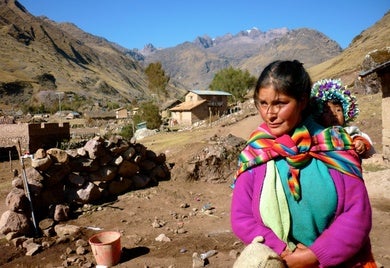
How to make cultural tourism inclusive and sustainable
If you want to start a hotel, the normal thing to do is buy some land, build the hotel, hire a few locals for cooking, cleaning and maintenance and open for business.
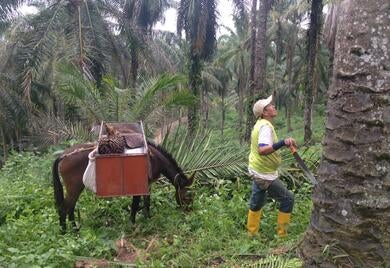
Four Ways to Get the Most out of Palm Oil in Latin America and the Caribbean
What do soap, Ben and Jerry’s, and KitKat bars have in common? They all contain palm oil, an oil produced by the oil palm tree. Indonesia and Malaysia produce the vast majority of the world’s supply and have experienced significant environmental consequences as a result. Now the crop’s profitability is attracting interest in other tropical climates, including Latin America and the Caribbean.

Improving effectiveness of development cooperation and the role of private sector
By Ichiro Toda Many collaborative efforts are underway to bring public and private development practitioners together to strengthen development effectiveness. The push for more cooperation began in November 2011 when the global development community, including the IDB, agreed to the Busan Partnership for Development Effectiveness. The principles in the agreement promote enhanced country ownership, results measurement, inclusive partnerships, transparency and mutual accountability in development work. Recognizing the central role of the private sector, the Busan final document encouraged efforts to:
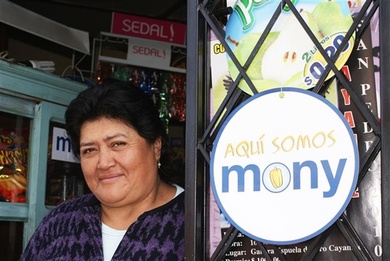
Corporate social innovation is the new corporate social responsibility
By Elizabeth Boggs Davidsen A new trend in international development has paired some unlikely business partners: development finance institutions and impact investors are working with large multinational corporations to fund projects that advance both development and business agendas.

Financial inclusion just a click away: E-wallets and payment platforms
By Valentina Echeverry, Opportunities for the Majority; and Sergio Navajas, MIF. In Latin America, 60 percent of the population lacks access to financial services, equivalent to approximately 250 million people. However, mobile phone penetration is between 90 and 100 percent. In some countries, such as Colombia, penetration is 105 percent. This indicates that most people have a mobile device and some, even two. What role do mobile wallets and payment platforms play in financial inclusion?
