
Sustainable BusinessRecent posts
Corporate Governance: Practical Sessions from Family Business to AI Oversight
Strong governance is what turns sustainability goals into results. At Sustainability Week 2026 in Barbados, join free training sessions on family governance, AI oversight, and SOE continuity, available online on May 25.
Not Impact Measurement. Impact.
MDBs are pioneering a new profession for results in a data-rich world. This blog was originally posted by the World Bank on April 21, 2026, by the Heads of Outcome Measurement of Multilateral and Bilateral Development Agencies, including IDB Invest.
The Rules Have Changed: Sustainability Is Now the Price of Entry for Investment in Latin America and the Caribbean
Discover how, at Sustainability Week, May 26–28, private-sector leaders turn resilience into investable, scalable growth.
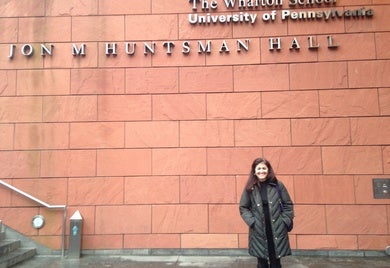
Millennials and Shared Value: a perfect business strategy
Much has been said about the millennials, those born between 1980 and 2000, accounting for approximately 80 million people in the United States, and what they represent for the future of our society. For businesses, for example, it is crucial to understand this new generation, both as consumers and employees, otherwise companies run the risk of becoming irrelevant and antiquated. A recent Deloitte Survey shows that companies will need to change the way they do business in order to accommodate this new generation. Millennials do not begrudge businesses making a profit, but they also believe that businesses should have a purpose: being a catalyst in making a lasting, positive impact on society.
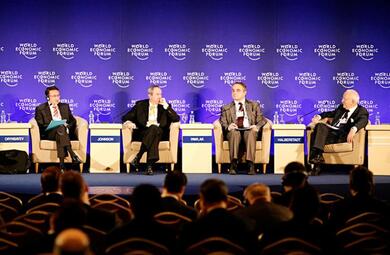
Why are there so few women at the World Economic Forum?
Only 17% of participants at the World Economic Forum, hosted in Davos, Switzerland last month, were women. The annual WEF meeting brings together 2,500 leaders from government, the private sector and civil society to discuss challenges and opportunities for the global economy. For instance, one of the major outputs of the conference is a Global Risks Report that summaries economic, environmental, geopolitical, societal and technological risks to the global economy. If so few women are included in the WEF, how can the conference identify the risks that apply to the whole population and influence thinking on major world issues?
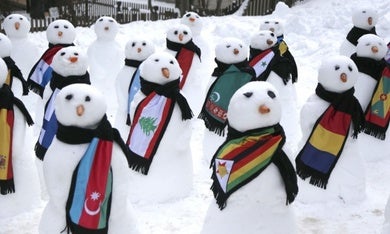
Climate change slides off CEOs’ agendas in Davos
As the World Economic Forum drew to a close last week in Davos, Switzerland, three sobering messages for sustainable business emerged from the 2,500 participants in the invitation-only event. As I followed media coverage closely, my takeaways were the following:

Is Investment in Palm Oil Certification Worth It?
Palm oil has a terrible reputation. Especially among environmental and social advocates, palm oil is viewed as the crop responsible for a large-scale deforestation, particularly in Southeast Asia. Deforestation of carbon-rich forests leads to greenhouse gas emissions; between 2001 and 2010, palm oil-driven land-use change resulted in an average of 216-268 million tons of CO2 equivalent per year in Indonesia alone. For some perspective, that’s equivalent to the emissions from driving more than 45 million cars over the course of a year! Evidence also suggests labor rights violations, including child labor, at many plantations.

Best of 2015: Quinoa: more than a healthy super-food, a super solution to food security
Two years ago, the Food and Agriculture Organization (FAO) declared 2013 the International Year of Quinoa. Before then, it was scarcely found outside of colorful Andean marketplaces except at boutique shops in the U.S. and Europe. Now, many international food companies are embracing quinoa and exporting this super-food from Andean countries like Bolivia, Peru and Ecuador.
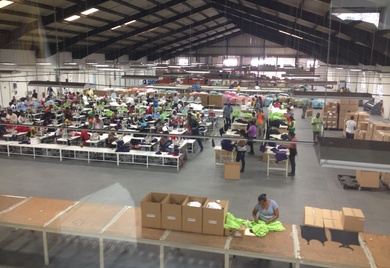
How Haiti is becoming a leader in the quality clothing industry
By Rahul Desai, Principal Specialist, Operations Coordinator, Opportunities for the Majority at the IDB Three business leaders did what others might think is too risky and counter-intuitive. Joey Adler, the CEO of Diesel Canada and founder of the OnexOne Foundation; Richard Coles, the owner of Multiwear, one of Haiti’s leading clothing manufacturers; and Rob Broggi, a former hedge fund executive, created a company to demonstrate that Haiti is a source of higher priced, high quality apparel. This shifts away from the prevailing paradigm as being only a low-cost producer of commodity garments. In 2013 they launched Industrial Revolution II, also known as IRII, a Haiti-based garment factory that while competitive, will still invest 50% of profits into its workers and their families.
