
Sustainable BusinessRecent posts
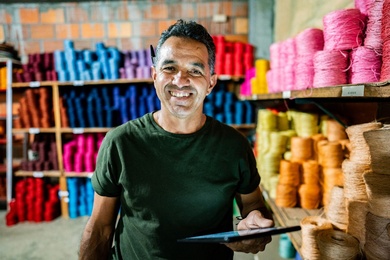
What Drives Business Growth in Colombia? Six Key Factors
Initial capital has long been understood as a driver of business growth, but in Colombia, how much capital is needed to grow?

Sustainable Financing for Construction in Mexico: Banco Inmobiliario Mexicano’s Framework
A sustainable financing framework to strengthen Mexico’s construction sector and help reduce the country’s housing deficit.
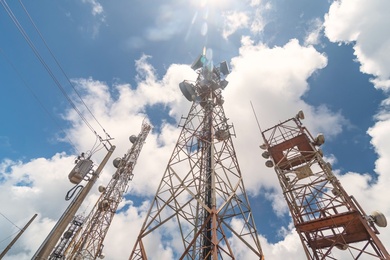
Building the Market While Building the Network: Tigo Paraguay’s 10 Year Local Currency Bond
IDB Invest acted as an anchor investor, strengthening confidence among local market participants in Paraguay to finance digital infrastructure.

Three Things You Should Know About Broadband
By Mónica Fernández Alvarez de Lugo, Opportunities for the Majority at IDB; and Lucie Klarsfeld, Hystra. In the past year, MIT and NASA have been working hard to make broadband connectivity available on the moon. The results have been so positive that your connectivity on the moon is actually better than in many countries on Earth, including the United States. And this same year, Mark Zuckerberg, founder of Facebook, created internet.org, with the goal of providing connectivity to every single person around the world.

The importance of being Robert
*By Andrew Morrison My middle name is Robert, but I am sure my parents would have thought more about making it my first name if they had known what a recent study has revealed: for large U.S. companies, more board seats are held by men named Robert, John, James and William than by all women combined. In fact, women hold only 16% of board seats in the U.S. While this is an improvement from 11% in 2011, at this rate it will take 80 years until women hold 50% of board seats.

It’s All in the Family: A Conversation with One of the Netherland’s Leading Impact Investors
What do family values have to do with impact investing? A lot if you are talking about Oikocredit, a Netherlands-based international cooperative that has successfully contributed to a thriving impact investing ecosystem in its home country. Comprised of member churches, foundations, support associations, and other like-minded organizations, Oikocredit has a robust network of more than 800 partners, €801 million in total assets, and €611 million in outstanding capital. A partner of the IDB since 2010, Oikocredit first participated in the IDB’s syndicated loan program when it joined B lenders, Blue Orchard S.A. and Calvert Foundation, to provide a $36 million loan to Mibanco to increase microfinancing to women entrepreneurs in Peru. We recently talked to Guillermo Salcedo, Deputy Director Loans & Investments, about Oikocredit’s mission and focus on fostering a dynamic investment environment in Latin America and the Caribbean.

3 Ways CEOs can address the Gender Wage Gap
In her Oscar acceptance speech heard around the world, Patricia Arquette challenged people of color and the LGBT community to help fight for wage equality for women in the United States, the same way these women stood with them in their fights for equality. Ironically, Ms. Arquette was addressing the Oscars’ most homogenous group of attendees, and one that was not reflective of the movie industry’s diverse consumer base.
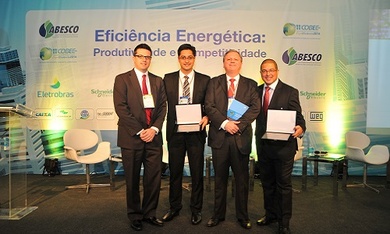
How can banks jump-start Brazil's energy efficiency market?
Last year, I traveled with a team of IDB private sector specialists to São Paulo. There we hosted, in partnership with the UNDP, two one-day trainings for commercial banks. The purpose was to introduce the characteristics of financing energy efficiency projects to relationship managers and credit risk officers of the participating financial institutions. We demonstrated through a dynamic process and real case studies how they could overcome the typical barriers to investment in energy efficiency projects.

How sustainable is your morning coffee? 3 Tips to Reduce its Impact
Coffee is cultivated in over 70 countries around the globe and it is considered one of the world's most valuable agricultural commodities. In the United States alone, the coffee industry is valued at an estimated $30 billion. But the question for both producers and consumers is: how sustainable is coffee?
