
Financing for Construction in Mexico: Banco Inmobiliario Mexicano’s Framework
A financing framework to strengthen Mexico’s construction sector and help reduce the country’s housing deficit.


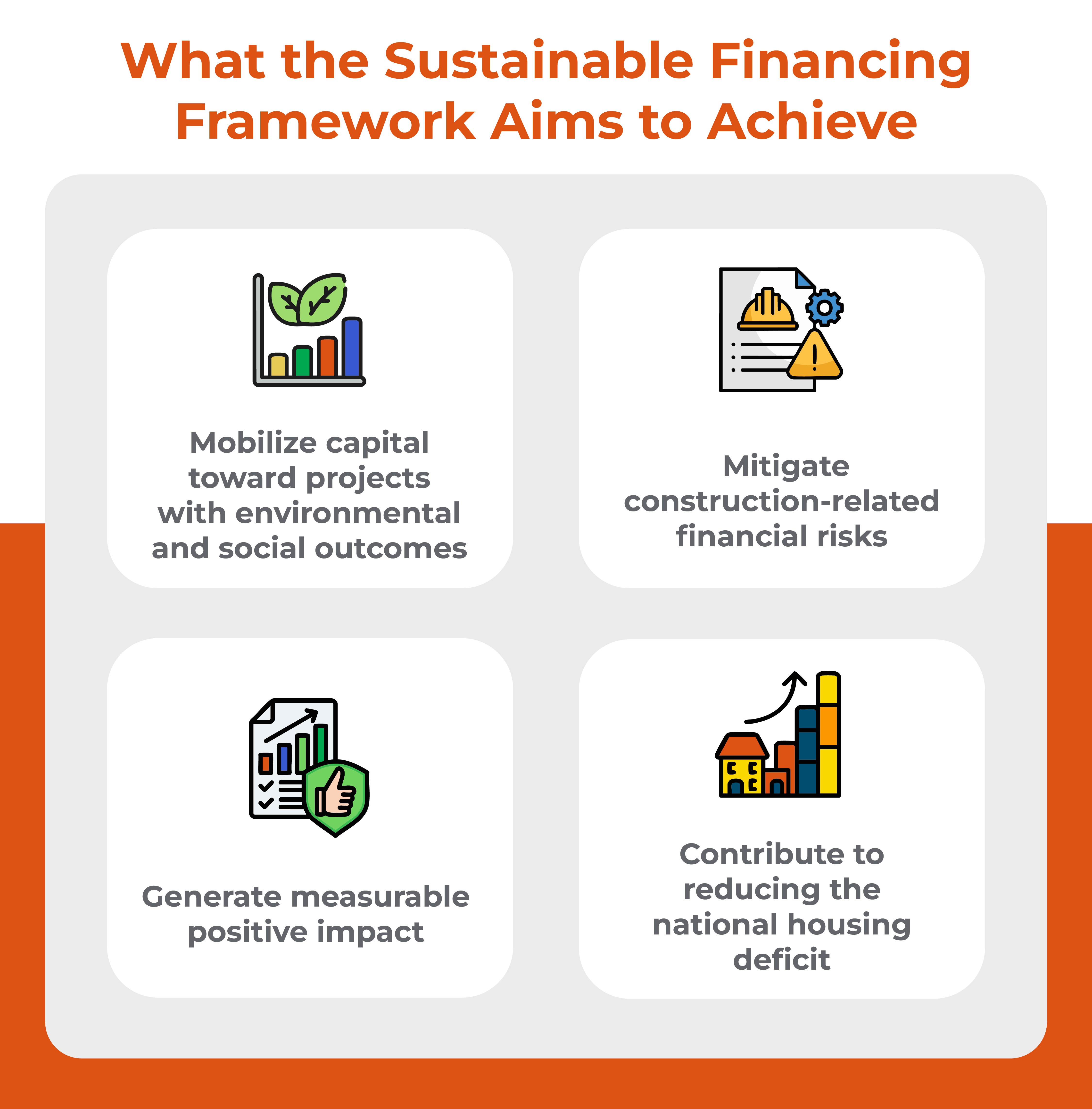
The construction sector plays a strategic role in Mexico’s sustainable development. In response, Banco Inmobiliario Mexicano (BIM), a real estate–focused financial institution, developed a financing framework, with support from IDB Invest, tailored to the real estate sector's needs.
BIM’s specialization in the construction sector, combined with its technical rigor and regulatory alignment, positions this framework as a benchmark for the Mexican market.
BIM’s role in the development of this framework
Unlike banks with diversified portfolios across industries or segments, BIM operates as a niche bank focused on construction and real estate. This specialization enables the institution to rely on an internal technical team to evaluate projects, verify appraisals, analyze risks, and ensure compliance with environmental and social criteria.
This internal capacity was critical to strengthening the framework’s scope and ensuring that eligibility criteria are supported by specific, clear, and verifiable technical parameters applicable to different types of real estate projects.
Alignment with Mexico’s Taxonomy
BIM’s financing framework is among the first in Mexico aligned with the country’s sustainable taxonomy and was designed specifically for the construction category. This represents a significant step forward in the development of the national finance market.
Alignment with the taxonomy also helps standardize language among all stakeholders throughout the life cycle of a real estate project, thereby enhancing competitiveness.
The framework defines resource‑efficiency criteria tailored to each project typology. It recognizes that technical requirements vary across single‑family, multifamily, and vertical housing, as well as developments with other uses, such as hotels or schools.
Which Projects are Eligible for Financing Under this Framework?
The framework accepts projects that hold international certifications such as EDGE (Excellence in Design for Greater Efficiencies) and LEED (Leadership in Energy and Environmental Design), as well as projects certified under national standards, provided they meet the minimum energy and water performance thresholds established by the taxonomy.
In an innovative step, BIM also developed the BIM Sustainable Assessment Tool (Cédula Sostenible BIM). This internal instrument enables the evaluation of non‑certified projects and expands access to financing, particularly in the affordable housing segment.
This initiative is aligned with the priorities of Mexico’s federal government to reduce the housing deficit. According to a 2022 government estimate, Mexico required 591,252 new housing units. However, the number of homes built in 2024, according to the National Housing Registry, totaled only 128,147 – the lowest level in the past decade.
How Does this Framework Help Reduce Mexico’s Housing Deficit?
The framework places strong emphasis on housing finance, prioritizing social, low‑income, traditional, and middle‑income housing. Eligibility criteria incorporate price caps and specific requirements to ensure that a meaningful share of financing is directed toward segments with the greatest needs.
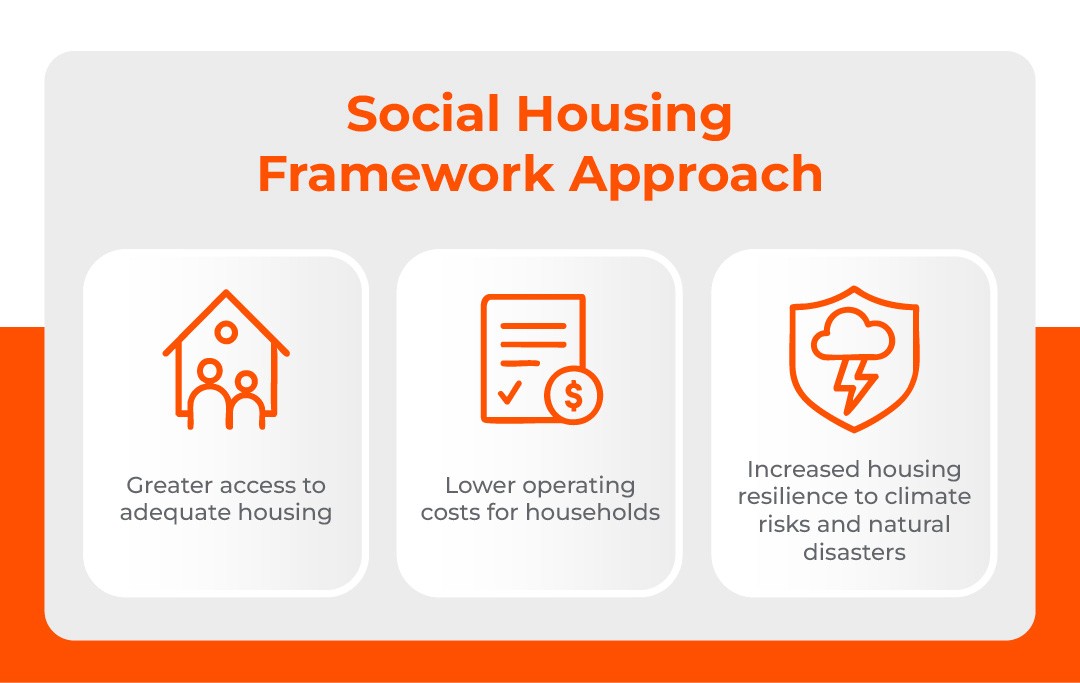
The framework also incorporates a robust social component aligned with the Social Bond Principles and the Sustainability Bond Guidelines of the International Capital Market Association (ICMA). It identifies and tracks financing provided to women‑led real estate developers – a segment historically underserved by the financial system.
This financing framework not only strengthens the bank’s risk management and portfolio quality, but also sets a replicable precedent for other financial institutions in Mexico and across the region, demonstrating that it is possible to scale resilient housing, reduce gaps in access to financing, and contribute to the development of the construction sector.
Related Content
IDB Invest Promotes Sustainable Housing in Mexico with Banco Inmobiliario Mexicano
Authors

Pamela Castellán
Pamela Castellán is currently an external consultant (PEC) in the Climate and Environment Division at IDB Invest, where she supports financial institutions in upstream work and in the structuring and implementation of technical advisory services related to sustainable finance.
She holds a master’s degree in Innovation from the University of Salamanca and has more than 10 years of experience advancing the transformation of the construction sector toward more sustainable models. Previously, she served as executive director of the Guatemala Green Building Council.
During her tenure, she led the construction sector in developing Guatemala’s Sustainable Finance Taxonomy and promoted the approval of municipal and financial incentive regulations that have helped catalyze investment in sustainable construction in the country. She also served as president of the Americas regional network of the World Green Building Council, where she led regional initiatives and represented the sector in international forums.
Her professional background combines technical expertise with multiple accreditations in sustainable construction and sustainable finance, as well as experience in building strategic partnerships among the public sector, the private sector, and multilateral organizations, with the objective of generating social, environmental, and economic impact across the region.

Armando Simón Múgica
Lead Investment Officer – Financial Sector (México y Central America). In his role as Lead Investment Officer, is responsible for IDBI’s investment and origination efforts for Financial Intermediaries in Mexico and Central America (currently based in Mexico City). Prior to his current position at IDB Invest, he served as Investments Director for Latin America at MicroVest (DAI Capital) - impact fund based in Washington, DC. During his tenure, Mr. Simón was responsible for the regional management of the fund and project development, subscription, transaction execution, and relationship management for MicroVest's Latin America and Caribbean (LAC) portfolio. He held a similar role for several years at a US-based financial institution with a global portfolio. Originally from Mexico, Mr. Simon holds a Bachelor's degree in International Business Administration from Universidad Iberoamericana and an MBA from Babson College in Boston, Massachusetts. He is fluent in Spanish, English, Portuguese, and French.
LIKE WHAT YOU JUST READ?
Subscribe to our mailing list to stay informed on the latest IDB Invest news, blog posts, upcoming events, and to learn more about specific areas of interest.
SubscribeDevelopment Impact
Related Posts

Sustainability Week 2026: Choose Your Free Sessions on business innovation and entrepreneurship
Business and knowledge come together at Sustainability Week 2026. Discover our virtual sessions on business innovation and entrepreneurship. Register today.

Corporate Governance: Practical Sessions, from Family Business to AI Oversight
Strong governance is the bridge between business strategy and tangible results. At Sustainability Week 2026 in Barbados, join free training sessions on family governance, AI oversight, and SOE continuity, available online on May 25.
Not Impact Measurement. Impact
MDBs are pioneering a new profession for results in a data-rich world. This blog was originally posted by the World Bank on April 21, 2026, by the Heads of Outcome Measurement of Multilateral and Bilateral Development Agencies, including IDB Invest.