
Sustainable BusinessRecent posts
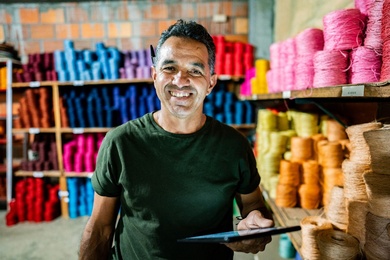
What Drives Business Growth in Colombia? Six Key Factors
Initial capital has long been understood as a driver of business growth, but in Colombia, how much capital is needed to grow?

Sustainable Financing for Construction in Mexico: Banco Inmobiliario Mexicano’s Framework
A sustainable financing framework to strengthen Mexico’s construction sector and help reduce the country’s housing deficit.
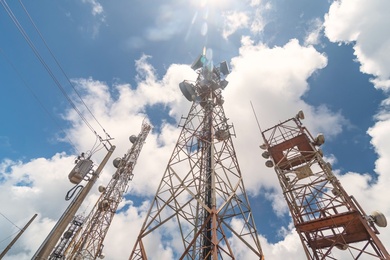
Building the Market While Building the Network: Tigo Paraguay’s 10 Year Local Currency Bond
IDB Invest acted as an anchor investor, strengthening confidence among local market participants in Paraguay to finance digital infrastructure.

Three ways to strengthen financing for private companies in the Caribbean
Growing up in The Bahamas, I remember my grandmother’s asue. There weren’t any banks where she lived on the island of Inagua, and even if there had been, it wasn’t customary for women to frequent them. To adapt, women (and sometimes men) formed their own informal savings groups, known as asues. As her group’s custodian, my grandmother collected a weekly contribution from participants who would then withdraw money on special occasions to cover school fees or larger purchases.

The region is evolving. So are we.
We are witnessing the Fourth Industrial Revolution, the theme at this year’s World Economic Forum in Davos. It represents the digital revolution, the rise of the collaborative economy and growth expectations that are exponential instead of linear. The economic transformations emerging from this revolution remind us that the business models of yesterday cannot build the business of tomorrow. It reminds us how quickly the world is evolving and how quickly the Latin American and Caribbean region is following this trend.

How airports are making traveling more sustainable
By Christian Mirabella In 2015, almost 39 million people traveled through São Paulo-Guarulhos International Airport. Located in Brazil’s southeast, Guarulhos is not only the largest hub in the country, but in the entire region. The amount of passengers transiting here follows an important global trend: air travel is continuing its dizzying rise. Only five years earlier, Guarulhos had recorded a mere 27 million passengers.
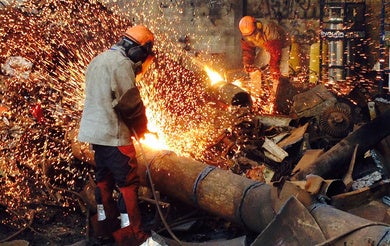
Why steel companies are hiring more women
If the entire private sector of Latin America and the Caribbean was one giant company, six out of ten of its employees would be men. And while you could find a somewhat larger number of women in some parts of that company such as Finance, Legal and Human Resources, other areas would almost entirely be made up of men.
Technology to access an unexplored market in Peru
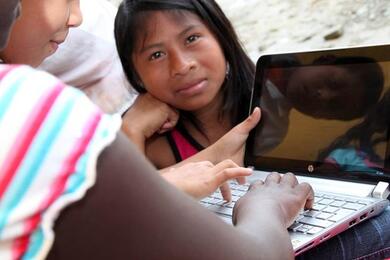
Good news for companies and financial institutions interested in tapping into new markets: Peruvians who live at the base of the pyramid (BoP) spent 160 percent more on information and communications technologies (ICT) in 2013 than in 2000 –from US$20 per capita per year to US$52. Currently, four out of ten BoP heads of households use the internet. More than half of them are between 18 and 35 years old. Additionally, 95 percent of the country’s BoP heads of household own a cellphone, and predominantly the younger ones use it to access the internet.

The best of 2015: Four transportation projects leading in sustainability
Climate change and transportation have an intimate yet complex relationship. Transport accounts for one-fifth of the world’s energy use and one-quarter of energy-related CO2 emissions, making it a main cause of global warming. On the other hand, climate change can severely affect transportation systems, resulting in shorter project life spans, reduced quality of infrastructure services and increased maintenance and operating costs. These impacts on infrastructure harm the economy as a whole by causing trade and supply chain disruptions and hindering access to markets, schools and health centers.
