
Sustainable BusinessRecent posts

Latin America and the Caribbean at the forefront of energy and technological progress
The region is rich in essential minerals and has the potential to develop its value chains. Countries must overcome several challenges to take advantage of these resources and their benefits. This requires transparency, governance, and attracting private investment.
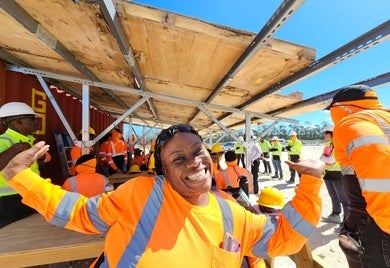
We Helped a Solar Plant Hire More Women. Will the Industry Follow Suit?
The Lucayas Solar Power Project in the Bahamas marked a milestone by pioneering the integration of women in the construction of solar photovoltaic plants. What we learned in the process can help other companies’ commitment to gender equity.
Overcoming Three Challenges to Unlock the Potential of Green Hydrogen
Several countries in Latin America and the Caribbean have an adequate renewable energy generation capacity, abundant water resources and other favorable conditions to diversify the power generation matrices and decarbonize energy-intensive industrial segments. Breaking down legal, regulatory, financial, technical and market barriers can help them lead the charge on clean energy initiatives.
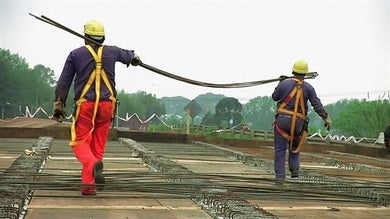
The “Latinization” of public-private partnerships: What the world can learn from Latin America and the Caribbean
*By David Bloomgarden The world can learn from the experience of Latin American and the Caribbean in mobilizing private investment in public infrastructure and services.

What is the Value of Nature?
An apple at a supermarket: $0.50. 1,000 gallons of tap water in New York City: $4.95. Annual value of pollination to agriculture: $200 billion. Cost savings from good land management in New York City's watershed: $8 billion. Total value of benefits from nature: priceless? Robert Costanza, a leading environmental economist, just published the article: "Changes in the Global Value of Ecosystem Services," where he estimated the total value of these benefits at $145 trillion per year. That’s about twice as much as the total output of the global economy. Some of the value that nature provides has an obvious cost. Other values don't directly affect your wallet and are less visible. But just because we don't pay for some of nature's benefits doesn't mean they have less value.
Is Sustainability a Business Opportunity?
Today, forward-thinking companies understand the “why” behind investing in sustainability. Simply put, it makes business sense. However many companies, large and small, are still looking for the “how to”.
WANTED: Innovative companies for a $760 billion market
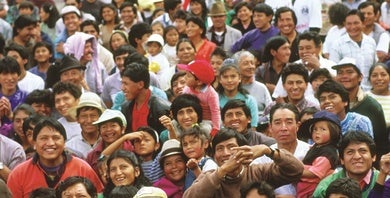
It has been more than ten years since we first read about the base of the pyramid (BOP) and the large and virtually untapped market represented by this socio-economic segment. People at the BOP in Latin America and the Caribbean live on less than $10 a day, but they have benefited from the region’s economic growth between 2000 and 2010 and their incomes have been growing ever since. Latin America’s BOP now encompasses 406 million people and represents a market of $760 billion. A market segment that awaits for innovative companies.

Surprising ways that biodiversity is linked to sustainable development
On the International Day for Biological Diversity, it’s a good time to reflect on the ways that biodiversity contributes to sustainable development. In an age of smartphones and super computers, it’s easy to overlook how dependent we are on the simple technologies of nature.
Changes at the base of the pyramid will transform markets in Latin America and the Caribbean
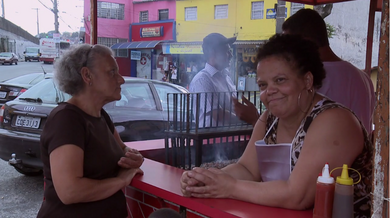
By Lourdes Gallardo, Senior Specialist, Opportunities for the Majority at the Inter-American Development Bank From 2000 to 2010, Latin America and the Caribbean (LAC) enjoyed a remarkable wave of sustained economic growth which helped improve the incomes and welfare of millions of people living at the base of the pyramid (BoP). According to the World Bank, nearly 70 million people increased their purchasing power significantly and 50 million Latin Americans escaped poverty over the decade. This sea change dramatically altered their aspirations, priorities, and interactions with their societies.
