
Double-Click for Women: Closing the Digital Divide from a Private-Sector Perspective
By closing the technology and gender digital divide, we could add about $2 trillion to global GDP, and prevent the creation of wider gender gaps as automation replaces the less-qualified workforce, frequently women, in larger numbers.


The gender digital divide is real and is leaving women and girls out of strategic areas of education, technology innovation and labor inclusion.
A recent study carried out by the Inter-American Development Bank, IDB Invest and IDB Lab called highlights the lack of access, education, and use and training in technology as the three elements making up the digital divide between men and women.
The gap is so wide that it has been estimated that, if the use of Internet and mobile phones were similar across the genders, an additional $2 trillion could be added to the global GDP. Women are well behind men in terms of digital skills, which is worrying as in Latin America and the Caribbean the percentage of workers in positions with higher risks of being replaced by robots ranges between 62% and 75%, and women hold the largest number of such positions.
Given the leadership and entrepreneurship gender gap in the technology sector, women are at a disadvantage when it comes to leading the technological changes in the world of work and accessing roles requiring more complex digital skills.
This is not only a loss for women and girls. The exclusion of this part of the population is a market opportunity for companies in the ecosystem. Closing the digital divide means that more women have access to smart phones and Internet accounts. Better digital skills can also bring about increased data consumption. And a more diverse business leadership is associated with better business performance.
To close the digital divide, companies can make sure their policies and practices are suitable to stimulate diversity. Equality certifications are a stringent mechanism to achieve that: last year IDB Invest approved a transaction in Chile which is aimed not only at granting access to devices and better payment conditions to acquire them, but also at rendering advisory services so that the company can get EDGE-certified to improve its gender equality policies.
Apart from encouraging diversity at decision-making level, companies in the telecommunications sector can segment their portfolio to gain a better understanding of it from a gender perspective. This will let them understand the growth of the client base—especially women clients—as well as the consumption patterns to push those services in which they are underrepresented.
A deeper look at those behaviors can indicate which digital skills women must acquire to optimize the way they consume telecommunications services. Operators can develop a course offering in order to help women improve this aspect.
This exercise is not only relevant for telecommunications companies. It was during the pandemic that some companies, like Elo7, a digital handcraft marketplace, decided to study how and when women used their platform in order to better adapt it to their needs and usage patterns, and to teach them more effective digital skills.
The financial sector also has a major role to close the digital divide. The pandemic exponentially sped up the digitization of financial products and services.
Thus, it is essential that financial institutions include digital education as part of their non-financial services offering. Digital education must comprise key skills, such as digital marketing, for the success of businesses, particularly those led by women.
Additionally, mobilizing capital is central for financing the technology needed for the digital transformation of women-led enterprises. It is important to be aware of the special needs of women-led businesses, which is only possible if the financial intermediaries make a gender-based disaggregated analysis of the portfolio.
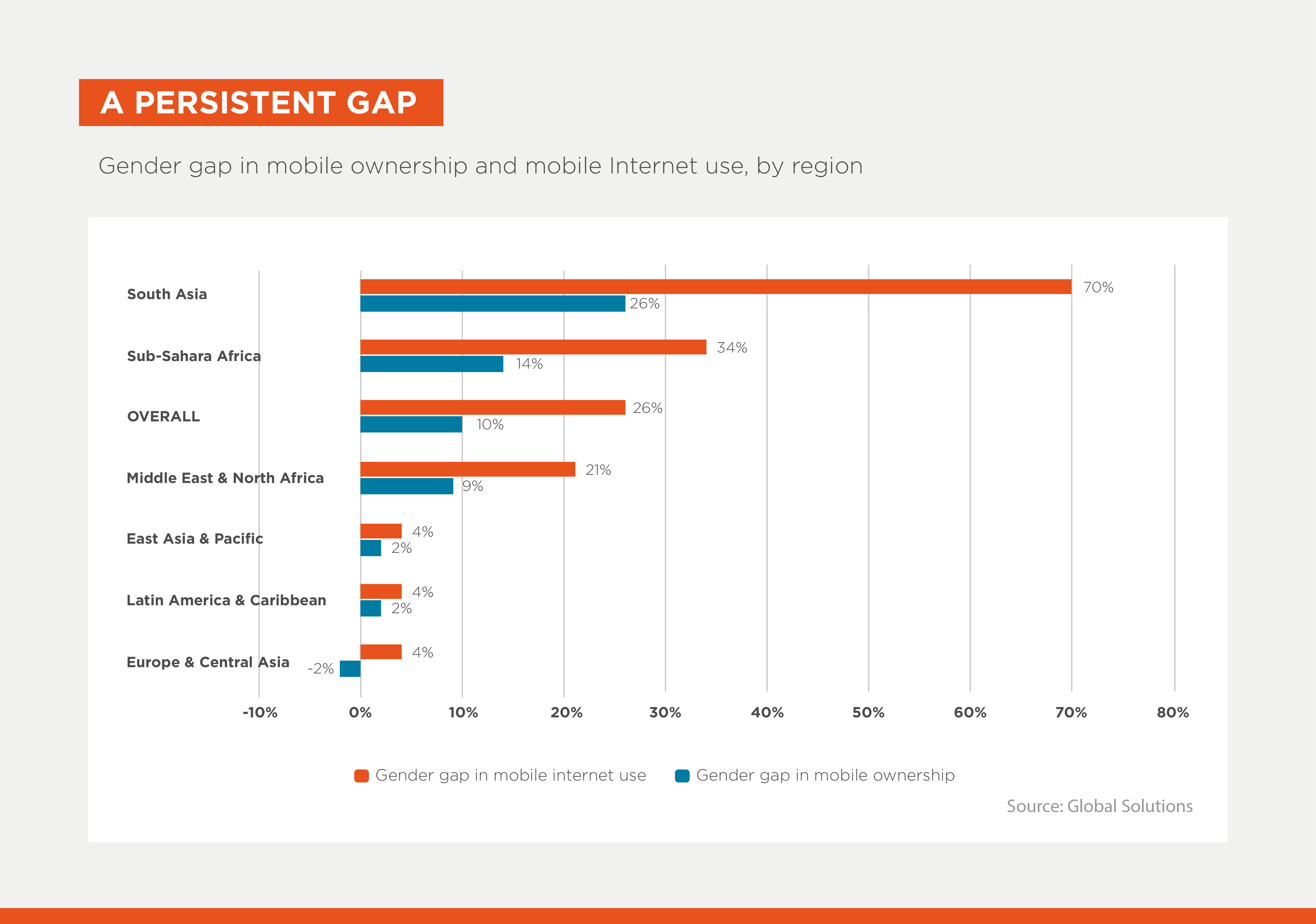
According to the figures presented by the USAID’s Gender Digital Divide report, over half of the women worldwide are offline. Only 48% of them use the Internet, whereas 58% of men have access to the service. The divide is wider in developing countries, where 53% of men use the Internet in comparison to 41% of women.
These differences arise from economic reasons, the lack of digital skills, the lack of access or interest because they are unaware of its advantages and, in some cases, harassment and security risks. But technology allows for improving women’s quality of life, as well as their families’ and communities’, and their countries’ economy. Let’s close the gap right now.
Authors

Jimena Serrano
Jimena Serrano is a gender, diversity and inclusion officer in the IDB Invest Advisory Services team in Washington DC. Since 2015, she has advised IDB Invest clients in promoting practices to ensure equal access to opportunities for men and women in the business world, including leadership positions, value chains, and strategies to meet the needs of underrepresented groups as a market opportunity. She has designed gender programs tied to results in the context of blended finance and was one of the leaders in the design of a business tool based on the Women's Empowerment Principles (known as the WEP tool). Before her arrival at IDB Invest, Jimena worked in the public policy consulting area of The Economist Intelligence Unit; she was also part of the core team that prepared the Report on the Full Participation of Women and Girls for the Gates Foundation and the Clinton Foundation. She is a lawyer from the Universidad de Los Andes in Colombia and has a master's degree in international economics from Johns Hopkins University School of Advanced International Studies (SAIS).
LIKE WHAT YOU JUST READ?
Subscribe to our mailing list to stay informed on the latest IDB Invest news, blog posts, upcoming events, and to learn more about specific areas of interest.
SubscribeGender
Related Posts
Digital Innovation Expands Financing for Women-Led SMEs in Latin America and the Caribbean
Loans and disbursements approved in less than 24 hours, enabled by artificial intelligence, and early invoice payments powered by fintech solutions are transforming access to credit for MSMEs, especially those led by women.

Fixing the Broken Rung: How Data Can Help Advance Women’s Careers in Latin America and the Caribbean
In Latin America and the Caribbean (LAC), the greatest disruption in women’s career progression occurs during the transition into managerial roles. A collaboration between IDB Invest and LinkedIn, within the framework of the Development Data Partnership, uses large-scale labor-market data to identify where women’s participation declines and what barriers exist across sectors and career stages.

Addressing gender-based violence from the private sector: the experience of Laboratorios Bagó
Francisco Méndez, CEO of the pharmaceutical company, shares his company's efforts and achievements in fostering an inclusive and safe work environment.