
Technology to access an unexplored market in Peru

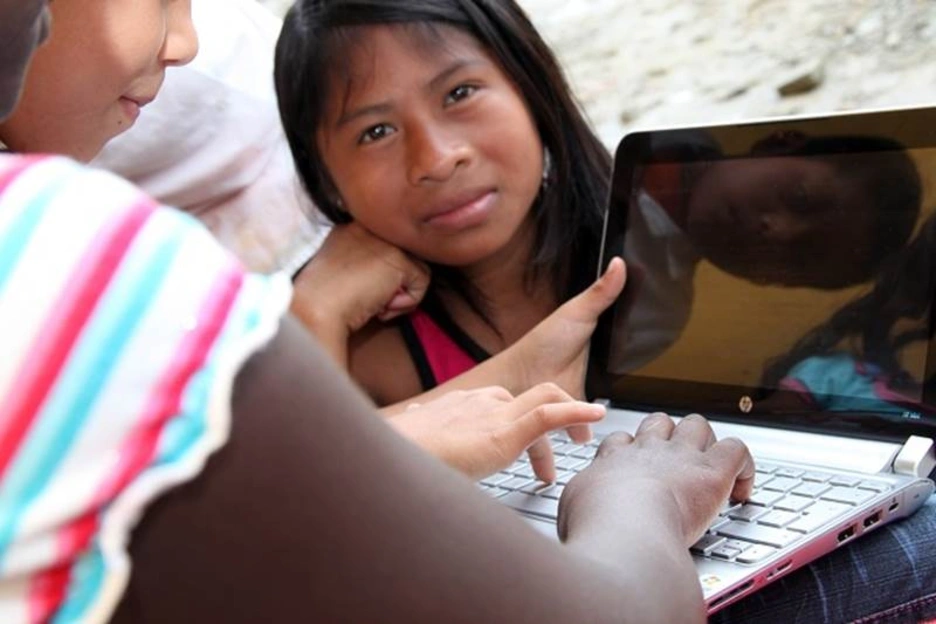
[caption id="attachment_3945" align="alignnone" width="300"] The younger households are particularly attractive; they are behaving and spending more like the middle class and value ICT and accessing the internet.[/caption]
The more and better connected the BoP becomes, the easier it is to access this market segment, offer them affordable products and services and build a long-lasting commercial relationship. In Peru, the BoP is more connected than ever and eager to access goods and services that improve their quality of life.
Like the rest of the region, Peru grew consistently between 2000 and 2013. The consequences were felt throughout society, including at the base of the socio-economic pyramid. Today, 19 million people or 62 percent of the country’s population, live at the BoP, representing an annual market of $43 billion. This segment today spends 33 percent more than in 2000.
A Rising Market: Discovering Opportunities at the Base of the Pyramid in Peru, a study from the Inter-American Development Bank, presents revealing information on the younger BoP population in the country and how they engage with ICT and the internet. The study is an instrument for the private sector to better tailor its products and identify which channels and contents are better suited to penetrate the market segment.
To give an example, cellphone plans with internet are more common among young heads of households. More interestingly, although plans (pre and postpaid) with no data rank first and second among BoP individuals –they adjust to income fluctuations and are perceived as cheaper– for the children in the household (17-25 years old) cellphone plans with data are in second place. This means in some households the children may have plans with internet while their parents don’t. This makes young children in the household a port of entry to the family and an opportunity to influence consumption.
The use given to internet also differs from one generation to the other. Heads of household over 35 tend to use the internet to look for jobs or study, while the younger segment use it to go on Facebook, send electronic mails and instant messaging. These differences send important signals to the private sector, as they would help refine the offer or improve marketing efforts.
Notwithstanding the many business opportunities these few facts may provide, it is necessary to address barriers to access, which are also different depending on the age group. Heads of household over 35 manifest the main obstacle is lack of knowledge on how to use the computer or cellphone. In contrast, for the younger ones it is not having devices. While one group is in need of digital literacy, the other is demanding a more affordable offer.
It’s evident that the Peruvian BoP is a growing market segment. The younger households are particularly attractive; they are behaving and spending more like the middle class, and value ICT and accessing the internet. If creative, companies can identify plenty of business opportunities in the space for content creation, financial services, health and education, to give a few examples. Companies around the world are leveraging ICT to serve the BoP and Peru should not be the exception.
The BoP’s willingness to spend on ICT together with the recent important regulatory changes in the telecommunications sector in Peru, make up a perfect recipe and allow us to say that the ICT market at the BoP will continue to grow in the coming years.
Escrito por

Lina M. Salazar Ortegón
Lina Salazar Ortegón es entrenadora de salud integral. Previamente trabajó en Comunicaciones de BID Invest. Antes de entrar al Grupo BID, Lina trabajó en la Americas Society/Council of the Americas (ASCOA) en Nueva York, la Organization for Economic Cooperation and Development (OECD) en París y la Cámara de Comercio Colombo Americana en Bogotá. Lina es Abogada y Politóloga de la Universidad de los Andes en Bogotá, Colombia, y tiene una maestría en política pública de Sciences Po en París y de la Universidad de Columbia en Nueva York. Lina ha publicado artículos en medios impresos y en línea; y habla español, inglés, francés y portugués.
¿TE GUSTA LO QUE ACABAS DE LEER?
Suscríbase a nuestra newsletter para mantenerse informado sobre las últimas noticias de BID Invest, publicaciones de blog, próximos eventos y para obtener más información sobre áreas específicas de interés.
SuscribirseFinancial Institutions
Posts Relacionados

Cómo Santander Brasil y Eco Invest movilizan capital privado a gran escala
BID Invest financia al Banco Santander Brasil para apoyar la agricultura sostenible, la restauración de tierras y la infraestructura resiliente.

Calificación AAA de S&P valida la solidez y el rumbo estratégico de BID Invest
La calificación AAA amplía el acceso de la institución a una base más amplia de inversionistas, lo que refuerza su capacidad para financiar y movilizar inversión privada de impacto en América Latina y el Caribe.

Más allá de la brecha de liquidez: cómo el factoraje inverso está impulsando el crecimiento de las mipymes
Un estudio de BID Invest en México estima que la adopción del factoraje inverso se asocia con un aumento del 27% en las ventas de las empresas.