
Sustainable BusinessRecent posts
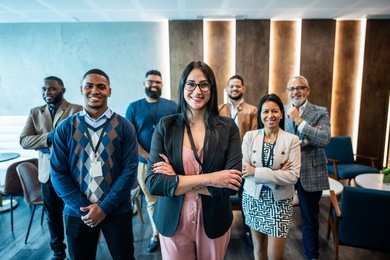
Corporate Governance: Practical Sessions from Family Business to AI Oversight
Strong governance is what turns sustainability goals into results. At Sustainability Week 2026 in Barbados, join free training sessions on family governance, AI oversight, and SOE continuity, available online on May 25.

Not Impact Measurement. Impact.
MDBs are pioneering a new profession for results in a data-rich world. This blog was originally posted by the World Bank on April 21, 2026, by the Heads of Outcome Measurement of Multilateral and Bilateral Development Agencies, including IDB Invest.
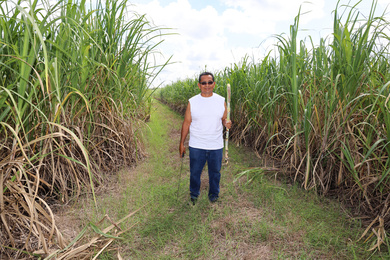
The Rules Have Changed: Sustainability Is Now the Price of Entry for Investment in Latin America and the Caribbean
Discover how, at Sustainability Week, May 26–28, private-sector leaders turn resilience into investable, scalable growth.


Would a women’s club break the hegemony of the men’s club?
* By Maria Teresa Villanueva and Ana Isabel Rodríguez Iglesias You could play a game to find the seven differences in photographs of boards of chambers of commerce in Latin America and the Caribbean. At first glance, they all look very similar: white men between 50 and 60 years old, wearing suits and ties. A quick review of the composition of boards or councils of seven chambers of commerce in the region (in Argentina, Chile, Colombia, Jamaica, Mexico, Panama, and Peru) reveals that 91% of their members are men and only 9% are women.

Banks can make the world a better place — here’s how
* By Angela Miller When people are asked to name institutions they trust, banks rarely top the list. In fact, they don’t usually make it among the top five. According to the Edelman Trust Barometer, the financial sector is among the least trusted industries, a position it has held since the height of the global financial crisis in 2008.

A survival guide for business: The role of corporate governance and sustainability
By Rocío Budetta and Andrea Ortega Químicas Veterinarias is a small producer and distributor of veterinary products in Nicaragua. The Hoigjelle family founded the company in 1999, and since then it has met with success in this Central American country with a market of more than 120,000 micro, small, and medium-sized enterprises.
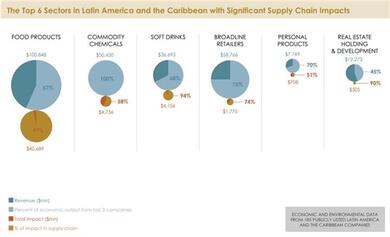
Greening corporate value chains lowers environmental impact and lifts competitiveness
By David Bloomgarden and Michael Hofmann Adidas, one of the world’s top two sportswear manufacturers, recently ended its business relationship with 13 of its Asian suppliers as a result of their severe or repeated noncompliance with labor, health, and safety workplace standards at their factories. This is one example of large multinational corporations working harder to demonstrate to their ever-more-demanding stakeholders that they operate sustainably. As a result, companies’ sustainability strategies are increasingly directly relevant to their operations—and are resulting in positive financial returns. An analysis of S&P 500 companies confirmed that businesses that have built sustainability into their core strategies achieve financial profitability that is significantly higher than that of their laggard peers—by between 18% and 67%.

Development finance institutions and private sector innovation
By Andre Averbug Development finance institutions (DFIs) can play an important role promoting innovation for increased competitiveness and sustained development in their client countries. Properly executed programs and projects can leverage private investment placement, develop local capital markets, improve resource allocation, as well as avoid moral hazard.
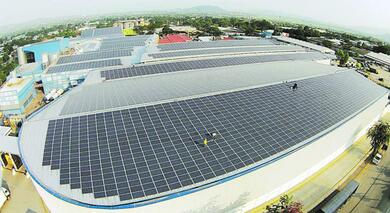
A Green Revolution under the Central American Sun: Solar energy in Honduras
[caption id="attachment_2625" align="alignleft" width="448"] Solar energy in Honduras: the roof of Embotelladora de Sula[/caption] The same sun that bathes Central America’s beaches is an increasingly valuable asset for many companies in the region. That is the case with the Honduran bottling plant Embotelladora de Sula, one of the largest rooftop photovoltaic projects in Latin America.
