
What good is capital without customers? Financial inclusion is necessary for healthy societies
*By: Tomas Miller
The financial inclusion strategies that several countries in Latin America and the Caribbean are adopting and incorporating into their national development policies aim at increasing access to and use of financial services for segments of the population that have been excluded or underserved by financial systems. These policies assume that achieving a higher level of financial inclusion is a necessary condition for increasing the social inclusion of these excluded people. What good is having a solvent and liquid financial system if it serves only businesses and powerful families? What good is capital without customers?


 A complete financial system should not only be solvent, but it should also facilitate transactions and provide credit and savings instruments to families and companies that can make good use of these financial services, regardless of their size. This is the raison d'être of the banking system. Because if we have learned anything over the years, is that small and micro entrepreneurs do not pose greater credit risks, but rather pose different credit risks. Similarly, it is empirically proven that poor families and families in the lowest income segments also save; their marginal propensity to save is different from wealthy families, but at the end of the day, they also save.
Financial institutions understand well these differences in customer behavior. For example, in Latin America and the Caribbean, more than 1,000 institutions are providing microcredit to 22 million microenterprises that maintain a loan portfolio of $40 billion. The interesting thing is that these loans are funded mostly by deposits and savings from the public, which means that society recognizes microenterprises as a sector that deserves financing and that can be financed. Therefore, financing is increasingly flowing to this sector.
Despite these advances, it is estimated that the number of microenterprises in Latin America and the Caribbean totals 86 million, and that only 25 percent of these have access to credit from financial institutions. The gap in financing small and medium-sized enterprises also is vast: there are an estimated 3.4 million of these enterprises in the region and the financing gap is estimated at $235 million. Furthermore, there are 150 million adults who do not have a savings account at a bank.
Financial inclusion policies can improve the welfare of society, and to the extent that they allow families and businesses to realize their dreams and achieve their growth and investment plans, the policies may contribute to reducing poverty.
This is particularly important in Latin America and the Caribbean, where between 2002 and 2013, the number of people living in poverty was reduced by 60 million. These people joined a new economic class that demands services—particularly education, health care, and housing—that can only be paid for with financial products and services designed for them.
Likewise, there’s an increase in demand for insurance that allows this new class of people to reduce their vulnerability, and even for pension savings to protect them when they grow old. Financial institutions are adjusting to incorporate this new wave of clients in their loan portfolios and their product offerings, so that even if Latin America and the Caribbean grows at a moderate pace, it will be inclusive growth, which is preferable to an accelerated but exclusionary growth.
*About the Author

Tomas Miller joined the MIF in 2000 and heads the MIF’s Access to Finance Unit, overseeing a loan and equity portfolio related to microfinance, venture capital, early-stage equity, small business financing, and financial services for low-income people.
From the Multilateral Investment Fund Trends blog
Authors

Autor invitado
LIKE WHAT YOU JUST READ?
Subscribe to our mailing list to stay informed on the latest IDB Invest news, blog posts, upcoming events, and to learn more about specific areas of interest.
SubscribeDevelopment Impact
Related Posts

Supporting Argentine SMEs: Financing for Working Capital and Investment
IDB Invest is helping strengthen Argentina's private sector through long-term financing and reverse factoring solutions that improve small and medium-sized enterprises' access to liquidity.
Three Takeaways From our 2026 Impact Report
Learn how IDB Invest's portfolio is performing on development impact.
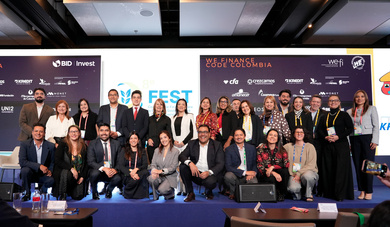
WE Finance Code Colombia: Data and Partnerships to Expand Financing for Women-Led Businesses
Financial sector stakeholders across Colombia are joining forces to expand women entrepreneurs’ access to credit through data, collaboration, and financial solutions tailored to their needs.