
What is a B-bond?
With a nearly $200 billion a year financing gap, it is virtually impossible for the development banks in Latin America and the Caribbean to close it alone. However, there is good news.


Even though regional balance sheets can provide a fraction of the financing needed, development banks are multiplying their impact in other ways. One of the latest structures allowing them to do more with less is the B-bond or bridge-to-bond structure.
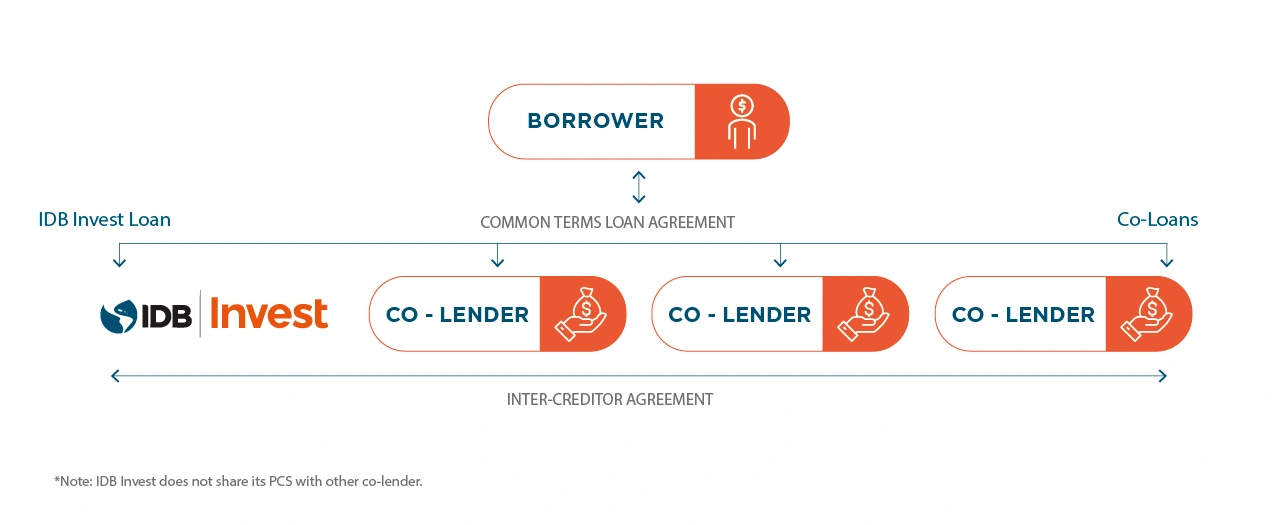
The financial structure is relatively simple while the development impact can be catalytic. The most recent example is a project financed by IDB Invest with project sponsor Invenergy. Instead of fully financing the $68 million loan to build the $102 million La Jacinta plant in Salto, Uruguay, IDB Invest arranged a $65 million B-bond. The B-bond was sold to a special purpose vehicle and then privately placed to an institutional investor. IDB Invest provided the remaining $3.6 million A-loan.
A pioneer structure to facilitate finance
The B-bond allows IDB Invest to involve institutional investors. They are relevant given the amount of long-term funds they manage (assets valued at 20% of Latin America and the Caribbean’s GDP, in fact) and traditionally prefer to invest in developed markets. Now, alongside IDB Invest, they are becoming more comfortable with emerging market risk.
La Jacinta is the third such B-bond but the first in solar in the region. IDB Invest pioneered this structure in 2013 when it financed a 305 MW hydropower plant in Costa Rica developed by ICE, the state-owned utility. In addition to IDB Invest’s $200 million A-loan, it brought in institutional investors with a $135 million B-bond. In 2016, there was the second B-bond with the Campo Palomas wind farm also in Uruguay. IDB Invest provided $67 million from its own capital and mobilized another $68 million from DNB Bank which then sold its participation as bonds.
What are the B-bond advantages?
- Solution for the long-term: The tenors extend beyond what commercial banks typically provide. La Jacinta’s 25-year project bond marks one of the longest tenors for a project bond in Latin America and the Caribbean. In Campo Palomas, as in Reventazón, the institutional investors and IDB Invest provided 20-year financing.
- Market comfort: IDB Invest has seen its network of institutional investors grow. For many, Latin America and the Caribbean is a jurisdiction where they don’t have an established track record. The participation of IDB Invest in structuring and sharing risk reassures them. In Reventazón, none of the institutional investors had previous experience in Costa Rica. In Campo Palomas, only one investor had experience in Uruguay. In the coming months, IDB Invest is hosting road shows to encourage local institutional investors to invest in their own markets. As deals materialize, the B-bond structure can be replicated to accommodate a diversity of infrastructure projects and geographical locations.
- Investment grade rating: La Jacinta’s bond was rated GB2 by Moody’s strengthening its green bond framework. In Campo Palomas, the B-bond received a green bond certification from DNV-GL and Baa3 international rating from Moody’s. Reventazón resulted in an investment grade rating, piercing the sovereign ceiling.
- Do more with less: IDB Invest benefits from these structures because it shares project risk with the investors and frees up capital on its balance sheet for other development projects. This year, for example, it doubled its mobilizations without having to double capital requirements.
- Development impact: The investment in Uruguay is part of the country’s trend toward climate change mitigation and non-conventional renewable energy (NCRE). Nonexistent a decade ago, NCRE now represents 20% of the country’s generation. These projects also create jobs and stimulate economic growth.
As B-bonds prove their success, development banks can start to turn their balance sheet billions into trillions. The more the commercial bankability of infrastructure is demonstrated, the more projects will attract investors and bring development returns at increasing scale.
Authors

Elizabeth Nicoletti
Elizabeth Nicoletti maneja comunicaciones ejecutivas y participación de partes interesadas en BID Invest, donde cubre proyectos complejos de infraestructura con asuntos de riesgo contextual y reputacional además de liderar las comunicaciones para la Oficina del Gerente General. Antes trabajaba en la Vicepresidencia del Sector Privado y Operaciones sin Garantía Soberana como una redactora de discursos, y en la División de Mercados Financieros del Banco Interamericano de Desarrollo (BID). Antes de llegar al Grupo BID, Elizabeth trabajó en la Corporación Financiera Internacional (IFC, por sus siglas en inglés) en Washington, DC, la Fundación Chol-Chol en Temuco, Chile y el Centro Internacional de Investigación de la Mujer (ICRW, por sus siglas en inglés) en Washington, DC. Elizabeth cuenta con una maestría en economía internacional de Johns Hopkins University, School of Advanced International Studies (SAIS) y es licenciada de Georgetown University de Washington, DC.
LIKE WHAT YOU JUST READ?
Subscribe to our mailing list to stay informed on the latest IDB Invest news, blog posts, upcoming events, and to learn more about specific areas of interest.
SubscribeDevelopment Impact
Related Posts

Supporting Argentine SMEs: Financing for Working Capital and Investment
IDB Invest is helping strengthen Argentina's private sector through long-term financing and reverse factoring solutions that improve small and medium-sized enterprises' access to liquidity.
Three Takeaways From our 2026 Impact Report
Learn how IDB Invest's portfolio is performing on development impact.

WE Finance Code Colombia: Data and Partnerships to Expand Financing for Women-Led Businesses
Financial sector stakeholders across Colombia are joining forces to expand women entrepreneurs’ access to credit through data, collaboration, and financial solutions tailored to their needs.