Guatemala Advances in Diversifying Energy Sources for the Transport Sector
IDB Invest supported technical studies that provided evidence for the introduction of a 10% ethanol blend in gasoline in Guatemala.


Ethanol is one of the most widely used biofuels in light-duty transportation today, and its blending into gasoline has expanded progressively across countries worldwide. Approaches vary: some countries established mandatory nationwide blends, others began with regional programs, and some offer different fuel options at service stations.
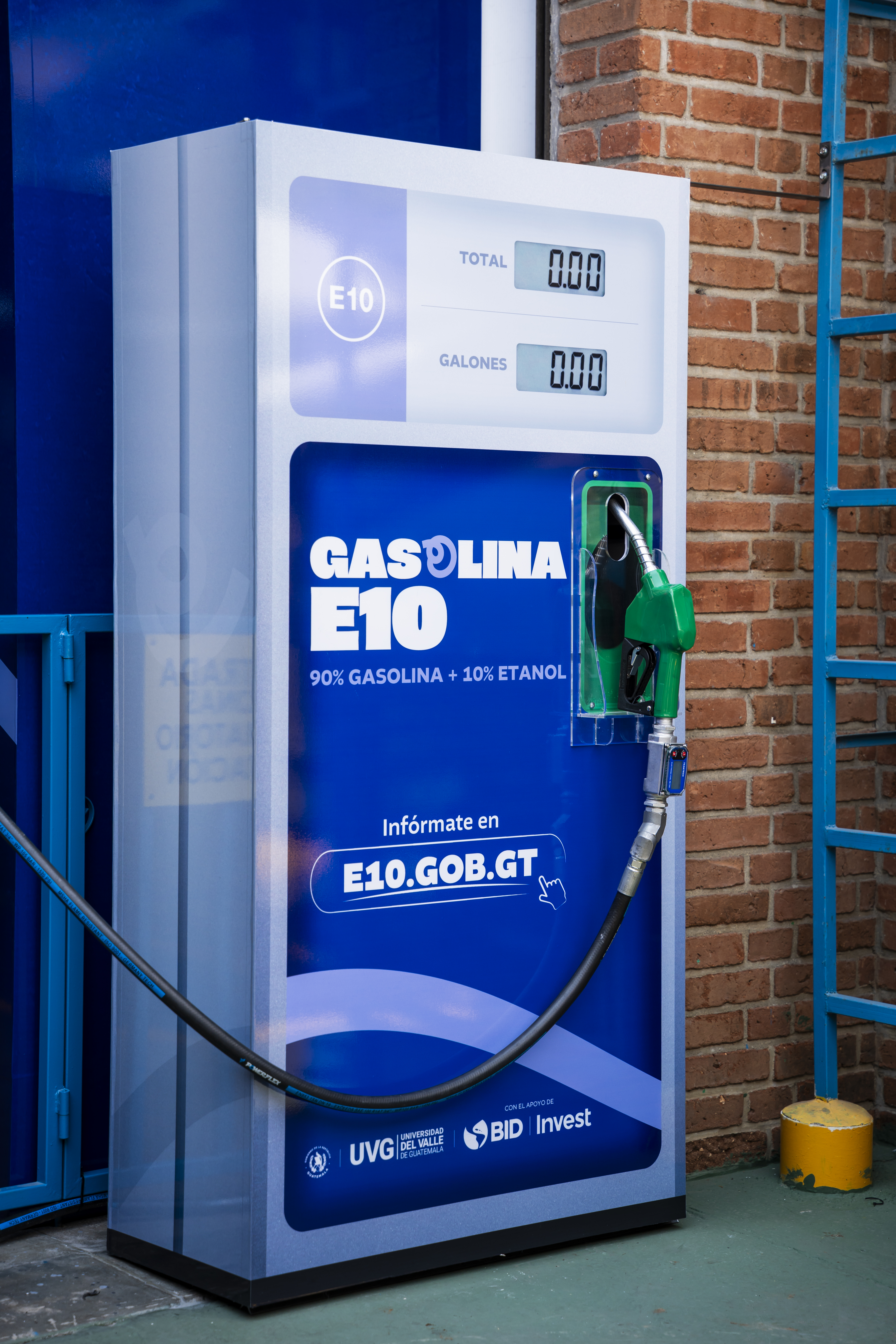
Guatemala's legislation authorized the use and blending of ethanol 40 years ago, followed by the development of regulations and technical standards, but the country launched its biofuels program last August. Introducing a 10% ethanol blend in gasoline helps diversify the country’s fuel mix while strengthening its sugar industry.
Evidence to Support Ethanol Adoption
International experience provides valuable references for ethanol use, but Guatemala needed local evidence generated under the country’s own conditions to inform decision-making. To this end, IDB Invest supported technical studies to assess the feasibility of using an E10 blend in the country’s vehicle fleet, providing independent information to support decision-making.
One of these studies focused on ethanol use in motorcycles, an important segment of the country’s vehicle fleet. Over 12 weeks, 21 motorcycles of different makes, model years, engine sizes, mileage levels, and fuel systems were evaluated. Together, they traveled 51,764 kilometers using E10 under real-world operating conditions.
The results provided favorable evidence. No widespread patterns of mechanical deterioration or operational issues attributable to the fuel were identified during the evaluation period, and the motorcycles achieved a weighted fuel efficiency of 111 kilometers per gallon, in line with normal fuel consumption.
Environmental measurements also showed a favorable trend compared with the conventional gasoline reference, with improvements in several combustion-quality indicators and reduced hydrocarbons under different operating conditions.
IDB Invest supported Guatemala in generating technical evidence through local measurements and results obtained under real-world conditions to support the introduction of ethanol.
An Experience That Spans Continents
In North America, the United States offers one of the largest-scale examples. Over several decades, the country developed an ethanol industry closely linked to agricultural production, particularly corn. Ethanol is now a common component of the gasoline used by U.S. drivers, and the United States is the world’s largest ethanol producer. Canada has also incorporated ethanol into its fuel market, with national and provincial policies aimed at increasing its share in fuel blends.
Across the Atlantic, Europe has taken a more gradual approach. Nineteen countries, Austria, Belgium, Bulgaria, Czechia, Estonia, Finland, France, Denmark, Ireland, Latvia, Lithuania, Luxembourg, the Netherlands, Poland, Germany, Hungary, Romania, Slovakia, and Sweden, currently market gasoline blends containing ethanol. The United Kingdom introduced E10, containing 10% ethanol, as its standard grade of gasoline, while countries such as Spain, Portugal, and Italy are progressively incorporating biofuels into their transport and renewable fuel policies.
India has made ethanol an important component of its energy security strategy and has moved rapidly toward higher blending levels in gasoline.
Thailand has extensive commercial experience with different ethanol-blended fuels. The Philippines has a national standard and mandate, while Vietnam has incorporated ethanol into one of the gasoline grades available in its market. Japan, meanwhile, has set targets to progressively increase the use of bioethanol over the next decade.
The use of ethanol as a biofuel is not limited to large economies. In Africa, for example, countries such as Ethiopia, Kenya, Malawi, Mozambique, South Africa, and Zimbabwe have experience blending ethanol into their fuels, while others, including Angola and Nigeria, have established policies to expand its use. In several of these countries, the sugar industry is also directly linked to the potential for local fuel production.
In Oceania, ethanol blends are available in Australia, with specific policies in some states, while New Zealand also allows their sale and use.
Latin America: From Pioneer to Global Leader
Within this global landscape, Latin America holds a special place. The region was an early adopter and today accounts for a significant share of global production.
Brazil is the undisputed leader. It formally began using biofuels, specifically sugarcane ethanol, in the 1930s to support local sugar producers. However, large-scale industrialization and widespread nationwide use took off in 1975 following the oil crisis, with the creation of the Proálcool program. What began as a policy to reduce energy vulnerability evolved into an industry connecting agricultural production, industrial processing, fuel distribution, technological innovation, and the automotive industry.
But Latin America’s experience extends far beyond Brazil. Argentina, Bolivia, Colombia, Ecuador, Jamaica, Paraguay, Peru, and Uruguay have developed regulatory frameworks, markets, and programs to incorporate ethanol into their fuels. Costa Rica, meanwhile, has made progress on a program to incorporate ethanol into its energy diversification strategy.
Colombia has more than two decades of experience blending fuel ethanol into gasoline. Its policy linked biofuel development to energy diversification and strengthening domestic value chains.
Argentina built its model on a strong agribusiness base. Paraguay, meanwhile, shows how a smaller economy can leverage its agricultural production to develop a significant renewable fuels market. Peru and Ecuador offer other examples of the gradual introduction of ethanol linked to domestic production capacity.
These are different paths toward the same goal: leveraging resources that the region can produce to diversify its fuel mix and strengthen energy security. This is one of the characteristics that makes ethanol particularly relevant for Latin America. In Guatemala, IDB Invest supported this process through studies and technical evidence that helped assess ethanol performance under real-world conditions and generate key information for its incorporation into the country’s fuel mix.
Authors

Christian Parra
Christian is part of the Climate Change Team of Advisory Services Division at IDB Invest, which he joined in 2017. He is responsible for coordinating advisory projects in the energy sector. Before joining the IDB Group, he held positions as: National Director of Climate Change Mitigation for the Ecuadorian Ministry of the Environment, Sustainable Energy and Climate Change Coordinator at the Latin American Energy Organization (OLADE), Coordinator of the Low Emission Capacity Building program of the United Nations Development Program (UNDP), researcher at Ecuador’s National Institute of Renewable Energy and Energy Efficiency, officer at the Ministry of Energy of Ecuador, as well as independent consultant for the private sector. Christian has a PhD from Valladolid University (Spain), holds a master’s degree in sustainable energy development from the University of Calgary (Canada) and an undergraduate degree as agricultural engineer from The central University of Ecuador.

Gabriel Jiménez
Gabriel is the IDB Group Private Sector Coordinator for the Central America, Haiti, Mexico, Panama and the Dominican Republic (CID) Region since 2022. In this role, Gabriel provides strategic support to IDB, IDB Invest and IDB Lab teams to generate and take advantage of operational synergies within the IDB Group and achieve better impact in the Region. Gabriel joined IDB Invest in 2018 as an Investment Officer for the Manufacture Unit where he originated, structured, and implemented financial solutions for clients in Ecuador, Chile, Panama and Uruguay, and prior to that worked in international development, corporate banking and auditing firms in the Americas. Gabriel is a Business Administration Engineer specialized in Finance from Pontificia Universidad Católica del Ecuador, holds an MBA from Nanyang Technological University in Singapore and has a Diploma in International Commerce from Pontificia Universidad Javeriana de Colombia.
LIKE WHAT YOU JUST READ?
Subscribe to our mailing list to stay informed on the latest IDB Invest news, blog posts, upcoming events, and to learn more about specific areas of interest.
SubscribeMinerals
Related Posts
How IDB Invest Is Helping Latin America Capture More Value From Its Minerals
Through capital mobilization and strategic partnerships, IDB Invest supports mineral value chains, from mining and processing to enabling infrastructure and other value-added activities.