Author Bio

Nikolai Orgland
Nikolai Orgland is a Blended Finance Investment Officer in the Financial Products and Services Division at IDB Invest. He specializes in designing innovative financial solutions to support catalytic private sector projects with the potential to achieve impactful outcomes in climate mitigation and adaptation. Prior to joining IDB Invest, Nikolai worked as an energy finance consultant at the World Bank’s global energy practice and the International Energy Agency’s clean energy innovation unit. In 2021-22, he was a fellow of the Mercator Fellowship for International Affairs. An engineer by training, Nikolai holds a Master of Science in Energy Management & Sustainability, as well as a Bachelor of Science in Environmental Engineering, both obtained from the Ecole Polytechnique Féderale de Lausanne in Switzerland.
Posts by Nikolai Orgland
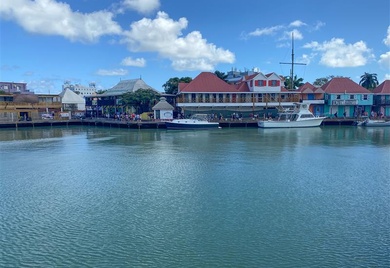
Facing the Storm: How IDB Invest Supports Caribbean Private Sector Resilience
IDB Invest is partnering with the Green Climate Fund to help Caribbean businesses better withstand future climate shocks through blended finance and technical assistance.

Outcome-Based Financing Rewards Investors Upon Achieving Impact
IDB Invest’s team has implemented almost 50 operations of this kind in Latin America and the Caribbean for $247.81 million in blended finance and an additional $16.74 billion mobilized.

Is Bikesharing The Future of Latin America’s Cities?
Micromobility solutions, such as shared bikes and scooters, have gained significant traction in cities worldwide, with Latin America witnessing a surge in their adoption. These alternatives to car usage promise reduced emissions, reduced congestion, and decreased parking space demands in urban centers.