
Sustainable BusinessRecent posts

Korea's Cutting-Edge Innovations to Transform Agribusiness in Latin America and the Caribbean
Discover how IDB Invest connects regional agribusinesses with leading innovators in Korea to accelerate smart agriculture, agritech, and sustainable growth.
Digital Transformation Redefines Agricultural Competitiveness in Latin America and the Caribbean
Every time an agricultural company determines when to irrigate, selects what inputs to apply, or decides how to market or transport its production, the use of data and technological solutions becomes a key competitive advantage.

Combating Multidimensional Poverty from the Private Sector Requires Much More Than Jobs
For Danper, a leading Peruvian company in the global agri-food sector, understanding the living conditions of its workers and their families is fundamental to strengthening actions to improve their quality of life.

Don’t let base of the pyramid millennials catch your company off guard
Hardly a day passes without a new article on how businesses are analyzing the needs, wants and spending trends of millennials. In the US alone, millennials (or Generation Y), those born between 1980 and 2000, represent 30 percent of the population. By 2025 they will be 75 percent of the workforce of this country. The impact that millennials are starting to have on the global economy, the environment, and politics is enormous. But “millennial mania” is dominated by studies, research and marketing efforts that focus on affluent individuals. Meanwhile, in Latin America and the Caribbean a market of 77 million low-income or base of the pyramid millennials goes almost unnoticed.
How to make cultural tourism inclusive and sustainable
If you want to start a hotel, the normal thing to do is buy some land, build the hotel, hire a few locals for cooking, cleaning and maintenance and open for business.
Four Ways to Get the Most out of Palm Oil in Latin America and the Caribbean
What do soap, Ben and Jerry’s, and KitKat bars have in common? They all contain palm oil, an oil produced by the oil palm tree. Indonesia and Malaysia produce the vast majority of the world’s supply and have experienced significant environmental consequences as a result. Now the crop’s profitability is attracting interest in other tropical climates, including Latin America and the Caribbean.

Improving effectiveness of development cooperation and the role of private sector
By Ichiro Toda Many collaborative efforts are underway to bring public and private development practitioners together to strengthen development effectiveness. The push for more cooperation began in November 2011 when the global development community, including the IDB, agreed to the Busan Partnership for Development Effectiveness. The principles in the agreement promote enhanced country ownership, results measurement, inclusive partnerships, transparency and mutual accountability in development work. Recognizing the central role of the private sector, the Busan final document encouraged efforts to:
Corporate social innovation is the new corporate social responsibility
By Elizabeth Boggs Davidsen A new trend in international development has paired some unlikely business partners: development finance institutions and impact investors are working with large multinational corporations to fund projects that advance both development and business agendas.

Financial inclusion just a click away: E-wallets and payment platforms
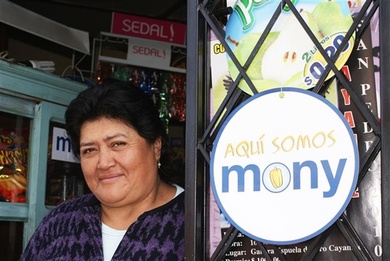
By Valentina Echeverry, Opportunities for the Majority; and Sergio Navajas, MIF. In Latin America, 60 percent of the population lacks access to financial services, equivalent to approximately 250 million people. However, mobile phone penetration is between 90 and 100 percent. In some countries, such as Colombia, penetration is 105 percent. This indicates that most people have a mobile device and some, even two. What role do mobile wallets and payment platforms play in financial inclusion?
