
Sustainable BusinessRecent posts
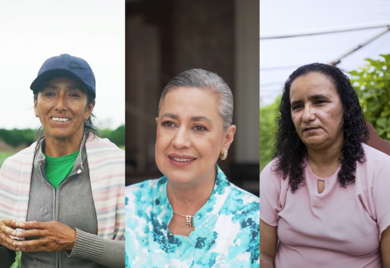
Digital Innovation Expands Financing for Women-Led SMEs in Latin America and the Caribbean
Loans and disbursements approved in less than 24 hours, enabled by artificial intelligence, and early invoice payments powered by fintech solutions are transforming access to credit for MSMEs, especially those led by women.

Fixing the Broken Rung: How Data Can Help Advance Women’s Careers in Latin America and the Caribbean
In Latin America and the Caribbean (LAC), the greatest disruption in women’s career progression occurs during the transition into managerial roles. A collaboration between IDB Invest and LinkedIn, within the framework of the Development Data Partnership, uses large-scale labor-market data to identify where women’s participation declines and what barriers exist across sectors and career stages.

Addressing gender-based violence from the private sector: the experience of Laboratorios Bagó
Francisco Méndez, CEO of the pharmaceutical company, shares his company's efforts and achievements in fostering an inclusive and safe work environment.
Development finance institutions and private sector innovation
By Andre Averbug Development finance institutions (DFIs) can play an important role promoting innovation for increased competitiveness and sustained development in their client countries. Properly executed programs and projects can leverage private investment placement, develop local capital markets, improve resource allocation, as well as avoid moral hazard.
A Green Revolution under the Central American Sun: Solar energy in Honduras
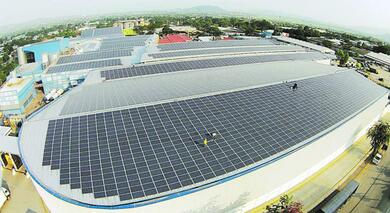
[caption id="attachment_2625" align="alignleft" width="448"] Solar energy in Honduras: the roof of Embotelladora de Sula[/caption] The same sun that bathes Central America’s beaches is an increasingly valuable asset for many companies in the region. That is the case with the Honduran bottling plant Embotelladora de Sula, one of the largest rooftop photovoltaic projects in Latin America.

Three reasons why sustainability supports SME growth
Doing business these days is about more than just profitability. It’s also about sustainability, even for small and medium-sized enterprises (SMEs). Despite this, lots of SMEs are standing on the sidelines, hesitant to make investments in sustainability that don't guarantee an immediate return. So let's look at these three reasons to invest in SME sustainability initiatives:

Three surprising habits of highly productive women in the private sector
In Argentina, 61 percent of mothers work outside the home. In Chile, the US and Mexico, those numbers are 59 percent, 57 percent and 42 percent, respectively. Globally, that percentage is growing. As I prepare to join these women after the birth of my second child, I know I must find ways to be more productive and disciplined in my corporate environment. To tackle this, I spent my last weeks of maternity leave seeking the advice of the most highly productive women in the private sector I know. Their surprising answers on work-life balance, professional success and doing more with less offer tools for women, men and companies more broadly.

How new technology can make business sustainable
Did you know that when Alexander Graham Bell invented the telephone, his initial idea was to develop a device for people to hear live orchestra? The world undoubtedly changed when it was introduced. But it was actually the consumers who turned it into a different innovation, preferring to call friends and family than listen to music. This is just one example how innovation and science are transforming society.
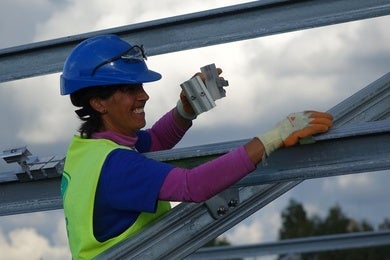
No Women in Renewable Energy? Look Again.
Three years ago when the Canadian Climate Fund (C2F) first launched, private sector clients would balk when we asked them about the gender impact of their proposed renewable energy projects. The renewable energy sector is growing in the region, bringing with it new job opportunities, skills requirements and local business development. In this part of the climate change conversation, women in renewable energy are often invisible. This was, after all, a man’s world – renewable energy projects are primarily construction and engineering. We know the numbers – women earn only 11 percent of Sciences, Technology, Engineering and Mathematics (STEM) degrees in the region.
