
World looks to BRICS for sustainable business solutions
Multilaterals can provide sustainable business solutions – the recent BRICS summit highlighted how.
Two weeks ago, the leaders of the five BRICS emerging nations –– Brazil, Russia, India, China and South Africa–– met in Fortaleza, Brazil for the 6th BRICS Summit. A $100 million development bank and a currency reserve pool were launched among the nations, a long-waited initiative since talks first began five years ago. This is no small feat. The five nations together account for half of the global population and 20 percent of the world’s GDP. Moreover, in the last ten years the economic outputs of these emerging nations have quadrupled . Although economic growth often translates into better living standards and opportunities for citizens, it is often coupled with key economic, social and environmental challenges –– especially in rapidly growing emerging economies.

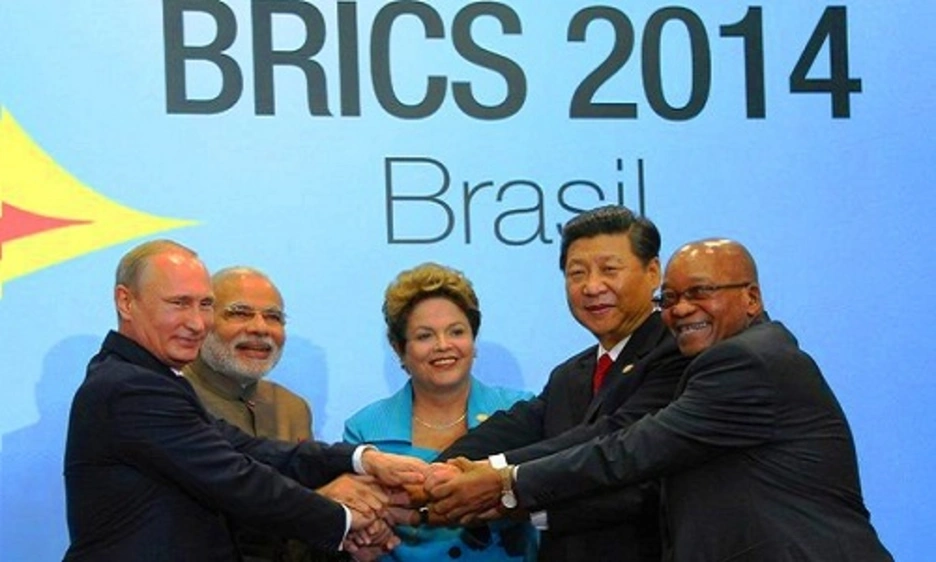
[caption id="attachment_1568" align="alignleft" width="300"] Photo credit: Creative Commons by Presidential Press and Information Office[/caption]
While the creation of the New Development Bank is controversial in some circles, today I would like to focus on the BRICS Summit’s theme, which emphasized how to tackle inclusive growth and sustainable solutions, from both the public and private sector angles.
Legitimate sustainable development means attaining economic progress while stimulating social advancement and environmental protection. This can be achieved through policies that are socially inclusive and incentivize returns both for the general public as well as business’ bottom lines. As witnessed during the 6th BRICS Summit, concrete steps are being taken by governments to accelerate sustainable transformations. Investments that achieve environmental and social development ought to be promoted, for example by targeting investments in the education sector providing equity of access and high-quality initiatives that encourage innovation; instrumental in lifting the emerging middle class in these five nations. The term “business as usual” no longer applies. It is crucial that businesses adapt to ever-evolving market conditions incorporating inclusive and sustainable goals in their value proposition to customers. One way in which companies can have a competitive advantage is to align financial and social returns of their investments--a business concept also known as shared value.
Many companies and top executives can attest that addressing society’s needs and challenges, beyond just helping short-term profitability of the company, has proven to yield long-term success (see the experience of Dow Chemical in the September 2013 article in the Harvard Business Review). A framework used to identify such opportunities and generate an actionable business strategy for companies, is the Shared Value Appraisal conducted by the Inter-American Development Bank (IDB).
Universidad San Ignacio de Loyola (USIL) in Peru, was one of the first IDB clients to pioneer this methodology in order to explore possibilities to generate societal change while generating financial returns. USIL is a leading private university based in Lima that is investing in Peru’s emerging middle class. In 2013, USIL received a $25 million loan from the IDB to expand its campus and scholarship products for lower-income students. In addition to the financing package, a Shared Value Appraisal was carried out where the team identified the opportunity to enhance USIL’s offering to economically disadvantaged students by allocating $2 million to set up a Student Guarantee Fund. The Fund, a first for the Peruvian market, provides collateral for loans and scholarships, enabling low-income students with high academic potential to continue and finish their studies. At the same time it generates financial value to USIL by attracting new students it also provides a social benefit in the form of increasing access to a high-quality and otherwise unaffordable education to those who are economically disadvantaged . Because USIL takes on the cost of borrowing the money for the guarantee fund, it has to certify that the investment is financially sustainable, ensuring its students graduate and are productive in their respective societies.
As the New BRICS Development Bank continues to influence the discussion on sustainable development, businesses should continue to deliver innovative strategies that are not only actionable and adaptable to all levels of development, but that are also ambitious.
Authors

Cassia Peralta
Cassia Peralta es consultora independiente de MBA y se desempeñó como oficial de inversión de BID Invest hasta mayo de 2017. Su trabajo se centraba en la estructuración de inversiones sólidas que promuevan el desarrollo a través de prácticas de negocio sostenibles. Cassia nació en Brasil y tiene un MBA en Marketing y Emprendimiento de Wharton School. Es además autora galardonada del libro "Born in Rio".
LIKE WHAT YOU JUST READ?
Subscribe to our mailing list to stay informed on the latest IDB Invest news, blog posts, upcoming events, and to learn more about specific areas of interest.
SubscribeDevelopment Impact
Related Posts

Supporting Argentine SMEs: Financing for Working Capital and Investment
IDB Invest is helping strengthen Argentina's private sector through long-term financing and reverse factoring solutions that improve small and medium-sized enterprises' access to liquidity.
Three Takeaways From our 2026 Impact Report
Learn how IDB Invest's portfolio is performing on development impact.
WE Finance Code Colombia: Data and Partnerships to Expand Financing for Women-Led Businesses
Financial sector stakeholders across Colombia are joining forces to expand women entrepreneurs’ access to credit through data, collaboration, and financial solutions tailored to their needs.