
Sustainable BusinessRecent posts

2024, the Year the World Turned Its Eyes to the Amazon Region
The "lungs of the planet," was one of the major topics of the past twelve months. Despite significant challenges, the region has much to offer regarding global solutions that drive sustainable development. Here is a selection of blogs we published on the topic.

Addressing Climate Change Through Improved Business Continuity
The increasing impact of climate change on the Caribbean, emphasizes the need for effective business continuity management to mitigate disruptions.

Assessing Climate Risks Is Vital for Companies, the Economy and the Environment
Although each company’s adaptation strategies must be tailored to its unique circumstances, ignoring climate change is never wise. Conducting a professional assessment is the best approach to making informed decisions.

Corporate social innovation is the new corporate social responsibility
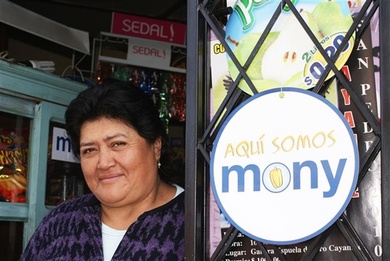
By Elizabeth Boggs Davidsen A new trend in international development has paired some unlikely business partners: development finance institutions and impact investors are working with large multinational corporations to fund projects that advance both development and business agendas.

Financial inclusion just a click away: E-wallets and payment platforms
By Valentina Echeverry, Opportunities for the Majority; and Sergio Navajas, MIF. In Latin America, 60 percent of the population lacks access to financial services, equivalent to approximately 250 million people. However, mobile phone penetration is between 90 and 100 percent. In some countries, such as Colombia, penetration is 105 percent. This indicates that most people have a mobile device and some, even two. What role do mobile wallets and payment platforms play in financial inclusion?
Potential in the Pacific: Connecting SMEs across Latin America
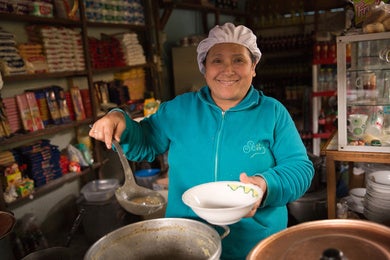
By Ana Lucia Escudero Peru’s southern port of Paracas boasts pre-Incan trade routes dating back to 300 B.C. – a fitting venue to host the 10th Summit of the Pacific Alliance where heads of state from Mexico, Colombia, Chile and Peru discussed ways to deepen trade integration, financial ties and social inclusion among the four nations.

What is the connection between No Impact Week and sustainable business?
I dare you: Can you buy nothing for a whole day? I know it sounds tough, but it happens on No Consumption Day. Employees who sign up for No Impact Week can experience how lowering our environmental footprint can impact quality of life, communities and planet. While No Impact Week is about discovering how lifestyle changes like consuming less can increase personal fulfillment, health, and happiness, it certainly begs the question: How is less consumption also good for sustainable business?

How to reduce your energy costs and become more competitive
These days, reducing production costs to increase competitiveness is a must. In a report titled Climate Solutions, the World Wildlife Fund notes that the world could cut its energy consumption by 40% by 2050 just by improving energy efficiency and energy conservation. But when looking for alternatives that don't sacrifice the quality of raw materials, not many entrepreneurs realize that a change in energy policy could save them a considerable amount on their energy bills.
Transformation of banks to reach unbanked: Cases from Jamaica and Paraguay
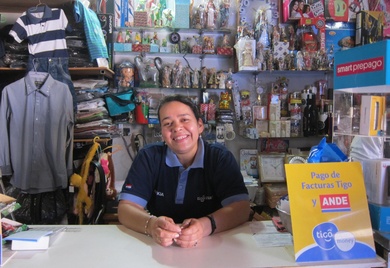
By Tomas Miller and Veronica Trujillo There have been remarkable advances in the role of banks in financial inclusion and development in Latin America and the Caribbean as measured by various indicators (access to bank accounts, supply of credit, insurance for micro and small enterprises, and availability of customer points of service) compared with levels in the previous decade. However, the region still falls short in terms of the overall penetration of its financial system and in comparison with other parts of the world. Access to and use of credit and savings—measured as the proportion of people that borrowed money or had savings accounts with formal financial institutions in the past year—reach only 11% and 14% of the region’s population, respectively. Also, the proportion of adults with any account at a financial institution or through a mobile banking provider is a mere 51%, compared with more than 60% globally, according to the The Global Findex Database 2014.
